A focused episode of ‘American Crime Story’ plays to its strengths

“A Random Killing” –  B

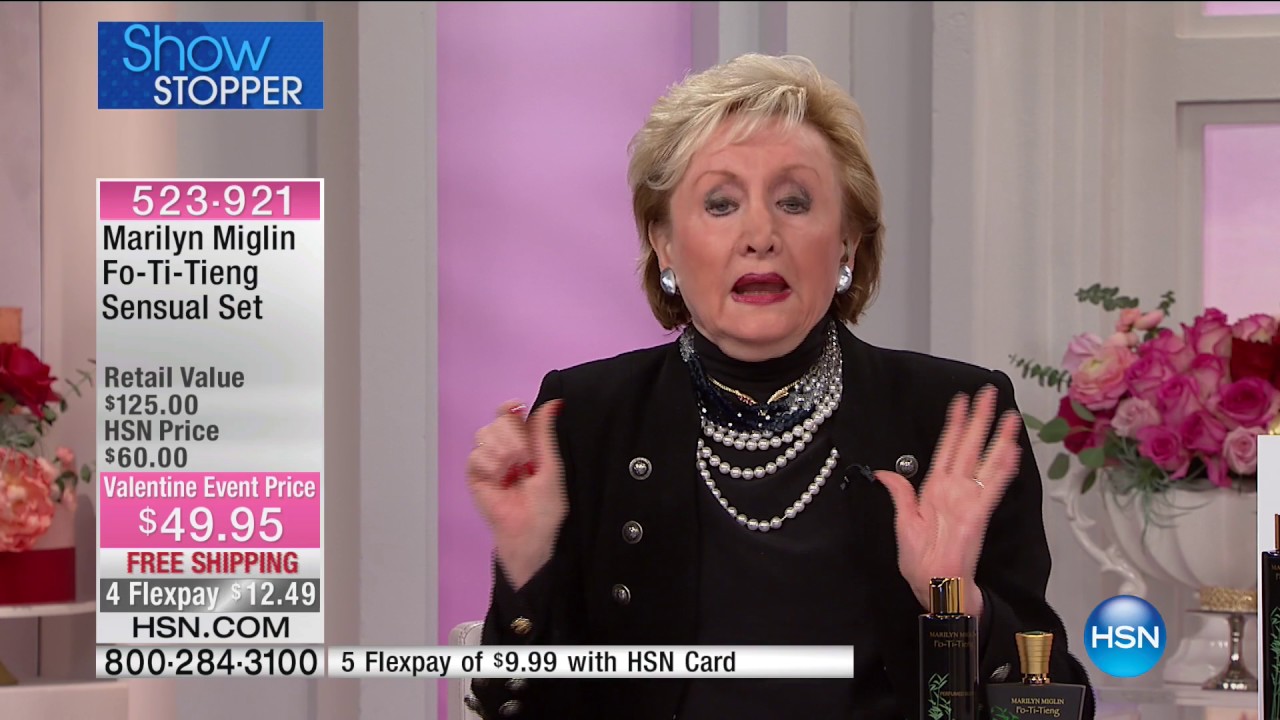
In “A Random Killing,” it’s the silence that stands out. There’s silence on the other end of the telephone as Marilyn Miglin leaves a message for her husband, not knowing that he’s already been murdered. There’s silence when she swings open the door to find her house just slightly off—ice cream left melting on the counter, a used but uncleaned bathtub. The noises we do hear—exploratory footsteps, Marilyn clacking her nails on the countertop—reinforce the eeriness of the situation. Marilyn barely flinches when a scream breaks the silence to confirm what she suspected. She stares straight ahead before saying, barely above a whisper, “I knew it.”

It’s a masterful cold open, anchored by Judith Light’s performance, and it sets up an episode that’s more focused than last week’s “Manhunt.” Where “Manhunt” was sprawling and scattered, “A Random Killing” has a clear game plan and a narrower focus, zeroing in on the murder of Lee Miglin and the immediate aftermath. Lee, a real estate tycoon, was Andrew’s third victim—second in the backwards chronology of the series—and the details of the circumstances are perhaps the most muddled of all his victims.

As I mentioned while covering the pilot episode, part of American Crime Story’s task is to full in the blanks left out of Maureen Orth’s book. Lee’s family—primarily his wife Marilyn (something of a Home Shopping Network celebrity) and his son Duke (an actor who had a bit part in Air Force One, released a few months after his father’s death)—have always denied that Andrew knew Lee (or anyone; Duke’s actor-status had some rumors swirling). It’s always been emphasized as a random killing, a robbery because Andrew needed cash and a car, and Lee had both. “A Random Killing,” despite the title, says otherwise.

In this narrative, Andrew is Lee’s escort and shows up unannounced. Lee feeds Andrew. They briefly catch up. The two flirt in a way that older, impressive men sometimes flirt with younger nobodies: Lee pulls out his plans for the Miglin-Beitler Skyneedle, posed to become the tallest building in the world, which we know was never built. “Do you think I really want to spend all evening listening to how great you are?” Andrew questions Lee. But a part of Andrew probably does want to hear it: He’s obsessed with power and money, because he doesn’t have it. There is so much packed into this little scene, such as the frustration in Andrew’s voice as he challenges Lee’s claims that Lee wants to be an anonymous man eavesdropping on happy people in the Skyneedle, rather than forcing his name and bravado onto the building. This anonymity is baffling to Andrew, the man least likely to be forgotten. The two have an interesting dynamic, both pretending and not-pretending that this is not about money, but instead a “genuine attraction” though whatever it is—either in real life or in the series—isn’t enough to spare Lee from a brutal murder.

In the garage, Andrew puts a glove in Lee’s mouth and tapes up Lee’s face the way he taped up the businessman’s last week (though a bit more careful in this instance). Lee puts his trust in Andrew the way he would with a dominant partner, submitting to Andrew’s assumed-foreplay because he can’t have expected it would go as far as it did. Whether or not this scene works for you, I think, may depend more on the words than the actual violence. No doubt that both are horrifying, but it’s Andrew’s agenda that’s bone-chilling. He wants to effectively throw Lee out of the closet, making sure that when someone finds Lee, his body is surrounded by gay porn magazines. “I want the world to see that the great Lee Miglin is a sissy,” Andrew says, leaning in close enough so Lee can hear him clearly without his hearing aid, “The great Lee Miglin who built Chicago, built it with a limp wrist.”

It goes back to this season’s recurring thematic element of the weight of being closeted, and maybe the somehow still-existing belief that people—people with fame and power, especially—owe it to the world to be honest and open about their sexuality, regardless of whether or not they want to. For Andrew, the episode seems to be suggesting, it’s almost unfair that Lee is celebrated for being something that he’s not: a straight family man. Andrew doesn’t have that luxury, and he wants to make sure Lee doesn’t, either. Like last week’s incident with the businessman, it’s a scene that I can’t fully parse just yet, or not until I have the finished nine-episode picture. It’s unsettling and queasy, which is certainly the intentions of writer Tom Rob Smith, but maybe in a different way than it’s intended.

Everything else in “A Random Killing” is easier to swallow, and it all works pretty well. Andrew visits a Versace store in New York City, as if test-driving Versace’s life. The police catch a break when they figure out they can track Andrew in Lee’s stolen car due to the car phone … until media botches it by revealing that detail to the public and, in turn, to Andrew who swiftly pulls over to destroy the signal. Another frustrating note regarding the investigation: When Marilyn lists the items that were stolen, she includes Lee’s gold coins which are “unusual and easy to trace” if Andrew brings them to a pawn shop, as he did in Miami. Later, Andrew commits another murder—one that better fits the episode’s title—in order to switch vehicles, this time shooting a stranger in the back.

Light, as Marilyn, gives an impressive performance throughout “A Random Killing,” teetering between stoicism and breaking down. Marilyn has only just started to mourn her husband’s death before police all but say it’s time to start mourning her sham marriage. It’s a hard task, playing a woman who reactions are all internal rather than external: “How can a woman who cares so much about appearances appear not the care?” she asks, aware of how her lack of emotion must be coming off to the public. When Marilyn does begin crying, only for a second before regaining her composure, it’s heartbreaking. But “A Random Killing” leaves some things open-ended. When Marilyn sternly says, “We have no family connection to this Cunanan. We’ve never heard of him. It was a robbery, and a random killing,” there are so many layers to the statement: Are we supposed to take this as fact or is she practicing what to repeat to the press?

Stray observations

  • Major props to Gwyneth Horder-Payton who did a stellar job directing in this episode, truly capturing the suspense. The wide shot of Andrew dropping concrete on Lee made me actually jump and shut my eyes.
  • Marilyn telling the detectives that she’ll allow Andrew to steal items but “he won’t steal my good name, our good name. We’ve worked too hard making that name and we made it together” is a powerful sentiment, especially put next to Donatella’s similar statement in the pilot episode.
  • I’m glad the show is putting in effort to showcase victims’ backstories instead of just depicting the murder and moving on.
  • That ending! Such a great, devastating ending!

A focused episode of ‘American Crime Story’ plays to its strengths

Versace: The Mysterious Murder of Lee Miglin

Two months before Andrew Cunanan killed Gianni Versace, another murder was already making national headlines—the savage killing of Lee Miglin, a self-made real-estate tycoon. Authorities did not immediately link Cunanan to the killing—his third murder in a spree that spanned from Minneapolis to Miami. Even so, the real-estate developer’s affluence, his position as a philanthropic society fixture alongside his Home Shopping Network empress wife, Marilyn Miglin, and mysterious circumstances made the killing the focus of intense media interest.

On May 4, in the toniest neighborhood of Chicago, Miglin was murdered at the property he shared with his wife while she was out of town on business. The Chicago Tribune reported that Miglin’s body “was discovered in a detached garage, tucked under a car and obscured by a trash can. Miglin’s feet were bound together and his face was carefully wrapped in masking tape, except for a hole for his nose, sources said. The masking tape was soaked in blood, as were Miglin’s shoulders and chest, sources said.”

“The murder was brutal and had grisly, ritualistic overtones: Miglin’s hands and feet were bound, and his body was partially wrapped in plastic, brown paper, and tape,” wrote Vanity Fair contributor Maureen Orth.“His ribs had been broken, and he had been tortured with four stabs in the chest, probably with garden shears. His throat had been cut open with a garden bow saw. According to friends, however, the autopsy revealed no sexual molestation.”

When Miglin’s 96-year-old mother, Anna, heard these details, she told press that her son had “died a worse death than Christ.”

Perhaps even more mysterious than the murder scene, however, was the condition of the Miglins’ home when Marilyn returned to it. According to Orth, the murderer had slept in Miglin’s bed, eaten a ham sandwich in the library, shaved in the bathroom, and bathed in the bathtub. The killer, it appeared, had been in no hurry to leave the duplex—and when he did, he is said to have helped himself to as much as $10,000 in cash and several of his victim’s suits. These details, along with the facts that Miglin did not have defensive wounds and there were no signs of forced entry in the home, suggested that Miglin might have known his killer, or immediately acquiesced to a threatening intruder.

In her book Vulgar Favors: Andrew Cunanan, Gianni Versace, and the Largest Failed Manhunt in U.S. History, Orth included more details about the crime scene: that a tube of hydrocortisone cream was found under Miglin’s body; he was wearing Calvin Klein bikini underwear, jeans (with an open zipper), and just one Ferragamo black suede shoe. His ankles were bound by an orange extension cord, his chest was weighed down by two bags of cement, and “the wrapping of Miglin’s face resembled the latex masks Andrew seemed so intrigued with from watching S&M pornography.”

Once police found Cunanan’s stolen Jeep parked around the corner from the Miglins’ home—linking Cunanan to the crime—they discovered several other clues inside: a copy of Out magazine and a tourist pamphlet.

With the benefit of hindsight, Orth’s book, and additional research, The Assassination of Gianni Versace: American Crime Story writer Tom Rob Smith views Miglin’s murder as being uniquely reflective of Cunanan’s personality.

“The murder of Lee Miglin is full of Andrew’s monstrous thoughts about how he’s furious with the world and how he’s attacking both the reputation and the successes of Lee Miglin,” Smith told Vanity Fair. “And that again is spoken to by the women’s clothing, the pornography left around the body of Lee Miglin. In the same way that terrorists try to talk to the world, Andrew’s trying to talk to the world through these monstrous acts.”

“Lee Miglin really was an extraordinary embodiment of the American dream,” added Smith. The future mogul sold pancake batter out of the trunk of his car before finding real estate.“I found it very inspirational reading about his journey from being the seventh child of a coal miner who was worth nothing, earning his way into the heights of Chicago society through tenacity and brilliance and the amount he gave back.”

Speaking about the extremely violent nature of the murder, Smith reasoned, “If you can’t communicate to the world through creation, you communicate it through destruction. And that’s how a very clever, genuinely clever young man who had never hurt anyone ended up doing this horrific, horrific thing. The process seems much closer to radicalization and terrorism than it is to the pathology of a serial killer.”

In the aftermath of the murder, reporters and authorities tried to find a link between Miglin, who appeared to have been happily married for nearly 40 years, and Cunanan. Cunanan had a history of being “kept” by wealthy older boyfriends, and was rumored to have worked as an escort. Was Miglin one of the men Cunanan rendez-vous-ed with during his days on the “sugar daddy” circuit?

Authorities also questioned Miglin’s surviving son, Duke, a handsome actor at the time. According to Orth, Cunanan had casually name-dropped Duke—and an unnamed “rich family in Chicago”—on several occasions in his lie-filled conversations with family and friends. There were suggestions that Cunanan could have known Miglin: one of Miglins’ neighbors told Orth that she saw Miglin during the weekend of his murder “with a young man with dark features wearing a baseball hat.” A sex worker also told Orth about being hired twice by a man named “Lee”—whom the worker believed to be Miglin.

Investigators suspected a relationship between killer and victim as well.

“Why would Cunanan go to Chicago, find Miglin, and torture him without some motive?” investigator Todd Rivard of the Chicago County Sheriff’s Department asked Orth, testing the logic of the killing being random. Gregg McCrary, senior consultant of the Threat Assessment Group and former supervisory special agent of the F.B.I.’s Behavioral Sciences Unit, added, “I’d say it’s highly probable that [Cunanan] knew Miglin. Would this guy let some stranger in off the street? The answer is no. Either [Cunanan] knew of the guy or knew his son. The idea that he just picked him up off the street and stalked him and tortured him and then killed him is bizarre—not the most likely scenario.”

As recently as last year, however, Duke Miglin maintained that there was no connection between his father and Cunanan before the murder.

“There was no relationship whatsoever,” Duke Miglin told ABC, adding that any reports to the contrary were “very hurtful, very painful, for me personally … there were attacks on me as well that I really didn’t appreciate. And I still don’t.”

Even reporters at the time were left stymied, like John Carpenter, the lead reporter on the story at the Chicago Sun-Times. “To me, what everybody always felt was that it was clearly somebody who knew that Marilyn Miglin was away for the weekend,” Carpenter told the Chicago Sun-Times this week. (Miglin’s family has maintained that the killer could have known Marilyn was out of town by listened to a voicemail she left for her husband, alerting him of what time she would return to Chicago on Sunday.)

Though the family maintains that the murder was random, the creators of American Crime Story clearly believed differently—as evidenced by Wednesday’s episode, which suggests Cunanan and Miglin had a romantic relationship.

American Crime Story executive producer Brad Simpson said this week that the episode “dramatize[s] what we believe happened that weekend starting from the established facts of the crime scene. Based on the evidence, we believe that Lee and Andrew did know each other, and [that] Andrew’s attack, as with all his victims except for William Reese, was targeted and specific. We used Maureen Orth’s book and consultancy, as well as the FBI records and the statements from witnesses inside the records for research and background.”

When asked whether she felt any conflict over the series depicting Lee Miglin as gay—in direct contradiction to the message the Miglin family has stuck with since his death—actress Judith Light who portrayed Marylin in the episode told Vanity Fair’s Still Watching podcast: “I don’t contradict it. That’s not my business. That’s for other people to talk about and to discuss…I would never, ever add anything to a dynamic of people who are suffering through a tragedy.”

Actor Mike Farrell, who plays Miglin, said that “a further manifestation of the horror of” the murder is “a kind of inability or unwillingness to accept what I think is a very real and very natural part of this man’s life.”

In the aftermath of the murder, Miglin’s wife, Marilyn, worked through her grief by throwing herself back into work—appearing on the Home Shopping Network just three weeks after the funeral.

“I just agonized over it, but I was determined to not let adversity affect my life, so I got on that plane feeling more alone than I ever felt in my entire life… I decided that I would hide in front of the camera,” Marilyn told press in 1998, explaining why she returned to work so quickly.

A former model and dancer who built a $50 million cosmetics empire and earned the nickname “the Queen of Makeovers,” Marilyn was firm in her refusal to believe the rumors about Lee, saying, “We don’t even think about it. We know who we are and what we stand for.”

Speaking about her unwillingness to let her husband’s murder destroy her, she told the paper, “I will not let one evil force run my life … I won’t acquiesce to that.” As for the fact that—like Donatella Versace in the aftermath of her brother’s murder—she did not show the world she was mourning, Marilyn said, “Weeping publicly wouldn’t have been good for me or my family … someone had to take charge.”

Versace: The Mysterious Murder of Lee Miglin

‘Versace’ Review: Episode 3 portrays the horrific end of a marriage

In the first season of American Crime Story, Cuba Gooding Jr’s O.J. Simpson was like snowball rolling down a mountain. His trial gathered together every wild idea about America, race, gender, class, celebrity.

The Assassination of Gianni Versace moves in different directions, backwards, and inwards. Wednesday’s third episode tracks Andrew Cunanan (Darren Criss) further back in time from the titular murder. But this episode also feels more intimate, miles away from the media circus of the bloodsoaked premiere. Much of the action in “A Random Killing” takes place in one location, a townhouse in Chicago. It’s home to the Miglins, an old married couple with old married secrets. Lee (Mike Farrell) is a real estate tycoon. Marilyn (Judith Light) owns a cosmetic company.

It’s great casting and great stunt casting. Farrell and Light are remarkable in delicate performances, balancing public image and private struggle, and their appearances carry the weight of their accumulated decades of TV history. We meet Marilyn in front of the cameras on the Home Shopping Network. She is an entrepreneur-performer peddling fragrances and a certain idea of herself. “I started from nothing,” she says, “Just an idea and a longing to explore what perfume is really about.” She’s talking about the American Dream, and in Versace‘s sorrowful vision, both Miglins represent a complication of that familiar national myth. We see Marilyn introduce Lee at a fundraiser for the Governor, telling the crowd about her husband’s own Horatio Alger-ish journey to real estate tycoonhood. “My Lee is the American Dream,” she explains.

Pay attention to one of Marilyn’s first lines, from the Home Shopping segment. “Perfume,” she says, “is about our bodies talking to each other without words.”

The Miglin marriage is built on some wordless talking. Director Gwyneth Hoarder-Payton lingers in closeup on the Miglins’ face, and then cuts to long shots that emphasize how empty their big house can feel. And there is love here, a mutual feeling of profound pride. “I could never stand in front of those cameras,” he tells her, marveling at her skills, and perhaps fearing that the cameras could see into the hidden corners of his soul.

Like many of the main characters in Versace, Lee lives inside some variant of the closet. When Marilyn leaves, Andrew arrives. We already know things won’t turn out well, since “A Random Killing” begins with the discovery of Lee’s body. Versace writer Tom Rob Smith uses non-linear storytelling to heighten the tragedy. We keep meeting people at the moment of their death, so when we see them alive, in flashback, we feel that there is already something half-dead about them.

Mike Farrell is heartbreaking in the scenes with Criss. He radiates pride showing off architectural plans for a magnum opus, a skyscraper that would be the Tallest Building in the World. And he radiates shame when Andrew cuts through the facade. “You’re trying to impress me,” says the young man, almost sneering as he points out how Lee is pretending “that there’s a genuine attraction between us.”

“You can pretend too,” says Lee. Farrell gives that desperate line deep melancholy. How much of his life is pretending? Andrew kisses him, ravenously. “You’ve never been kissed like that, have you?” he teases. “How did it feel?” Lee, exultant: “Feels like I’m alive.”

Not for long. The murder is violent, and pushes “A Random Killing” into a higher state of melodrama. “Concrete can build,” says Andrew with a flourish, “Concrete can kill.” This episode begins a miniature Versace trilogy, a very strong run of three episodes that explore Andrew’s killings in tragic depth. Lines like that feel overripe, come close to portraying Cunanan as horror-film character. But this episode, and the next few, are stunning in their exploration of the devastation Cunanan leaves in his wake. The police find Lee’s body, and seem more concerned about the “homosexual pornographic magazines” left around his bloody corpse than his corpse itself.

The death leaves Marilyn in a state of besieged grief: Devastated by her loss, devastated by how society itself is assaulting her marriage. “How dare they say our marriage was a sham,” she says:

Lee and I shared our whole lives. We shared all kinds of adventures. We rode in hot air balloons. When I was lost in the desert, he rescued me. How many couples can say they have that kind of romance?

The episode’s final act is boldly unstructured. We follow Andrew across state lines into his most random killing; all he wanted was a truck. But his victim’s last words resonate throughout the episode. “I’m a married man,” he says. “We have a son, Troy. I’d very much like to see them again.”

The mention of a family activates something. Andrew pulls the trigger. Earlier, Lee had told Andrew about his great dream: He would build the tallest building in the world, and then ride up the elevator with visitors. “All those families, those children…I could just roam among them, eavesdropping.” It’s a generous image and a lonely one: A man apart, hiding in plain sight. Andrew himself had told Lee something that could be equally revealing. “I could almost be a husband, a partner. I could almost be. Almost.” The life he’s describing seemed closed to Andrew at that time; in the American legal system, a gay man could be a husband, a partner, but the situation would need to resemble the Miglin marriage, full of secrets, full of almosts.

The portrait of this marriage is complicated, free of cliché or simple answers. “How many husbands believe in their wife’s dreams?” Marilyn asks in the final scene, returned to the Home Shopping Network. “How many treat us as partners?” It’s a truly demolishing moment. Light’s performance such a wonder, nails tapping on formica, makeup as body armor. She turns to face us, explaining a lesson she learned about living on camera. “Think of the little red light,” she says, “As the man you love.” The man is gone, but the red light remains.

‘Versace’ Review: Episode 3 portrays the horrific end of a marriage

The most disturbing thing about the latest “American Crime Story” is that Lee Miglin’s house is just completely barren

Never in a million years did I ever expect American Crime Story: Versace to do a bottle episode, but it’s happened. The latest episode of the series, “A Random Killing,” takes us back in time a few months before Andrew Cunanan made his way to Miami and murdered Gianni Versace on the front steps of his apartment. In this episode, we find ourselves in Chicago, and meet Cunanan’s third victim, Lee Miglin.

Cunanan murdered Miglin in May of 1997, and did so in a very brutal way — the American Crime Story episode shows us that Cunanan bound Miglin’s head with tape, just like we saw him do int he second episode. He also stabbed Miglin repeatedly, dropped a bag of concrete on his chest, and then possibly ate him?? It is hella disturbing, and also incredibly sad, as prior to this murder watched Miglin share a few touching moments with his wife, Marilyn (who at the time, and still does, own a cosmetic company sold on HSN).

The murder is hard to watch, and TBH I had to look away a few times because Cunanan is a LOT to handle. But even more so that watching this brutal murder, I can’t shake the fact that the Miglins have literally nothing in their house. Like, nothing.

I’m not exaggerating when I say their townhouse in Chicago is just completely barren. The scenes we’ve seen in Miami are all done in shades of pink and orange — because, those are SUCH Miami colors — for some reason the Miglin’s is ALL WHITE. It’s honestly too white. And where there are pops of color, they’re few and far between. It makes me uncomfortable that there are only three things on the Miglin’s mantle.

There only thing in their bedroom is a *white* picture in a *white* frame.

The carpet is white, the hallway runner is white (Marilyn’s suitcases are white!!) and I would spend 10 minute sin this house before I spilled spaghetti sauce everywhere.

Unfortunately, I could not locate any pictures of the interior of the Miglin which means we’ll never know if this all white decor is real, or created for the show.

As for what else is real and/or created for the show? The Miglins steadfast denies that Lee knew Cunanan before the murder, and that it was a completely random act of violence, so what we see in the episode is mostly dramatized — maybe including the TOO WHITE decor.

The most disturbing thing about the latest “American Crime Story” is that Lee Miglin’s house is just completely barren

American Crime Story: Versace Season 1 Episode 3 Review: A Random Killing

Judith Light is a national treasure.

Buoyed by a raw and painful performance by Judith Light, American Crime Story: The Assassination of Gianni Versace Season 1 Episode 3 was all about the murder of Chicago bigwig Lee Miglin at the hands of Andrew Cunanan.

To say this hour was gut-wrenching would be an understatement.

There is no Gianni Versace this week. No Donatella. No Antonio. There’s no Miami. Instead, we venture over to Chicago, just a few months before Versace’s death.

Here we meet Lee and Marlyn Miglin, an older, wealthy couple who are apart of Chicago’s elite society. From the outside looking in, these people have it all. Marilyn is a fixture on the Home Shopping Network, and Lee has designed buildings all over the windy city.

But the outside rarely ever tells the full story. And the truth was that Lee was having relationships with male escorts. Andrew Cunanan among them.

I try. I try.

—Lee

Lee seems like a conflicted man, as he’s built himself a Catholic altar in his basement where he can pray and seemingly absolve his sins. But even while he may be living a sort of double life, he doesn’t seem to want to stop.

When Andrew shows up, Lee takes a moment to look at himself in the mirror, making sure he’s presentable. And he greets Andrew with a hug that is begrudgingly accepted by the agitated Andrew.

From the moment Andrew comes inside, he’s abrupt and harsh. He chastises Lee and talks down to him at every turn. Even though Lee is the older, seasoned individual in this dynamic, Andrew is running the show.

No, I’m not like most escorts. I’m not like most anyone. I could almost be a husband. Or a partner. I could almost be.

— Andrew to Lee

After Andrew places an intense kiss on Lee, you can see the look of satisfaction that takes over Lee. That kiss brings him back to life almost. It’s what he wants but can never say out loud.

Since the episode begins by showing us that Lee is dead, it’s an intensely brutal march towards the dreaded moment. Andrew takes pleasure in torturing Lee, detailing everything like the sociopathic killer he is.

I’ve killed two people, Lee. Two people that were very close to me. I know it’s hard to believe. Intellectual Andrew. Well read, well spoken Andrew. Well dressed. But here I am. This is me.

— Andrew

Just like in American Crime Story: The Assassination of Versace Season 1 Episode 2, Andrew covers his victim’s face in tape, rendering them powerless. Andrew has to be the dominant person in every situation, every conversation, every aspect. His narcissism pervades every single action he takes.

It’s unclear how closely these two men are connected, but the narrative leads us to believe they’ve met at least once before. The true motive behind the killing isn’t explicitly clear, but in death, Andrew wants to expose Lee to the world by surrounding him with pornographic magazines and dressing him in ladies underwear.

Lee seems to be the kind of person Andrew hates. And that seems to be reason enough to kill him.

What follows the murder is a bit of a whirlwind. Marilyn isn’t the grieving widow you might expect. She seems to have it together, and she’s staying strong for her children. For herself. For Lee.

She isn’t interested in what the police are insinuating about her husband; she’s interested in preserving the legacy of his name. Their shared name – a name that is synonymous with success, not scandal.

Judith Light brings a depth and realness to a woman we don’t know much about. It’s hard to create a character that connects fully with an audience when they only get roughly 20 minutes of screentime. But she does just that.

I have a feeling when this series concludes, people will still be talking about her performance. It’s just that good.

It was a random robbery. And a random killing.

— Marilyn

Marilyn will not let Andrew Cunanan take anything else from her.

After the murder, Andrew flees town in the Miglin’s car and heads towards New York City. The police figure out fairly quickly that Andrew is behind the murder since the car he’d stolen from his previous victim is parked near the Miglin’s home.

But like all things involving Andrew Cunanan, the police are too late. Once it’s leaked that he’s being tracked, Andrew is on to his next getaway car and his next victim.

While Lee’s murder was somewhat personal and vindictive, Andrew’s fourth victim was opportunistic. Andrew needed a car, and this man was in the wrong place, at the wrong death.

His death is chilling, and clearly, at this point, Andrew is killing to stay alive. He needs to stay alive long enough to reach his target.

He needs to stay alive long enough to kill Gianni Versace.

Are you learning any new information about this case from the series? What did you think about “A Random Killing” being devoid of the Versace’s?

American Crime Story: Versace Season 1 Episode 3 Review: A Random Killing

American Crime Story: Versace Recap: ‘I’m Not Like Most Escorts’

Ladies, when you ask your men what their plans are while you’re away and they say “working,” know this: There’s at least a chance they’re planning a rendezvous with a murderous gay escort.

At least that’s what happened to poor Marilyn Miglin (played to perfection by the most special of guest stars, Judith Light) on Wednesday’s third chapter of American Crime Story: Versace, which blew us back to Chicago in May 1997.

The moment Marilyn returned home from filming a Home Shopping Network segment in Canada, she sensed something was wrong. And there was something wrong: Her husband Lee had left an open carton of ice cream on the kitchen counter. Also, he’d been murdered.

A flashback to a week earlier revealed that Andrew and Lee had a semi-regular thing going on, though Andrew’s latest visit — which would turn out to be his last — came as a welcome surprise to Lee, who didn’t even know that Andrew was in town. And he definitely didn’t know that Andrew was going to wrap his head in masking tape and drop a cement brick on his head.

“I want you to know that when they find your body, you will be wearing ladies’ panties, surrounded by gay porn,” Andrew told him, making sure to yell loudly enough that Lee could hear him without his hearing aid. “Soon, the whole world will know that the great Lee Miglin, who built Chicago, built it with a limp wrist. Your wife will know … your children will know. Tell me something, Lee: What terrifies you more, death or being disgraced?” Splat.

Of course, there are a few details about Lee and Andrew’s night together that weren’t made public — like the entire “Andrew” part. “He won’t steal my name,” Marilyn told investigators. “Our good name. We worked too hard.” (That speech and the one about why she wasn’t showing her grief were exquisite.)

With his third kill under his belt, Andrew took off in Lee’s Lexus. But when it became apparent that the authorities were tracking him via Lee’s car phone (remember car phones?!), he ditched it in favor of the now-iconic red pickup truck. And all he had to do was kill one more person.

Also worth discussing…

* How did you feel about the episode’s noticeable lack of… Versace?

* Also, I looked into Marilyn’s son on IMDb. He was indeed a pilot in Air Force One, but he only snagged two more roles before quitting the business. (His latest credit is for appearing as himself in a Dateline NBC special about Gianni Versace’s murder.)

American Crime Story: Versace Recap: ‘I’m Not Like Most Escorts’

Why ‘Versace’ Shifted Its Narrative Away From the Fashion Designer

[This story contains spoilers from the third episode of The Assassination of Gianni Versace: American Crime Story.]

American Crime Story creator Ryan Murphy has said that while the first season of his FX anthology series, The People v. O.J. Simpson, was a courtroom drama, he conceived the second, The Assassination of Gianni Versace, as a thriller.

While the first two episodes of the season focused on the fashion designer’s slaying and the hunt for his killer, Andrew Cunanan (Darren Criss), the third installment focused on the murder of Chicago real estate titan Lee Miglin (Mike Farrell) — and didn’t actually include Versace (Edgar Ramirez), his partner, Antonio D’Amico (Ricky Martin) or his sister, Donatella Versace (Penelope Cruz) at all.

“Thrillers to me are about a sense of unease,” explained London Spy creator Tom Rob Smith, who wrote all nine episodes of the season. In The Assassination of Gianni Versace, which is told in reverse chronological order, the audience knows that Cunanan has left a trail of bodies across the United States — but each subsequent episode focuses on those people the FBI Most Wanted serial killer leaves in his wake.

“We have these amazing people, not just Versace but Lee Miglin, [first two victims] David Madson, Jeffrey Trail, [carjacking victim] William Reese, these figures that you fall in love with and that you are fearful for because Andrew is in their world and you know that Andrew is dangerous and destructive. There’s that permanent sense of tension that I think makes it a thriller. You’re unsettled. You want people to live when you know that they’re not going to live, and I think that’s the unsettling nature of our thriller,” Smith told The Hollywood Reporter.

While Versace might be the namesake of the show, the fact that he is not included in the third episode at all was in the interest of honoring Cunanan’s other victims rather than a slight to the designer.

“We did not want to just focus on the most famous victim,” executive producer Nina Jacobson told THR. “The more we researched the more you really felt the enormous sense of loss about the lives of these other people and the intimacy of these murders of the people he knew so well, and what they meant to him. We got so caught up in those characters. We wanted to tell their stories as well, and Tom just rendered them so completely. And the actors got under their skin so that once you got to know them, you wanted to have that time with them, and you wanted to feel that they got the same kind of attention and respect, as characters, even though they were not the names that people remembered.”

“A Random Killing” focused on Cunanan’s third and fourth victims, Lee Miglin and William Reese. While Reese was killed when Cunanan needed a new escape vehicle, the episode makes the case that Miglin not only knew Cunanan, but that they’d also been intimate. The family has consistently denied that Miglin was gay, but journalist and Vulgar Favors author Maureen Orth, who wrote the book on which the season is based, said her sources told her otherwise.

“His family always maintained very, very strongly that he was not [gay]. I did talk to a number of people, one of whom was a young male prostitute who said that he had had an assignation with both of them — I don’t know if his identity was 100 percent, but that’s who he thought he was,” Orth told THR. “A lot of people I talked to said they thought that Andrew was the guy they met in the airport when the Miglins were going to go with their son on a vacation, but it was not 100 percent. But the idea that the way he was killed would be evaluated by authorities as a crime of passion, or a crime of total hatred — you don’t usually kill that viciously when you don’t know the victim, according to what the police told me.”

Added Smith, “there is a lot of indication that he … had sex with men. There are escorts on the record, and there are lots of indications that he had met Andrew before, and they had a long-running sexual relationship. And how he constructed his life, which is, ‘To survive in this world you need to get married, you need to build a respectable facade around yourself.’ It boils down to, I guess, ‘How do you survive in this world if this world despises you?’”

The episode featured intimate scenes between Miglin and Cunanan, but also centered on the pain of Miglin’s widow, Marilyn, played by Judith Light. Light told THR that she approached her role sensitively, especially because it will unearth decades-old pain that the Miglin family has faced.

“I know that it could be painful, and I have sorrow for that. I don’t want anybody to ever, ever be hurt,” she said. “I also know that it’s a theatrical event, and I know that people want to know about it, and I hope that they will appreciate it in that light and give great care to the thoughts of the families as well.” But, Light said, she feels confident that everyone involved in Versace took the victims’ families feelings into account and approached the story with care, because “it’s incumbent upon us to do so.”

Why ‘Versace’ Shifted Its Narrative Away From the Fashion Designer

‘The Assassination Of Gianni Versace’ Recap: Andrew Cunanan Commits His Most Vicious Crime Yet

Before Andrew Cunanan killed Gianni Versace, he murdered four other innocent people in cruel, vicious ways. His third and fourth victims, Lee Miglin and William Reese, are the subject of the Jan. 31 episode. The episode opens in May 1997. Marilyn Miglin (played by the incredible Judith Light) returns to her Chicago mansion from a work trip to find her house empty. Her husband, Lee, is nowhere to be found. She notices a half-eaten ice cream carton and a liter of Coke sitting on the counter. She immediately knows something is wrong. A half-eaten ham and bloody clothes are found after searching the house.

When a police officer asks if anyone has looked in the garage, her friend opts to go and help. They find Lee’s Lexus is missing. Suddenly, the friend’s piercing scream fills the house. The stoic Marilyn whispers to herself, “I knew it.”

The episode then flashes back to one week earlier to when Lee and Marilyn are attending a special dinner. Marilyn gives a speech about Lee and practically bursts with pride about him. She’s so proud of how far he’s come — from being a coal miner’s son to one of the most successful real estate moguls in the midwest. He’s a self-made man to a tee. Lee also helped Marilyn achieve her dreams of running a beauty line. “He is my partner in every sense of the word,” Marilyn says. But is there a secret side to the great Lee Miglin?

Marilyn interrupts a secret phone call Lee is having with Andrew, and Lee keeps mum about who he was talking to. The next day, Marilyn heads off on a business trip. Lee seems overwhelmed with something, and Marilyn asks Lee to come along. He stays behind. Alone in the house, Lee’s free to wander. He sits at the same vanity Marilyn takes off all her makeup every night. He goes to pray and cries, “I try. I try.” Is Lee itching to reveal his true self?

‘This Is Me’

Andrew arrives at the house, and Lee ushers him in. They clearly know each other. Andrew stumbles around the house, and Lee asks him if he can stay the night. While Lee is trying to show Andrew a drawing of his beloved Skyneedle, a proposed building that would have become the tallest building in the world, Andrew points a gun directly at Lee. He puts it away before Lee notices it.

Andrew is stunned that Lee doesn’t want to name the Skyneedle after himself. It’s not about the fame for Lee, but for Andrew, that’s everything. Andrew plays right into Lee’s vulnerability: his desire for men. Andrew and Lee passionately kiss, and Lee admits that he finally feels “alive.” Lee notes that Andrew is not like most escorts. Andrew takes it a step further. “I am not like most anybody,” he says. Lee replies, “You make it seem so real.” Andrew’s been a star on his own stage for his entire life, so this is child’s play for him.

Andrew takes Lee out to the garage to “make a mess.” Andrew is in complete control. He tapes up Lee’s face and ties his legs together. He punches Lee in the face, drawing blood. “I’ve killed two people, Lee,” Andrew says. “Two people that were very close to me. I know it’s hard to believe. The intellectual Andrew. Well read, well spoken Andrew. Well dressed. But here I am. This is me.”

Andrew tells Lee exactly how he’s going to humiliate him. When they find Lee’s body, he’ll be wearing ladies panties and be surrounded by gay porn. “I want the world to see the great Lee Miglin is a sissy,” Andrew seethes. Andrew knows that Lee is terrified of being disgraced, and that’s exactly what he plans to do. Andrew doesn’t waste any time hitting Lee over the head with a heavy bag of concrete. He retreats back into the house with blood all over himself after killing Lee. He rips up Lee’s Skyneedle drawing and watches it burn.

A Good Name

The superintendent in charge of the case doesn’t want any details leaked. Marilyn reveals that $2000 has been stolen, as well as jewelry, gold coins, and clothes. The superintendent wants to talk privately with Marilyn about the gay porn found near Lee’s body. Marilyn refuses to see any other motive other than a random killing. “He won’t steal my good name,” Marilyn says, talking about Andrew. “Our good name. We worked too hard making that name.” Lee and Marilyn’s son, Duke, is an aspiring actor and will be seen in Harrison Ford’s Air Force One. Superintendent Rodriguez brings up Andrew’s name to Marilyn and Duke. Marilyn and Duke claim they don’t know him at all.

An officer notices a red jeep near Lee’s house. The car is quickly connected to the homicide of Andrew’s first victim, Jeff Trail. There’s a phone in Lee’s car, the one Andrew stole, so the police can track him. Andrew is already in New York. He steps inside Versace’s store and envisions the life of luxury he’s always wanted. He picks up a book about South Beach. Is this the moment he decides to go to Miami?

Marilyn has yet to openly grieve Lee’s death, and she knows people are judging her. Marilyn doesn’t want anyone to think her marriage to Lee was a sham. She loved him, and he loved her. She finally does break down to Lee’s business partner. “We had a fairy tale life,” she says. “We didn’t even fight.” Marilyn promises that she will fight to make sure Lee is not disgraced.

Andrew discovers that the police are tracking his phone and tries to get rid of it. When he realizes he can’t, he pulls into a national cemetery in New Jersey. He waits for everyone to leave and comes across the caretaker, William Reese. Andrew draws his gun and says he’s here to steal William’s truck. He takes William down to the basement. William begs for his life, but Andrew kills him anyway. He steals William’s truck and drives away without even blinking.

Marilyn finally does show her grief publicly on HSN. “He believed in me,” Marilyn says through tears.  “We were a team for 38 years. And I miss him very much.” Marilyn knows that Lee would not have wanted her to wallow in grief. He would want her to push forward with her dreams, and that’s exactly what she’s going to do.

‘The Assassination Of Gianni Versace’ Recap: Andrew Cunanan Commits His Most Vicious Crime Yet

The Assassination of Gianni Versace Recap: The Little Red Light

Editor’s Rating: ★★★★☆

This is going to be less of a recap and more of a For Your Consideration” ad for Judith Light. Give her all the Emmys. Give her every last one: Supporting Actress in What Used to Be Called a Mini-series, Guest Actress in Anything More Than 30 Minutes and Less Than Two Hours, Best Reality Television Show Host Who Is Not RuPaul. She has earned every single one of them in her turn as Home Shopping Network perfume maven Marilyn Miglin. (Here is the real-life Marilyn, for those of you who have never ordered anything through a television screen.)

The episode starts with Marilyn walking into her Chicago townhouse (which is decorated much like The Townhouse, New York’s historic gay piano bar, which should have been a clue) and she instantly knows that something is wrong. There is ice cream melting on the counter and a ham hock with a knife stuck in the middle of it on her husband’s desk. The mood is creepy as she enlists the help of some friendly neighbors to investigate the house. The scariest thing, though, isn’t that the house is empty and something obviously disturbing happened. The scariest thing is that the Miglins have a weird chapel in their basement, complete with a sectional. Why would someone need to sit on a sectional in his own home crypt? I guess to repent for his closeted homosexuality.

Anyway, Marilyn sits at the kitchen counter, clacking her nails in a way that’s reserved for tense television dramas and female villains in children’s movies. Eventually her neighbor finds her husband Lee’s body in the garage. “I knew it,” she whispers, sending shivers down my spine and getting awards nominations like quarters coming out of a slot machine. God, Judith Light is so good.

This episode is oddly structured, however. It’s clear that the series is moving backwards, starting with the titular assassination and then finding out how the fashion designer and his spree killer got to that fateful moment. It’s also simultaneously following the manhunt for Andrew Cunanan both before and after Versace’s murder. In that way, each episode is a little bit like a whirlpool, going both forwards and backwards intermittently. Lee Miglin gets the same treatment as Gianni Versace, stringing the details of his encounter with Andrew out over the course of the hour while simultaneously showing the aftermath. Miglin is this episode’s Versace and there’s no Versace at all. (Ricky Martin’s bare ass was definitely missed.)

The other weird thing is that we see Andrew kill Lee before we find out why he wants to do it in the first place. We see Andrew as a menace who terrorizes a man in his own home, as a total monster. But there needs to be more to the story than that, right? Anyway, Andrew shows up to meet Lee while Marilyn is out of town and Lee has a sense of foreboding about his favorite sex worker calling him out of the blue and telling him he’s going to stop by the house.

The two have a less than entertaining evening, where Andrew skulks around the house, asking Lee about his plans. Lee shows him the drawings for the Sky Needle, what he hoped would be the tallest building in the world, and Andrew gets upset that Lee doesn’t want to have his name on it. He can’t imagine anyone doing anything for a reason other than getting recognition. He knows he wants to leave his mark on the world, but he’s just not sure how he’s going to do it.

“I’m not like most escorts. I’m not like most anybody. I could almost be, a husband. Or a partner. I really could, almost,” he tells Lee, as if he’s asking for a ring. As if he’s asking for legitimacy and the entré into polite society that he’s always craved but been denied. This is where things get murky, though. I’m just assuming these things because we don’t know enough about Andrew or his motivations to know for sure.

Finally, Andrew tapes Lee’s head up in duct tape just like he did his john in Miami in last week’s episode. This seemed like a specific kink for that john, but it’s actually something Andrew likes to do, something that gets him off. “You’re so dominant out there and so pathetic in here. But you like being pathetic, don’t you?” he asks Lee while lording over him. Is it that Lee likes to be pathetic or that Andrew likes to be dominant? That he likes to be in control over these rich men who pay him for sex?

Andrew’s ultimate anger seems to be a coupling of Lee not wanting to marry him and Lee wanting to stay in the closet. Maybe he thinks that if Lee came out, he could get what he wants, or maybe it’s his perverted idea of a political statement. Andrew thinks that men who aren’t brave enough to live life honestly should be punished. We know this because he threatens Lee by telling him that his body will be found in women’s underwear, surrounded by gay porn magazines. Or maybe this is meant to be the ultimate humiliation, outing his secret lover to the world.

That plan is thwarted when the police, obviously in the Miglins family’s back pocket thanks to their years of donation, refuse to disclose any details about the murder. “He won’t steal my good name. Our good name,” Marilyn says. “We worked too hard to make that good name, and we made it together.” Marilyn is still clutching onto the illusion that her husband was faithful, good, and, most of all, straight.

Through this swirl of story, we learn all about Lee and Marilyn’s marriage and how they helped each other become moguls and prominent residents of Chicago society. They even had kids together and Marilyn thought that they were truly partners. She had no idea that he was hiring hustlers on all of his business trips. Or did she? Was that “I knew it” less about the body and more that something weird was going on with Lee all along?

Marilyn continues to insist that her husband was killed so that his car could be stolen, and that it was a random act of violence. Ironically, the random act of violence happens later, when Andrew figures out he’s being tracked by the gigantic Zack Morris cell phone in Lee’s car. He finds a red pickup somewhere in South Carolina, follows the driver home, and shoots him in point blank in the head while he pleads for his life. That is the “random killing” of the episode’s title, not the plotted-out bashing of Lee Miglin’s head with a sack of concrete.

This episode really digs into the conflicted emotions and motivations of all the people affected by these crimes. It’s as much about Marilyn Miglin as it is about anyone else, and how her life was forever altered because of all of these men, many of whom she never even met. Just like last year’s O.J. chapter, ACS is at its best when it’s trying to find the humanity in everyone, even the most despicable of creatures.

The episode started with Marilyn, so it’s fitting that it ends with her too, sa she publicly mourns her husband’s death to sell pheromone perfume on national television. She tells a story: When she started her broadcasting career, a friend told her to “think of the little red light as the man you love.” She stares into the little red light of the camera and closes her eyes. With that, chills rushed throughout my body, and Emmys erupted from the sky like a blizzard that had been building for weeks.

The Assassination of Gianni Versace Recap: The Little Red Light

The Assassination of Gianni Versace: Fact-checking Episode Three

The second season of Ryan Murphy’s American Crime Story anthology series, titled The Assassination of Gianni Versace, explores the titular designer’s brutal 1997 murder at the hands of serial killer Andrew Cunanan. We’re walking through all nine episodes with Miami Herald editorial board member Luisa Yanez — who reported on the crime and its aftermath over several years for the Sun-Sentinel’s Miami bureau — in an effort to identify what ACS: Versace handles with care versus when it deviates from documented fact and common perception. The intention here is less to debunk an explicitly dramatized version of true events than to help viewers piece together a holistic picture of the circumstances surrounding Versace’s murder. In other words, these weekly digests are best considered supplements to each episode rather than counterarguments. Below are Yanez’s insights — as well as our independent research — into the veracity and potency of events and characterizations presented in the grisly third episode, “A Random Killing.”

What They Got Right

The Lee Miglin murder
“The Miglin murder was always the thing that made the murders come alive,” says Yanez. “Before that, I don’t even remember having any knowledge that there was a guy who killed two other men, but with Miglin, he was well known. This was somebody prominent in the community of Chicago. Things changed after Miglin. People are really looking for Cunanan now. This is not just a guy killing people he knows. Now he’s a spree killer.”

How Cunanan killed Miglin
The degree to which Miglin and Cunanan were acquainted and/or lovers remains a point of contention (as you’ll see below), but the grittiest details of Miglin’s final moments ring true. In a 1997 Washington Post interview, a medical examiner summed up that there was no indication of “ritualistic torturing” of the Chicago businessman’s body. And though the use of a cement-mix bag to crush Miglin’s ribs may have seemed a bit on the nose, it apparently was one of his weapons of choice.

The car phone mistake
“It’s the first example of the police kind of blundering,” Yanez says regarding Chicago and Philadelphia cops’ failure to track down Cunanan via the pinging car phone in Miglin’s Lexus. (Though in fairness, the FBI was arguably more guilty of dropping the ball later on than Miami PD.) “I remember the beeping phone. That came out at the time.”

The Sky Needle
We couldn’t confirm whether Cunanan burned the design specs, or if Miglin had bragged to Andrew about his passion project, but Lee was indeed working for years on a looming Chicago skyscraper he dubbed the Sky Needle. (The name intended, no doubt, as a rebuke of Seattle’s Space Needle, much as its height would have eclipse Sears Tower.) Alas, Miglin’s plans to develop the world’s tallest building were thwarted by a weak Chicago office-space market, and those honors now belong to the Burj Khalifa in Dubai.

Marilyn Miglin’s reaction
It’s impossible to confirm whether Miglin’s cosmetics-queen wife had suspected all along that Lee was gay. But according to Yanez, the rest of Judith Light’s embodiment of the widowed millionaire scans as on-point. “It was always, ‘We don’t know who this person is. He was a complete stranger. He wouldn’t have known [Cunanan] that way. He wouldn’t have called anyone like that to the house.’ They never allowed the notion that this was someone that he knew.”

What They Took Liberties With

The Miglins’ ties to Cunanan
There has been speculation for years, even from the FBI, that Miglin (and perhaps even his son, Duke) had some kind of ongoing relationship with Cunanan. But as reporting at the time asserted and Yanez explains, “It was never confirmed. The Miglin family played a role in keeping his private life private. The same way whether [Cunanan and Versace] knew each other or not — you can’t really get a grasp on it — it was the same way with Miglin. That was all part of the Cunanan lore.” Still, Yanez confesses that it’s enticing to wonder aloud, “I don’t know how he would have known Miglin, but then again, how did he find him so quickly in Chicago?” (For what it’s worth the Washington Post observed that Miglin’s home was only a few minutes from the neighborhood’s main nightclub district.)

The William Reese attack
In one “Random Killing” sequence, Andrew pulls into a New Jersey state park, gun in backpack, anxiously ready to ditch Miglin’s Lexus and carjack an innocent victim. That all checks out. But what’s curious is the episode’s suggestion that he initially descended on an older woman, only swerving when William Reese showed up in his red pickup truck. “That’s artistic license,” Yanez insists. “We do know the murder of convenience is Reese. That somebody had said, ‘Oh, he almost carjacked me,’ no, nothing like that. I guess they’re just trying to show how randomly he picked Reese.”

Cunanan’s visit to a Versace store
There’s no doubt that Andrew swept through New York between murdering Miglin and making his way to Miami. It’s laid out in detail — down to his having attended movie screenings of Liar Liar and Devil’s Own — in the FBI files (see: pages 322-323). But nowhere has any official account included an indulgent tour of Versace’s namesake Manhattan boutique. “Yes, he had gone to New York, but it was very brief,” Yanez says, adding that bogus calls and dead-end leadsnotwithstanding, “there was never any actual sighting of him except for what the phone showed.”

William Reese’s final words
As the show did with Gianni Versace in the premiere episode, it appears to have fabricated Reese’s last utterances for dramatic effect. Reese did indeed leave behind a wife, Rebecca, and preteen son, Troy, though whether he begged to be reunited with them is something only Cunanan could have known. In an unfortunate twist, Troy — who appeared on-camera for a Dateline interview just last spring — was recently arrested on charges of criminal intent to commit involuntary deviate sexual intercourse with a child under 16, statutory sexual assault, unlawful contact with a minor and criminal use of a communication facility. “I’m sure Cunanan’s responsible in some way for that,” Yanez laments.

The Assassination of Gianni Versace: Fact-checking Episode Three