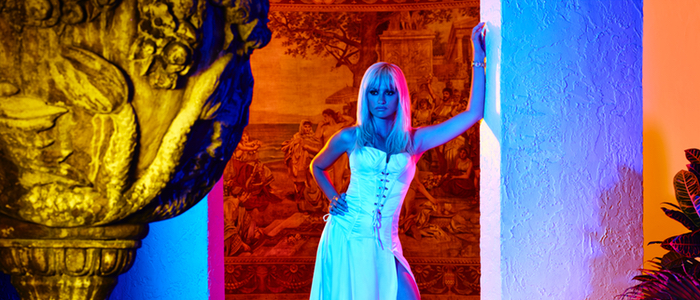
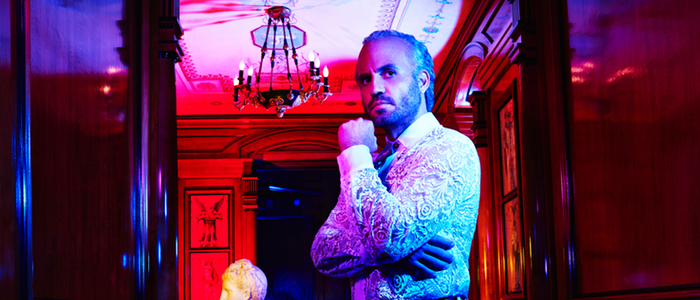
Episode 8 begins in 1957, Italy. Gianni Versace is a child, summoned to show his sketches of dresses to his mother. His mother tells him to follow his passions and pursue whatever career he desires. At school, a teacher insults Gianni after he self-identifies as a pansy. Later, Gianni’s mother patiently shows him how to make the dress he’s been fantasizing about.
Cut to San Diego, 1980. “Prince” Andrew Cunanan’s siblings note his father’s disproportionate affection for their youngest family member as they move into a new home. Andrew is given the largest room in the house.
Both Andrew’s father, Pete, and Andrew get dressed for respective interviews: Pete for a position as a stockbroker, Andrew for a spot in an elite private school. Pete extolls the virtues of his biography (much to the chagrin of his interviewers) while Andrew lists his most powerful wishes at the behest of schoolmistresses: He wants a Mercedes and a good relationship with God.
At home, Pete’s temper becomes obvious as he chastises Andrew’s mother for her frail nerves. Pete reads Andrew a book on etiquette as he falls asleep.
Pete lands the job; Andrew gets into the school. During Pete’s first day at work he’s shown failing at landing deals, but pretending like he’s succeeding. He buys a new car for Andrew (who is far too young to drive) that day. When Andrew’s mother is confused about Pete’s behavior, Pete pushes her to the ground. In the car, Pete explains that Andrew’s mother has been weak her whole life and that Pete is both Andrew’s mother and father. He rolls the window up as mother approaches the car.
Seven years later, Andrew showboats (and is called “a f*g”) during class photos while Pete works in a much less fancy call center. Andrew’s mother asks him about a new beau and Andrew wonders aloud what she’d think if he was dating an older woman. That night, Andrew has a secret rendezvous with an much older man. The man warns Andrew that their relationship must be kept hidden, as he is married. He drives Andrew to a high school party where he reveals an outrageous leather outfit, attracting attention on the center of the dance floor.
Andrew meets a girl named Lizzie who later admits she’s a married “grown-up” pretending to be a student because she missed so many opportunities as a home-schooled teen.
“I’m an imposter,” she says.
“All the best people are,” replies Andrew.
The next day, Pete’s bosses confront him about the lies he’s been telling at work. They inform him that the feds are aware of the scams he’s been running, making up fake stocks and stealing money from clients. He rushes to his desk and begins shredding papers.
He books a flight out of town for the same day. Andrew sees his father drive off into the distance. Andrew’s mother explains to her son that they have nothing left: Pete sold the house, emptied the bank accounts, and maxed out the credit cards.
Andrew tells his mom that he’s going to Manila to find his father. She warns Andrew that Pete is dangerous but Andrew will not listen.
Andrew manages to trace down Pete in the Phillpenes. Andrew asks where Pete’s been hiding the money that he had promised Andrew.
“Out of reach…” says Pete, as Andrew slowly realizes he’s been deceived. There never was millions of dollars stored away. It was all a lie. He confronts Pete.
“You were everything to me, Dad. But it’s a lie. And if you’re a lie, then I’m a lie. And I can’t be a lie,” says Andrew.
Ryan Murphy has embellished some of the details of Cunanan’s childhood, but a few of the more striking factoids are bizarrely true. Andrew, for example, did not cry as a baby — even when injured — according to testimony from Andrew’s parents themselves as recorded in Vulgar Favors by Maureen Orth. What the young Cunanan’s bizarre detachment from reality portended is quite clear now.
Surely Murphy seeks to humanize Cunanan by showing the strains of mental illness running through both his mother and father. And while Teen Vogue may think that sympathetic portrayals of (even objectively abused) serial killers in some ways romanticizes them, American Crime Story encourages empathy more than attraction.
What if Andrew had lived in a less dysfunctional home, like Gianni had? What if he wasn’t raised with materialism as the core tenet of his morality? Could he have grown up to be another Versace, boundlessly genius in some niche field? Or would his anger have festered anyway — always unsatisfied, always compelled to lie? Was it in his DNA? The lies are what brought Andrew’s father down, and perhaps what ultimately destroyed the younger Cunanan, too.
The last four episodes of American Crime Story: The Assassination of Gianni Versace continued telling in reverse the story of Andrew Cunanan’s rampage, weaving it with occasional tidbits about Versace himself. And as such, it wrestled with the same problem: Cunanan’s story is rich, fascinating, compelling, and creepy, hard to look away from but also hard to watch. The Versace stuff feels perfunctory, like the show is trying not to bounce the checks that its title and premiere already cashed.
But, now that the season is over, I have to say I think laying out the story this way was smart for a couple reasons. One, it maintains tension in a situation where we already know the outcome. A lot of people might not be aware of exactly who Andrew Cunanan killed before he shot Versace, and once you see him so casually bludgeon and shoot those people, everyone the younger Cunanan comes across feels like someone whose life might be in imminent danger. But two, and this one is the most important: It prevents the viewer from feeling any sympathy for a serial killer. If we’d started this show with Young Andrew, the sweet, innocent kid whose family life may have kick-started his mental undoing, we might have felt pity. And as we watched him lose his grip, we might have carried that pity into his downward spiral, into his murders, and past his victims. Which isn’t fair to them; Cunanan is not the hero of the piece. He is its horror. Telling it backward, then, means we saw the stark brutality of his crimes — of what he was capable of doing, and how glibly he could move on from it — before we saw the buildup to them, and while we could see the pieces the show was trying to put together about the hows and whys of his sins, we had those images in the forefront of our minds. So I felt sadness, but no sympathy.
It was supremely well-acted. All the Cunanan pieces were layered and interesting; the Versace stuff, less so. And in the end I think it achieved what it should: It painted a picture of a twisted, broken individual who went on a killing spree we’ll never truly understand, without in any way making us like him, or feel for him in place of his victims.
Here’s how they laid it out:
Ep. 6, “Descent”: Right after the hour devoted to poor Jeff Trail, and how achingly wonderful and tragic Finn Wittrock made his struggle — to me, that episode was a prime example of why backward storytelling worked; it was so much more affecting, knowing that Jeff was doomed, knowing this friendship that he thought was bringing him into the light was actually going to be his demise — we are introduced to Andrew’s past in San Diego. He’s living with a rich older man named Norman Blatchford in his sprawling oceanside manse; while he pretends to the world that he’s just Norman’s decorator, and they have separate mattresses, it’s implied he’s on Norman’s payroll as a companion, and Norman’s friends all sassily side-eye him — or in one friend’s case, actively call him out on his bogus airs and graces. For Andrew is throwing himself a lavish birthday party at Norman’s pad, inviting Lizzie, Jeff Trail, and his new crush David Madson, whom he has decided is his One and Only. Cunanan — per the show — asks Jeff Trail to give him expensive shoes and tell some white lies that will make Madson jealous. What ensues is Andrew seeing Jeff and David smiling and making small talk as Andrew gadflies about the party, which we’re meant to think informed some of the darkness that descended — and some of his cruel decisions with Jeff, like “accidentally” outing him via postcard. (This means the Trail episode is a SLIGHT timeline blip because we see Andrew and Jeff meeting in that hour, but here they’re already friends. Finn Wittrock is a Ryan Murphy guy, and I’m thinking they gave Trail his own episode as Emmy bait for Wittrock.) It ends with Norman (Michael Nouri from Flashdance, hotter as a silver fox) kicking out Andrew, and Andrew pulling a mini-STELLAAAAAAA by sneaking back to the house and contemplating breaking back into it.
We also see Andrew convince David to come to L.A. with him and spend time in a lavish hotel penthouse, echoing a lost weekend we’ll later see from when they met in San Francisco. It’s here that Andrew lays out his feelings for David and his belief that they should get married, and David spurns him, gently suggesting that perhaps Andrew thinks that David is The One because there haven’t been enough special someones in Andrew’s life. It’s also implied that David is starting to see through some of Andrew’s elaborate stories about his work, his life, his family, because he then kindly suggests they sit down and really get to know each other. With truths. So they start going back and forth, and David’s expression is so hopeful when he asks about Andrew’s family. Andrew opens his mouth… and starts talking about his stockbrocker father, and literary publisher mother, and how they adored him and gave him the master bedroom and she’d bring him lobster lunches at his fancy prep school. The air goes out of David — it’s like he sees in that moment that Andrew simply can’t be himself — and he visibly retreats. It’s the moment Andrew really loses him, the show implies, which is ironic because parts of that turn out to be truer than anything he’s ever told anyone else.
Ep. 7, “Ascent”: Here, we jump back to Andrew’s rise in San Diego’s social scene. He begins as a humble pharmacy employee with aspirations, living with a scattered, dreamy mother who seems only vaguely connected with reality. To make ends meet after he’s fired, Andrew tries to sign up with an escort agency that cruelly rejects him for being too smart, too square, too hard to sell. Almost out of spite, he goes out and attacks the job on his own, eventually turning up at the opera as polished as a gem and targeting Norman’s group with his charms. At a dinner party later, he’s almost tussled over by Norman, David — the snide, skeptical friend from Episode 6 — and a rich older man named Lincoln, who ultimately wins. Andrew asks for an expense account and cash and promises to turn their home into the heart of gay San Diego society, and Lincoln hungrily agrees. But then, high on his cash flow, Andrew — and some other suits his own age that he’s befriended — sees David Madson alone in a bar, and buys him a drink. A tryst in a hotel penthouse ensues, and Lincoln finds out and cuts off Andrew. Then he goes out and picks up a ragamuffin at the local gay hangout and brings him home; Lincoln reads him as a haunted loner, but instead, the man jumps at Lincoln’s touch and then bludgeons him to death with an obelisk. Andrew has returned home by now and is watching from the shadows, first in horror and then in fascination, as his benefactor is murdered and then he urges the killer to run. Supposedly, the murder is true, but no one knows whether Andrew witnessed it; the show uses it to imply that it awakens Andrew’s latent dark side. And intriguingly, it’s very similar to the way he later murders Jeff Trail, and partly evocative of Lee Miglin’s death.
Meanwhile, the show has paid Penelope Cruz a lot of money, presumably, so there’s a light storyline about Gianni grooming Donatella to come into her own. They do this by designing a dress together that she wears to the 1992 Met Gala, one they famously replicated later, and which has a bodice of belts. It was polarizing in the press but caused a stir in fashion circles; this happens in the show concurrently with Versace’s diagnosis with ear cancer and Donatella needing to step into a more commanding role at the company while he recovers. The parallels here are, I think, that tragedy brought both these people into who they became: Gianni’s illness gave Donatella the exprience she would later draw on to run the company, and Lincoln’s murder may have flipped a switch within Andrew that turned him from a pathological liar into a psychopathic serial killer. But as usual, the connections are loosely drawn, and the show slows down to a halt when the Versaces appear. Edgar Ramirez is good, and an uncanny likeness, and Penelope is… fine. It just feels so much like she’s acting around a mouthpiece.
Ep. 8, “Creator/Destroyer”: Here, we have a story of parents. Gianni’s mother, a dressmaker, encouraged her son’s latent artistry. When he was bullied at school for sketching dresses in class, his mother’s response is to piece together the ripped-up sketch and make it with him for real. She, the show suggests, built her son up; Cunanan’s father put Andrew on a pedestal and then may ultimately have helped destroy him.
We meet Modesto “Pete” Cunanan when he is moving his family from a small house to a two-story palace. Andrew’s other three (I think) siblings look on sullenly as they load and unload the U-Haul, and ride in the back with their mother, while Andrew rides shotgun and is led upstairs by his father to a master suite all his own. So that detail he told David was true. Andrew is very quiet, and sweet; clearly bright, but timid. No one quite knows why Modesto favored Andrew so heavily, but he did make everyone else sleep in cramped quarters, and he would serve himself and Andrew at dinner and leave the rest to fend for themselves. Even Andrew seems aware of the power imbalance and that Modesto is making something of a false god out of him, but is too cowed to complain. It’s telling when the ladies interviewing him for his fancy school ask him what his one wish would be, and when his scripted answer falls apart somewhat, Andrew offers up instead, “To be special.” This drives him straight to his doom, but in the near term, it turns him into the kind of attention-grabbing student at school who wears an unbuttoned shirt and necktie in his senior photo, or a red leather jumpsuit to a nearby party (in real life, he apparently donned it for Prom). He also trades sex with older men for money and convinces himself these are special relationships, which his clients quickly reject. It’s as if he spends his life trying to earn the platform and the adulation his father randomly gave him because he knows that was founded on dark things. Here he does become friends with Lizzie, who is awesome, and sees only Andrew’s buoyant side. Poor Lizzie. And poor Mrs. Cunanan, who becomes a shell of herself as events unfold.
Indeed, there is also a scene in which the show posits that Modesto sexually abused his young son, coming to his bed and telling him to tap into the side of himself that made no sound when he burned his foot as a baby. “Not a sound,” he repeats, switching off the light. No one seems to know if that’s true, although the favoritism absolutely was. Interestingly, Andrew’s siblings disappear entirely from the episode after the beginning, and are never mentioned again. The show almost throws it in there as if to be like, “Maaaaybe this is why Modesto favored him so much?” but then never has a take on the effect this had on Andrew. It might’ve colored his reliance on older men, specifically older providers who could give him the comfort his father later would not.
Modesto was also a gross shyster. He wields his wife’s post-partum depression as a threat. He turns on a dime when he decides people don’t have faith in him. He ignores his other children. He talks his way into a job with Merrill Lynch, but his gift of the gab is no match for his inability to play the markets. He quickly realizes he’s in over his head, and out of desperation, he starts swindling clients and tumbling to less and less prestigious firms until he’s busted by the FBI and flees to the Philippines. The family is left with nothing, and worse, he knew it was coming and did nothing to protect them. Andrew flies to Manila, convinced his father has money socked away and a plan for the family, and is galled to learn that Modesto does not and doesn’t care and never would have reached out to them. Andrew shatters. It could be because he coped with his father’s abuse by putting faith in him — like, needing desperately to believe that his person who has always told you that you’re amazing really is right, and really is good, and really is a straight-shooter. And that the self-worth he inflated you with is genuine and not based on lies. Whatever it was, Andrew finally sees his father for the hollow man he is, and starts to cry as Modesto taunts him. Andrew pulls a knife on him, but Modesto sneers that he doesn’t have it in him to kill. (This feels on-the-nose.) Andrew doesn’t, instead returning to San Diego to apply for a job at the drugstore. When the friendly Filipino clerk presses him on his ancestry, a bitter Andrew unspools his first lie about his background and the one he would tell the most: that Modesto owns countless successful pineapple plantations.
Ep. 9, “Alone”: We now pick up the manhunt after Versace’s death. Andrew originally reacts as nonchalantly as he did after Lee Miglin’s death, breaking into a nearby houseboat — more house than boat, but bobbing on the water — and celebrating with Champagne and snacks as he watches the coverage. But then he can’t get out of town, because checkpoints have been set up everywhere. He becomes increasingly dirty, desperate, and hungry, holed up in the houseboat with nowhere to go. A weepy call to Modesto extracts promises that Modesto will come get him, which I thought were going to lead to Modesto turning him in for the reward — but in the end he just goes on TV and gives a smug interview about how he and Andrew are working together to sell his life rights to Hollywood. Aghast, Andrew watches this and realizes that his father will never, ever be there for him, not ever, and that he is well and truly stuck. So he fires a gun at the TV in anger. I think this is pitched as his undoing, although apparently he didn’t actually do that. The caretaker or landlord, or whatever, comes into the place and sees it’s in disarray and Andrew shoots a gun at the ceiling to make him flee. So the cops come, and as they slowly climb up the stairs, Andrew sits on the bed and puts a gun in his mouth and pulls the trigger.
Word of his death is the only thing that makes Marilyn Miglin feel like the nightmare is over. For David Madson’s parents, it meant not being able to prove that David had nothing to do with Jeff Trail’s murder, and getting no answers about why he went on the lam with Andrew. What for her was closure was, for them, a door left ajar forever. The show takes liberties with Versace’s lover Ricky Martin, claiming he tried to kill himself after Donatella coldly told him that the house he was promised is controlled by the company now. In reality, he did live in Lake Como for a while and credits Elton John and their pals with helping him get over it. And Donatella, obviously, rises to the occasion, takes control of the company, and turns it into an empire, although all we see is her lighting a bunch of candles in the mausoleum.
After nine grueling and emotionally draining weeks, The Assassination of Gianni Versace: American Crime Story came to an end this week in one epic finale episode. Weeks of flashbacks have been leading up to this episode, and the pay off was worth it.
We’ve been saying this for weeks but Darren Criss’ performance in this episode really brought home all of the emotions of this horrible tragedy, and I daresay, made us feel a little sorry in the end to see him go, though the pain Andrew Cunanan caused everyone is one that will linger on for years. Criss wasn’t the only stand out performer from this episode as both Ricky Martin and Penelope Cruz did amazing in displaying their utter heartbreak and devastation caused by Gianni’s death.
Without further ado, let’s discuss “Alone.”
Back To The Start: The episode picked up exactly where the season premiere began, with Cunanan frantically strolling down the streets of Miami Beach, gun in hand, waiting for the perfect shot at Gianni Versace. We all know how that ended. Shortly after the murder, Marilyn Miglin was the first familiar face to reappear; the FBI showed up at her Miami hotel room to inform her that it was no longer safe for her to be in Florida, offering to help transport her to safety. She said no and promptly proceeded to let the police have it for their epic screw-ups.
Justice Served Wrong: Miglin wasn’t the only one displeased on how the authorities have been handling the whole Cunanan situation. Ronnie was also interrogated, providing him the chance to roast the cops on how seriously they’d been taking this case. To him, they haven’t been doing all that they can because Cunanan killed a bunch of gays.
Hiding In Plain Sight: As for Cunanan, he was holed up in some stranger’s houseboat literally eating dog food, practically daring the feds to bust him. He spent most of his time watching reports about himself on the news, and interviews with his father, which triggered Cunanan so badly that he shot his television screen. Speaking of the homeowner, it was his call to his caretaker that triggered the beginning of the end for Andrew. A burglary was reported by the caretaker, and the next thing Cunanan knew, the police helicopters were circling overhead. A negotiator tried to reason with Cunanan but he wasn’t about to give in. The infamous killer then placed a gun in his mouth and pulled the trigger before he could be apprehended.
A Tragic End Of A Life And Love: Shortly afterwards, we were taken inside Gianni’s funeral, during which Antonio discovered that he might as well have died along with his lover. The priest at Gianni’s funeral ignored him, and adding insult to injury, Donatella tells him that he’s not allowed to live in one of Gianni’s house as promised. In closing, Cunanan is later buried in a public mausoleum while Donatella prepares to meet with Versace’s lawyers and Antonio attempts suicide.
The finale of American Crime Story season 2 is titled “Alone,” a theme that is seen throughout the excellent episode. This season has quietly been one of the strongest things on TV right now (maybe the best show currently airing). Credit must be given to the writers and producers, because they absolutely stuck the landing, which is a tricky thing with a true story that ends in such a way as Andrew Cunanan’s story ended.
The thrust of the action returns to present-day Miami Beach (present day for the show), where Cunanan (Darren Criss) is on the run and then in hiding because of the high-profile nature of Gianni Versace’s murder. Unlike with Cunanan’s previous victims, Versace’s killing has captured the attention of the entire country, and therefore a manhunt involving hundreds of federal agents has descended upon the city.
As such, Cunanan has basically nowhere to go. He breaks into a houseboat and posts up there, initially celebrating his fame and being able to get away with killing Versace (Édgar Ramírez) in broad daylight. But as the days go by, Cunanan can’t leave the city because of police checkpoints, and he becomes increasingly desperate, to the point where he eats canned dog food because there’s nothing else in the houseboat.
In a heartbreaking scene (and it’s quite a credit to Criss’ performance that this scene is even remotely sad), Cunanan calls his father in Manila and cries about how he doesn’t know what to do. Modesto (Jon Jon Briones) promises he’ll be on the next flight out and that he’ll come get Andrew, but the next day, Cunanan watches on TV as his father is interviewed in Manila. Clearly, Modesto hasn’t even left the Philippines yet — plus, he makes up complete lies about his conversation with his son.
The apple doesn’t fall far from the tree, but Andrew has never been on the receiving end of the lies in quite this way, and it’s devastating.
When the caretaker of the houseboat comes by and finds Andrew there, the cops descend and the manhunt ends when Cunanan shoots himself in the head.
While all of this has been going on, there have also been glimpses of just how “alone” everyone else is. Cunanan’s mother Mary Ann (Joanna P. Adler) is alone and terrified, ushered out the door of her apartment by federal agents while reporters scream questions at her. Marilyn Miglin (Judith Light, who is outstanding in this episode) is trying to soldier on with her life and her business, but she is clearly a little lost without Lee and in a lot of pain.
Ronnie (Max Greenfield) is shown defending himself alone to the FBI, railing on them for not caring about these crimes because they involved gay men until a victim was so high-profile that they couldn’t ignore it anymore.
David Madson’s father is having to defend his son against accusations that David (Cody Fern) was involved in the murder of Jeff Trail (Finn Wittrock), which, by all accounts from law enforcement, he was not.
Versace’s partner Antonio (Ricky Martin) is utterly alone, even when surrounded by Versace’s friends and family, because no one will really acknowledge their love and the pain Antonio is in. In case you were wondering, Antonio is still alive, so the suicide attempt we see at the end of the episode was unsuccessful (if it even happened; we can’t find anything to corroborate that it did).
Even Donatella (Penelope Cruz) is alone, though she has a better support system than most. But she is haunted by refusing to take her brother’s call the morning he was killed, which she finally confesses to her older brother Santo (Giovanni Cirfiera) after the crowds and press have dispersed and they are alone.
It’s an incredibly tragic ending to a tragic season, but what else could it have been? Andrew Cunanan clearly was in a lot of pain and he inflicted that pain and suffering on nearly everyone around him, first psychologically and then as an actual killer. He then finally turned his pain and desperation back on himself.
The Assassination of Gianni Versace: American Crime Story Season 2 Episode 9 “Alone” is still compelling to watch but falls a little flat. “Alone” was always going to be a hard sell because much of the episode, Andrew is, well, alone and he is more dynamic when he is with other people.
We have seen Andrew in all sorts of forms—charming, predatory, menacing, confident—but when he’s by himself, he is just kind of blah.
In the days after Andrew killed Versace and there was a stepped-up manhunt in Miami, Andrew was in hiding. He could no longer afford to be out in public or else he risked capture.
So, much of the episode is Andrew trapped in a houseboat.
A highlight of “Alone” is seeing Judith Light as Marilyn Miglin again. She steals every scene she’s in and damn it, when Marilyn is on the verge of tears, I’m on the verge of tears too.
The story she tells about how she wanted to make a perfume that her mother would have worn is such a great story and evokes so much emotion.
Even Andrew is in awe of her. But there is no glimmer of remorse.
It’s interesting to see how when Andrew first breaks into the houseboat, he’s still giddy from killing Versace and to see his name paired forever with Gianni’s. The houseboat isn’t exactly lavish, but Andrew enjoys a bottle of champagne to celebrate his latest murder.
But then, food runs out. He eyes a can of dog food attempts to eat it and then vomits.
No, he is not that desperate–yet.
After seeing David Madson’s father on TV (which Andrew seems to be a little obsessed with the coverage of himself), he calls his father.
I wasn’t expecting to see Modesto again but even watching Andrew and Modesto talk on the phone elevated the excitement of the episode.
I never thought for a minute though that Modesto was going to help him. In fact, it wouldn’t be surprising if he had ratted out Andrew for financial gain.
As the days go on, we see that the rest of the dog food has been eaten. Modesto has not come to save Andrew and he has become the cockroach he trapped under glass.
Without much fanfare, Andrew is discovered at the houseboat and it is there, that he puts a gun in his mouth and pulls the trigger.
We’re then taken to the scene from the first episode where Gianni and Andrew are backstage at the opera. Andrew tells Gianni that he wants to be special and he’ll convince the world that he is.
Gianni: It’s not about persuading people you’re going to do something great—it’s about doing it.
And there we have it summed up in one line how completely different these two men are, no matter how they are forever connected.
“Alone” did show Donatella and Antonio briefly although it’s just plain sad to see how Antonio was treated. He isn’t acknowledged and is shunned at Gianni’s funeral and then is told that he may not have anywhere to go as the property Gianni promised him is controlled by the label’s board.
I think it would have been better if throughout the season we saw the aftermath of Versace’s murder intercut with Andrew’s previous murders. There isn’t much of a build-up to when Andrew is discovered and when he commits suicide.
By breaking up the manhunt, this final episode may have had more energy. I just feel like I watched an episode of Andrew watching TV.
The characters may not reflect their real-life counterparts one hundred percent, but I was invested in each and every one of them. There are lots of memorable moments throughout the season, but none of them felt sensationalized. And even though Andrew was humanized, his actions were never excused.
It’s disappointing that “Alone” is the weakest episode, but it doesn’t diminish the excellence of the episodes that came previously.
July 15, 1997. Andrew Cunanan slo-mos down the just-rained-on sidewalks of Miami Beach, accompanied by Ultravox’s “Vienna.” He passes people in friendly conversation; he passes a pair of beat cops. He comes upon Gianni Versace’s mansion, the sun now shining, and as Midge Ure wails, “It means nothing to me / this means nothing to me,” we see Cunanan draw on and murder Gianni again. Gianni’s fingers twitch again. Cunanan looms into the sun and blocks it out to look down Starman-ishly on Gianni’s body. | 22 March 2018
July 15, 1997. Andrew Cunanan slo-mos down the just-rained-on sidewalks of Miami Beach, accompanied by Ultravox’s “Vienna.” He passes people in friendly conversation; he passes a pair of beat cops. He comes upon Gianni Versace’s mansion, the sun now shining, and as Midge Ure wails, “It means nothing to me / this means nothing to me,” we see Cunanan draw on and murder Gianni again. Gianni’s fingers twitch again. Cunanan looms into the sun and blocks it out to look down Starman-ishly on Gianni’s body.
Later, Cunanan waits to cross the street, smugly watching cop cars scream past him before hustling over to the houseboat on the other side. Looking strangely apprehensive given everything else he’s done with it, he grips the gun barrel and uses the butt to break the houseboat door’s lock, then lets himself in and creeps towards the kitchen in the dark. More confident now that he’s established nobody’s there, he browses the cabinets, then helps himself to a bottle of champagne with an entitled puss on, typically dropping the detritus from the bottle neck onto the floor without a second thought. He switches the countertop TV on to enjoy Dan Rather’s somber report on Gianni’s death, then leaps over the back of a deep white couch to keep watching on the big TV in the living room (flanked, hilariously, by gold sphinxes). He hasn’t quite settled in when the champagne, shaken up by its journey, self-pops on the table and scares the shit out of Cunanan.
He flops back on the couch, laughing at himself, but sits forward again when the broadcast shows side-by-side pictures of Gianni and the prime suspect in Gianni’s murder – himself (Criss, Photoshopped relatively poorly for this production onto one of the real photos often used in the wanted posters). “Oh my god,” he murmurs, not stricken or fearful but almost surprised that it happened at all, much less because of him, then repeats, almost triumphantly, “Oh my god!” As the broadcast continues in VO, Cunanan climbs to the rooftop balcony of the houseboat, a curtain (I think) slung around his neck like a tuxedo scarf, drunk and turned on by his own infamy as he watches helicopters search the streets farther down the shore. He slumps into a lounge chair and swigs champers with a contented smile.
Tampa. Marilyn Miglin is packing her case before a broadcast when there’s a heavy knock at her hotel room door. It’s the FBI. “Is it that man?” she asks, then confirms that her children are safe before letting them inside. The agents explain that they believe Cunanan shot Gianni. Shaken, she sits down, wondering almost to herself, “When will this end?” Then she repeats it, more firmly, before proceeding to clock them for not catching Cunanan in the two months since he murdered her husband – how many more people will die? how much more pain do they think she can take? what has Cunanan been up to all this time? “We don’t know yet,” the lead agent is obliged to admit, as well as that Cunanan “evaded capture” in Miami. Marilyn’s are-you-fucking-kidding-me face
is particularly impressive work from Judith Light given that her fake lashes in this scene have their own congressman, post office, and vegan bakery.
The Republic Of Lashistan is decidedly unimpressed with the agent’s suggestion that, given Tampa’s proximity to Miami, she should leave Florida. (As am I; it’s nearly 300 miles, and whatever else you might say about Cunanan’s state of mind at this point, the idea that he would double back to kill a spouse, whom he would likely find at a television studio, is a non-starter.) A tear rolls down Marilyn’s cheek, but she’s like, incompetent says what? They want her to run, to hide “from him,” but she’s never missed a broadcast and she won’t start today, so they can provide whatever security they want to: on with the show. On the set, Marilyn marches up to the display, chuckling forcedly about her ability to break sales records under pressure. Her co-host gently tells her she’s sorry. “I need it to stop,” Marilyn grits.
The next morning, Cunanan wakes up to a news broadcast describing him as a “male prostitute” serving “an affluent clientele.” He puts on his glasses as the VO continues that he’s articulate, well-dressed, armed and extremely dangerous, and the newest member of the FBI’s Ten Most Wanted List. He peers expressionlessly at the Wanted card on the TV screen, then pads into the owner’s walk-in closet to shop for an outfit, settling on an all-yellow number as, in the next room, Marilyn’s voice talks about Lee as “a man who exemplified courage, honor, and dignity.” Cunanan doesn’t seem to hear this as he looks in the mirror, smirking. “We had a fairytale marriage,” Marilyn tells the press, faltering just slightly. “He was…my prince.” I don’t know why it’s here that I find myself thinking about those lost two months between when Cunanan murdered Miglin, then William Reese, and when he fetched up outside La Palazzo Versace and killed Gianni. American Crime Story really hasn’t dealt with them at all, unless you count the Ronnie interlude, which only seemed to last a day or two at the end, and it’s not that I think the show should have tried to fill in that gap, or that anything particularly noteworthy happened, or might have. Perhaps the Orth book has more insight, although my sense is that nobody really knows what Cunanan got up to during that time. But ACS did a great job imagining Cunanan’s time with David Madson after the killing of Jeff Trail, and Darren Criss and others have said that some episodes started out twice as long as what we see on broadcast…I don’t know. If there’s ever a director’s cut of the season, I’ll certainly watch it, whether or not it contains a theory or fantasia on the missing weeks.
Anyway: back to what is covered. Cunanan heads out in his sunny ensemble, complete with yellow ball cap, and reads the L.A. Times coverage of Gianni’s murder while waiting for an unsuspecting driver to drop her keys into an easily heistable purse, which she does. He tails her to an outdoor café and lifts the bag easily, walking past a wanted poster with himself on it in the café window and helping himself to her Mercedes. He’s listening to, and giggling delightedly at, radio coverage bemoaning the instinct to blame the murder of a prominent Italian on the Mafia when he’s forced to stop for a police checkpoint. When it’s clear the cops are taking more than a cursory glance at the cars ahead of him, Cunanan U-turns it on outta there, cursing. He’s parked on a side street, perusing a map, when an older guy comes out from between two houses and says Cunanan looks lost. He is; does the older guy know any way off the island besides the causeways? They seem really crowded. Older Guy sighs that every road off the island has police checkpoints at the moment. Riiiight, right, Cunanan acts: “Andrew Cunanan. It’s terrible, I hope they catch him.” Bold move. Older Guy asks, “What’s your name, young man?” Cunanan gives the Kurt DuMars alias, then bustles as casually as he can manage back into the front seat, thanking Older Guy for his help. Older Guy watches him go.
Cunanan, in a snit, parks the Benz under one of the causeways, pitches the keys into the water, and bellows in frustration.
Back in San Diego, Mary Ann Cunanan is hunched under a blanket she’s draped over the TV, I guess to hide her smoking, although she doesn’t seem to have cared about that before? In any case, the effect is of a twisted ritual of prayer, especially with the saints candles and crosses on the same table.
She’s creepily stroking the TV screen when there’s a knock on the door. It’s the cops. She unfastens the chain slowly, then opens the door to clasp one officer’s shoulder and ask, “Have you killed my son?”
Cunanan, limping back to the houseboat, comes across a wanted poster altered to show him with lipstick, and with lipstick and a blonde wig.
Back at the houseboat, he peels off his shirt and slings it over a chair, then guzzles a Coke and continues to marinate in the coverage of his misdeeds.
What’s more American than Coca-Cola and gun violence. Sigh. He’s admiring the wanted posters of himself he’s apparently collected when the coverage changes to footage of Mary Ann getting taken out of her apartment under the same blanket as before. She deer-in-headlightses at the jostling news crews and photo flashes before she’s eased into the back of a cruiser. Cunanan watches, taken aback.
At the Normandy, Detectives Lori and George roust Ronnie, accusing him of lying to them about knowing Cunanan – he stayed there, and he and Ronnie were friends. Ronnie lies again that Cunanan told him his name was Kurt, and he only just now saw Cunanan on the news; he was totally just going to call them. Det. George is like, cute; you can come with us. As he’s led out of his room, Ronnie grumps to Det. Lori, “We weren’t friends.”
In an interrogation room, Det. Lori continues to nope Ronnie’s version of events, saying Cunanan had been hiding in Miami for two months. Ronnie snorts that he wasn’t hiding, “he was partying,” and Lori’s like, great. Where? She lists a few gay clubs, and Ronnie snarks that ohhh, okay, “the only lez on the force” must have been looking for Cunanan. Lori pulls one of her patented “bye bitch” faces
as Ronnie sarcastically muses that the other cops, they didn’t care so much about finding Cunanan when he’d only killed a handful of “no-name gays.” Why might that be? George snaps that they have over 400 people looking for him, and Ronnie’s like, yeah, now you do, now that he’s offed a celebrity. There’s a little more salty back-and-forth, with Ronnie not having Lori’s bluff that he’s an accessory to murder and George not having Ronnie’s contention that they don’t really care about catching Cunanan, before George asks if he never mentioned Versace. Ronnie takes a swig of coffee and says he did nothing but, then muses that “we all” talked about Versace, about what it must be like to be so rich and powerful “that it doesn’t matter that you’re gay.” He adds that “you were disgusted by him long before he became disgusting,” which is true, and a good line, but like the rest of this speech not super-credible despite Max Greenfield’s estimable efforts. Ronnie goes on that George et al. would prefer “them” to stay in the shadows, “and most of us, we oblige.” People like him just drift away…get sick, nobody cares…"but Andrew was vain.“ He wanted to be heard, wanted people to feel his pain, "wanted you to know about being born…a lie.” Lori flinches a little, possibly at the clumsiness of this writing compared with the subtler work we’ve gotten the rest of the season, as Ronnie concludes that Andrew isn’t hiding. “He’s trying to be seen.”
Well, metaphorically. Literally, he’s trying to get out of town, but his next effort – breaking onto a boat at the marina in the hopes of sneaking out of Miami by sea – is stymied when a dock “neighbor,” mistaking him for the owner, comes onboard looking for “Guillermo.” He’s in the head, gun cocked, as the neighbor comes below decks calling for Guillermo, and when she pushes on the door and it’s pushed forcefully closed in response, she knows something’s hinky and hurries away. He exhales, then grabs his gear and bails, hopping from bow to bow as he tries to get out of the marina.
Which he does manage to do, and by the time he returns to the houseboat, the neighbor is leading Dets. Lori and Luke to the boat he tried to take, as he sees through a pair of binoculars. No time to feel truly trapped yet, though, as he can hear Lizzie Coté delivering a statement on the bedroom TV. She’s addressing herself directly to him and saying she knows he’s not the “despicable” person portrayed in news reports. He sinks to his knees, staring plaintively at her, as she goes on that she knows who he really is and loves him, “unconditionally.” The Cunanan she knows isn’t a violent person. “I know that the most important thing to you in the world is what others think of you,” she adds (emphasis hers); he still has a chance to show everyone else what she “and your godchildren” know. It’s time to end this, “peacefully.” We go to the ad break on Cunanan’s furrowed brow.
When we return, it’s another news show, this one about Jeff Trail and David Madson, the voice-over wondering a little too pruriently, “What did these two men do in their days on the road?” This is an understated dig at the salacious coverage, and investigative judgments, that a so-called gay serial killer received – that, somehow, the possibility that anal intercourse occurred is the most important thing to suggest and the chief aggravating factor in the case – and is completely in line with the tone of the reporting at that time. When I say that Ronnie’s dialogue speaks the truth but lands with a thud, I’m contrasting it with material like this, which is used perfectly whether it’s contemporaneous footage or a bone-dry recreation. The newsmag goes on to interview Madson Sr., who defends his son as a victim, not an accomplice, as Cunanan sits and listens, sweating. It doesn’t take long before Cunanan can’t hear anymore, and begins lunging at the various television sets to turn them off. He stops before switching off the last one, though, to look at a picture of David that’s now onscreen.
As with the Lizzie presser, and with Mary Ann as she watched footage of him, it’s as though they’re there with him, speaking to him. It’s the only companionship he can really manage, an idea of it, a picture of it that he can turn off. And when Madson Sr. says his son is a good man – was a good man – that’s just what Cunanan does, kicking at the off switch to silence a version of life and manhood he can’t access.
Later, he sits on the beach, alone, listening to the hectic sounds of nightlife on the boardwalk, before returning to the now-emptied fridge at the houseboat. He goes through the trash and makes sure he’s gotten every last blob of yogurt from a discarded cup, then spots some dog food. The attempt fails, as he can’t hold down a single spoonful before horking it back up, onto the wanted posters on the counter. He’s scraping his tongue with a paper towel (which he then throws on the floor, where he’s also left the upended garbage) when Marilyn Miglin’s segment comes on the home-shopping channel he’s got on. Marilyn tells a sweet story about the perfume she’s hawking, about how she wanted to go back in time and give her mother one of the luxuries she couldn’t afford, working so hard after Marilyn’s father died and putting every penny towards their room and board. Cunanan pulls up a chair and stares at the screen, ensorcelled by Marilyn’s tale of her wonderful dad and his early death, of her wishing she could go back in time and give her mother this thing she made…"as a way of saying how special you are.“
Now Cunanan’s at a pay phone, calling Modesto. A cousin brings Modesto the cordless; Modesto, an array of articles about his son on his desk, wonders how much he should charge for an interview "this time,” and looks horrified to hear who’s actually on the phone. The second he hears Modesto’s voice, Cunanan starts bawling like a child.
Modesto reminds him that “men don’t cry, remember?” Cunanan tries to ignore this, sobbing that he’s in trouble; he needs Modesto to come get him. Modesto says without hesitation that he’ll fly right over, and to hell with the charges still pending against him. Cunanan tells Modesto where he is in Miami. Modesto repeats that he’s coming, and when he does, “I will find you. And I will hug you. And I will hold you in my arms, like I used to. And it will all be okay.” Cunanan leans his head against the top of the pay phone wistfully, then asks, “You promise?” Of course Modesto promises! Cunanan is to pack some clothes and get ready to go as soon as Modesto arrives. The operator breaks in to ask for more money, and Cunanan, nodding, so eager to believe his salvation is nigh, burbles that he’s out of time. Modesto says again that he’ll be there soon.
Cunanan puts a cassette in and packs: clothes, books, a French passport. Not sure what the music is – sounds like Gershwin; could be Debussy; let me know in the comments, as Shazam didn’t come through for me here – but whatever the case, Cunanan is dreamy and hopeful as he lies in bed, watching the water’s reflection play with the fan on the ceiling, then as he puts his backpack and a stolen garment bag by the houseboat’s front door the next morning, and settles in next to them to read.
That night. No Modesto. Cunanan checks the water; he checks the entrance; nothing. Coming back in the house, he hears Modesto – giving a TV interview in which he first and foremost denies that his son is gay, then brags about Cunanan evading the cops, then claims they’ve discussed the rights to Cunanan’s story and Modesto is acting as the broker for those rights. As he’s blathering about the life-story title that Cunanan and Modesto agreed upon – “A Name To Be Remembered By” – Cunanan goes from pained to angry to just…dark.
That title is really bad, almost as bad as Modesto is a parent/person, and Cunanan shoots the living-room TV rather than listen to Modesto BSing that the charges keeping him out of the U.S. “are bogus,” or any other of Modesto’s horseshit that probably smells a lot like Cunanan’s own, even to him. And while I’m up, man has Darren Criss killed it in this role.
July 22, the day of Gianni’s funeral. Waiting uncomfortably in a salon, Donatella grouses to Antonio that Gianni should be alive, that “if everybody had done their job,” he would be. Antonio takes a beat, then tells her he heard the shots, and he knew – because his heart stopped. Donatella looks down, briefly shamed in her attempt to put Gianni’s death on Antonio, as he goes on that he knows her heart is broken too, but she and Santo have each other. Antonio had Gianni, only Gianni. Donatella doesn’t apologize or return the sentiment, just asks what he’ll do now. Antonio sighs that he’ll stay in Lake Como; as Donatella knows, Gianni set it up so Antonio could stay in “one of the houses,” and he just wants to stay close to Gianni. Donatella frowns, but is clearly not quite unhappy to inform Antonio that Gianni no longer owns any of the houses – he “spent too much money,” so the company had to take control of all the properties. The board of Versace now governs them. Antonio regards her with a dull “this bitch” stare until she finally meets his eye again, pulls a “…what?” face, and tells him to go to Lake Como and recuperate for a while. “And after that?” Antonio grunts. She non-answers that today is the day to say goodbye, and then both of them will start a new life. This expert “now isn’t the time”-ing is too much for Antonio, whose eyes fill with tears as he says he guesses that’s it, then; Donatella can just throw him aside like a piece of trash. Ricky Martin loses control of the accent, regrettably, as he pleadingly says he loved Gianni, Gianni was his life, and suddenly he doesn’t matter? Donatella’s look is hard to read, but I suspect she’s thinking, “Not ‘suddenly’ for me, no,” as Antonio says he has no home, no rights, nothing. She comes back toward him, saying firmly that the houses and the finances are controlled by the board. “You have a say,” he presses, but he’s not getting shit. “I’m sorry for your loss. I’m sorry for all of us!” She leaves the room in tears, not one of which is for Antonio.
The houseboat. Cunanan is kicking back with a can of dog food on the kitchen floor. Still the trash is scattered about. A huge roach scuttles across the floor, no doubt attracted to the sty-ish conditions currently prevailing, and Cunanan traps it under his drinking glass and picks it up to examine it as it sits on his palm under the glass. Little too pointed as survivor symbology goes, but Cunanan’s soon enough distracted by footage of Gianni’s memorial service, and all the glittery guests in their mourning attire. He hauls a huge projection system into the living room so he can watch it writ large (and because he shot the TV that was in there earlier). He projects it on the great-room wall above the doors, obliging him to look up at it, a supplicant, a worshipper, one of the congregation.
As Cunanan watches Princess Diana and Elton John dabbing at tears, Antonio numbly follows Donatella and the rest of the blood relatives into the family pew. The priest does not mention him along with the other family or loved ones, and snubs him after blessing the others in the pew; at the houseboat, as a boy soprano begins the 23rd Psalm and Antonio rises belatedly with the rest of thatcongregation, Cunanan crosses himself and kneels before the simulcast, singing along and weeping at the lines “yea, though I walk through the valley of the shadow of death / I will fear no evil.” Rain sprinkles the floral tributes outside Gianni’s house, and the wanted posters of Cunanan tucked between the mailbox and its flag.
Cunanan buzzes his hair short, like a penitent, while elsewhere, a caretaker (I assume?) tells someone on the phone that he’ll take care of it and writes down the houseboat’s address. Not sure if he’s responding to a complaint about the bugs or what, but he grabs some keys and a gun holster and heads out. Cunanan is napping next to a magazine with a Versace ad on the back when he hears the caretaker let himself in, the broken lock falling clean out of its housing. The caretaker creeps in gun-first, calling, “Is anybody here?” The only voices come from the TV, still on in the living room. “I am armed!” the caretaker calls. Cunanan appears in the hallway upstairs, also armed, and withdraws behind a wall, then fires a shot into the ceiling. The caretaker’s not about sticking around, and tuck-and-rolls out of there.
Det. Luke is having a smoke when the police radio comes on with an “occupied burglary” call for all units. He and Det. Lori head over. SWAT gears up and moves out. Cunanan comes downstairs to hear a breaking-news update on “the siege at Indian Creek,” which is a siege of…him. As the anchor describes the perimeter set up by the FBI and Miami police, Cunanan, coated in sweat, gawps at the screen.
After the commercial, more news reports. The cockroach, still under the drinking glass, is now dead. Cunanan sits primly on the couch in his underpants, watching the chopper shots of the houseboat from the outside, and the rattling of a close pass of a helicopter right overhead seems to make him only curious, not afraid – but when the phone starts ringing, and the hostage negotiator outside gets on a bullhorn and tells him they only want to talk, he starts freaking out for real. The team leader outside, flanked by Dets. Luke and Lori, tells everyone to hold positions, as we see sniper set-ups, news vans behind the perimeter, and the houseboat and its fountain looking very small.
In the Philippines, Modesto crouches, childlike, in front of his TV as a newscaster notes that efforts to draw Cunanan out have failed. Cunanan locks himself in the bedroom, panting, and turns to see his younger self on the bed. If any recent narrative could hope to get away with this pasteurized processed trope food, it’s ACS, but when you co-host a Beverly Hills, 90210 podcast, all you can think about is Dylan and his gooberama inner child at his father’s funeral.
I know it’s unfair to ACS, this reference, but you can see why it’s tough for me to take this visual cliché seriously. It’s nicely acted by both Darren Criss and Edouard Holdener – with the TV calling Cunanan “a known gigolo; a man who loved the spotlight,” Li’l Cunanan looks pleased with the attention, regardless of its origin; Grownanan is staring at his younger self with a mixture of confusion and fear, with perhaps a bit of relief mixed in – but we certainly did get it without this provol-onsense. The broadcast talks about Cunanan’s schoolmates voting him Most Likely To Be Remembered, and Grownanan beams at his boy self,
but when the broadcast returns to the police tape around the houseboat, Li’l Cunanan vanishes, and a light goes out in Cunanan. He’s utterly alone; he doesn’t even have himself. There’s no there there.
Outside, it’s decided that if Cunanan were going to come out, he would have. “Cut the power,” the team leader says. The TV goes off inside, and the fans. The SWAT team sends a handful of smoke bombs in ahead of themselves, and breaks the door down. Cunanan scootches up to the headboard and sits in that prim way of his, officiously removing his glasses. He cocks the gun and puts it in his mouth, far back, his lips not an inch from the trigger. He’s wearing no expression, but something makes him look over at himself in the mirrored sliding doors beside the bed. I took a screenshot of the moment, which is profoundly unsettling along a number of axes – the deadness of the eyes, the way the barrel of the gun pushes his face out of shape, the visual nod to fellatio and the Möbius of self-loathing and despair then implied, in this case, at this time; the grotesqueness of this last thing Cunanan saw, which was himself – but it felt wrong to use it. Not to mention that Cunanan in fact shot himself in the temple, but in any case, let’s leave it at Cunanan finally killing himself while staring into the camera and the bang coinciding with a smash cut to Cunanan and Gianni’s night at the opera, Cunanan saying in voice-over, “I’m so happy right now.”
Gianni is taking his leave of Cunanan. He chucks him flirtily on the chin and starts to make his way down the stairs from the stage when Cunanan asks, “What if – you had a dream your whole life that you were someone special? But no one believed it…not really.” Gianni looks at him with compassion as Cunanan goes on about persuading people he’d do something great. Gianni tells him gently that it’s not about the persuading people; it’s about the doing of that great something. Cunanan should finish his novel. “Or something else!” Cunanan Manson-lampses. “Do you think I could be a designer?” Gianni’s like, uhhhhh, so Cunanan adds that he knows “literally everything there is to know about fashion.” Maybe he could assist Gianni, or be his protégé? Gianni isn’t looking for that, but Cunanan feels that his being there, “like this, with you,” is destiny. Can’t Gianni feel it? When an answer isn’t forthcoming, Cunanan tries to kiss him, and is put aside – sweetly, as Gianni strokes Cunanan’s cheekbone and says it’s not that he isn’t attractive; he’s a “very interesting young man.” But he wanted Cunanan to take inspiration, nourishment from the opera, and if they kiss, it’s not about that anymore. Cunanan is still selling, offering dinner the next night, club-hopping…Gianni can’t, he’s too busy with work before he leaves town. “Another night. Another stage. Yes?” Cunanan is almost physically crushed by this courteous rejection as Gianni heads down into the orchestra pit, and the lights go out on Cunanan with a pointed thrunk.
Dets. Lori and Luke ID Cunanan’s body. Luke asks if he’s what Lori expected. “He’s just a boy,” she says. Cunanan’s body is loaded into a medical examiner’s van, and Lori watches sadly.
Marilyn Miglin is packing up from her broadcast when she’s informed by the FBI agents that Cunanan has taken his own life. “Good,” she says. “It’s over.” But it isn’t, quite; her co-host comes upon her reading letters from viewers, letters about Lee and his acts of generosity towards them, paying their bills, career mentoring. Lee never told her “about any of it. Why…didn’t he ever tell me?” Without waiting for an answer, because she doesn’t want to think too closely on Lee’s things not told, Marilyn says she answers all the letters, and tells the authors Lee is alive in their correspondence. She beams at a photo of him on her dressing-room vanity, adding that she’s so very proud of him.
Lake Como. Santo stares out at the water, then goes in to tell Donatella the lawyers have come. Before the meeting, she has to confess to Santo that, the day Gianni died, he called her about a show she was putting together in Rome, and he had a lot of questions, and she got annoyed that he didn’t trust her judgment – so when he called back a half hour later, she didn’t answer. She begins to ugly-cry. The Albinoni from the first episode of the season begins.
Antonio pours a bunch of pills onto a plate and looks at them sadly.
Bodyguards escort Donatella onto a balcony, an umbrella held over her, in slo-mo. At the edge of the balcony, she takes the umbrella without a word and heads towards a small mausoleum at the end of the property.
A metalworker brushes a brass nameplate, and polishes it with a cloth.
Antonio jams all the pills into his mouth and washes them down with wine, which we see from below, reflected in the mirrored tray holding the wineglass.
Donatella lights a candle before a photo of Gianni, under the box holding his cremains.
Antonio holds an item of Gianni’s clothing to his face, then subsides into bed to wait for death.
The cemetery worker takes his bag of tools into a crypt and screws the nameplate – which appears to belong to Cunanan – onto the front of one of the marble cells.
A maid comes upon Antonio on the floor. “No, no no no,” she gasps, shaking him and patting his face. He opens his eyes, and seems destroyed by having survived.
Donatella puts her hand flat on the box, as if to gather power from it. She looks into the etched mirror above the urn, whose design cuts her face into pieces and pulls it out of shape.
A close-up on the nameplate, which is indeed Cunanan’s, pulls away, then down the long silent hall of the crypt. It keeps pulling further back, further back.
Dozens of others interred here, hundreds perhaps, behind featureless marble, with identical nameplates. Cunanan’s gets smaller and smaller. The light at the end of the hallway gets further and further away. And then it’s over, and then it’s gone.
And so is American Crime Story’s second season. It didn’t work for everyone, but despite a couple of occasional quibbles, I liked it a great deal; I admire its ambition and I think that ambition is mostly realized. Fantastic performances all around, and a dimensioned meditation on what is born and what is made, on how much is destroyed when a destroyer is created.
Thanks so much for coming on this journey with me, and for supporting Previously.TV’s Epic Old-School Recaps. I’ll see you in the forums. Ciao, bellas.
Andrew Cunanan walks through Miami Beach toward death as “Vienna” by Ultravox plays on the soundtrack. That New Wave masterpiece is both a celebration and rejection of glamour. Sequentially so, in that vocalist Midge Ure sings of “a man in the dark in a picture frame, so mystic and soulful” and “haunting notes, pizzicato strings, the rhythm is calling,” only to follow up by proclaiming “the image is gone…the feeling is gone…this means nothing to me.” Simultaneously so, in that when he sings “this means nothing to me” the song soars as if nothing has ever meant more to him. Inextricably so, in that it wedges “only you and I” between each declaration of faded emotion and emphatic meaninglessness; in that the title comes from the chorus’s climactic phrase “Ah, Vienna,” a cry of joy and a sigh of loss all at once. The first time that chorus hits in the ninth and final episode of The Assassination of Gianni Versace: American Crime Story, Andrew Cunanan assassinates Gianni Versace. The second time, he’s standing in a stranger’s kitchen, rummaging through a fridge in a house he’s burglarized, pulling out a bottle of champagne and fiddling with the foil around the cork. His lonesome toast to himself is not timed to the music. The feeling is gone, only you and I, it means nothing to me, this means nothing to me.
“Alone,” ACS Versace‘s finale, is based almost entirely on such disconnection. Andrew Cunanan becomes a superstar literally overnight and ends his life with a stomach full of dog food and scrounged garbage. His sociopathic, spotlight-hogging father announces that the film of his son’s life is to be titled A Name to Be Remembered By — unnecessary verb, dangling participle and all — while reporters the world over mispronounce his name in increasingly comical ways. Andrew spends his life seeking the approval and affection of mostly older men and ends it after discovering empathy in the form of two women: Lizzie, his old friend, who pleads with him on television to show the world the loving and lovable person she and her children (“your godchildren”) have known all along; and Marilyn Miglin, wife of the man he tortured to death, raised (like Andrew) by a single hardworking mother after her fondly remembered father (like Andrew’s) was no longer there. Marilyn recounts the story of her family and her desire to create a perfume like something her late dad would have given her mom to show her she’s special and loved, and discovers her husband did things like this for strangers all the time without her knowledge. Andrew’s own mother, who wanted nothing more and nothing else but to be close to her son, hides from the world under blankets and jackets now that his presence is inescapable. The police, who Keystone Kop’d their way through a months-long manhunt as bodies piled up (even their wanted posters are preposterously homophobic, misleadingly tarting Andrew up like a drag Joker), deploy a small army of SWAT goons to corner Andrew in the houseboat where he just up and kills himself anyway. The monster they sought is pronounced by the lead investigator who finds his corpse to be “just a boy.” It falls to Ronnie, an HIV-positive junkie absolutely invisible to the straight world and who only knew Andrew under an assumed identity, to tell the FBI this man spent a lifetime in the shadows, in pain, and now wants only to be seen. At the heart of it all, the magic moment Andrew and Gianni shared in that San Francisco opera house long ago was just that — a moment. “It feels like destiny,” the desperate young man told the older genius. “Why, can’t you feel it?” He can’t.
Across the board, the performances — from Darren Criss, Édgar Ramírez, Penélope Cruz, Ricky Martin, Judith Light, Jon Jon Briones, Joanna P. Adler, Annaleigh Ashford, Dascha Polanco, and Max Greenfield, with Criss and Light especially putting in absolutely crushing work — resist grandiose or valedictory choices. None of them see this as a date with destiny at all. The episode’s only false note comes when writer Tom Rob Smith, director Dan Minahan, and showrunner Ryan Murphy insert a vision of Andrew’s younger self in the bedroom where he’ll die. It feels too grand, too full-circle. But then the boy disappears and the man lies back on a stranger’s bed in his boxer shorts, swallows a gun barrel, looks into the mirror at his own sad reflection, and blows his own head off, his own sixth and final victim.
Andrew Cunanan is dead and gone when The Assassination of Gianni Versace, one of the best dramas of the decade, concludes. Its final scenes focus on the family of the title character, not his killer; even this choice is a deliberate disconnection from what’s come before. Estranged though they are, both his sister Donatella and his partner Antonio struggle to connect what they had with what they have now. Donatella, who has coolly presided over Antonio’s excision from his late partner’s estate, sobs, because her brother annoyed her on the day of his murder to the point where she refused to pick up the phone when he called. Antonio has been rejected not only by Donatella but by the priest at Gianni’s funeral mass — where rich and famous friends from Princess Diana to Elton John to Naomi Campbell to Sting were present, but where Antonio himself did not merit a mention as a part of the family, nor a kiss from the cleric, whose institution spent the decade denying the humanity of homosexuals while systematically destroying the humanity of so many children in its charge. Like Andrew, he attempts suicide; unlike Andrew, he is unsuccessful.
Gianni Versace ends the series as a photo in a shrine where his sister goes to grieve and lament what could have been had she picked up the phone. Donatella is a distorted reflection in glass embellished with the House of Versace’s Medusa head emblem, monstrous in her mourning. Antonio lies cradled in the hands of the help, who save him from his effort to die with the love of his life. Andrew is just a name on a wall in a mausoleum, one of countless others, nothing special. It’s all so unglamorous, so unceremonious, so blunt and short and ugly. The glamour Versace worked all his life to create, that Andrew tried all his life to recreate, has no place here at the end. The image is gone, only you and I, it means nothing to me, this means nothing to me.
HOLLYWOOD—Ryan Murphy is totally a genius when it comes to molding some riveting narrative for the small screen. I mean “Glee” was the freshest dramedy on TV in years, and the limited-series “The People v. O.J. Simpson” was literally must-see TV! Well, Murphy’s latest series, “The Assassination of Gianni Versace” is a series that has all of America talking and for all the right reasons.
At first I thought it was a murder mystery, but that is not so much the case. Some may have thought it was a series all about the life of slain fashion icon Gianni Versace, but again that is not the case. At first that was something that was a drawback to me, but the audience is introduced to the character of Andrew Cunanan played with perfection by Darren Criss. Look I will be completely honest, if this movie made it to the big screen Criss would be a bonafide contender in the Best Actor Oscar race, however, that is not the case. However, this character is mixed bag of all sorts of chaos and I mean utter chaos America.
With each week since the first episode, the narrative has followed Andrew and his sexual escapades with closeted gays, at the same time, we see this inner evil continuing to fester more and more. This guy was beyond crazy, he was a sociopath who relished in doing what he did. On top of that, he was very calculated and charming. Last week’s penultimate episode really shed light on Andrew’s upbringing and wham it totally makes sense why he behaves the way he behaved and why he acted the way he acted. This kid was treated like a king by his father, while everyone else was left to have the scraps. I mean watching this kid have the biggest room in the house, his father lie and scheme to ensure his son had the absolute best is quite telling.
The finale brought the story back to the authorities hunt to locate Andrew who has evaded their custody up to this point, but the walls are vastly closing in on him. The episode titled, ‘Alone’ kicked off with Andrew walking the streets of Miami on that fateful day where he would fatally shot Gianni, and doing his best to allude authorities he broke into a boathouse and celebrated with a glass of champagne. When he turned on the news realizing that he had made national headlines, he celebrated that much more.
Its apparent Mrs. Miglin, whose husband was one of Andrew’s victims, was not pleased that the authorities weren’t doing much to nab a serial killer whose trail of chaos spawned multiple cities. Knowing his face was plastered over ever newspaper and TV station Andrew did as much as possible to conceal his identity, but he started to freak out realizing escape might be impossible, especially when he learned his mother was being questions by authorities on his whereabouts.
Andrew was ready to murder again after venturing onto a boat, in search for food. My fingers were literally crossed hoping he didn’t murder this woman who was poking around. From a distance he spotted the authorities on the marina. His desperation for food was bad, so bad he resulted to eating dog food, which he immediately vomited. In dire straits, Andrew reached out to his father, who was willing to help his son, but I was surprised he spoke to Andrew as if he had no idea of the crimes his son committed. He slept like a baby after speaking to his father; however, Andrew was later taken aback watching a TV interview with his father, who seemed to be a sellout. Furious, he fired a bullet into the TV. The apple doesn’t fall far from the tree, and it all makes perfect sense know in regards to Andrew’s behavior.
Jesus, this finale is a very slow burn. I was so captivated with the drama surrounding Andrew it didn’t even matter to me that no time was spent focusing on his sister Donatella and Gianni’s lover. It seemed such a strong narrative was built around Andrew that as a viewer you don’t really care as much about those mourning Versace’s demise. Versace’s funeral got underway, which was a moment Andrew couldn’t pass up watching. I wonder if he truly felt sorry or if he was just relishing in all the grief that he caused.
Andrew’s time at that house boat he decided to crash was coming to an end, as the owner came home, and feeling threatened fired shots drawing authorities to his location. Andrew sheltered himself inside a bedroom as authorities made their way into the home. He took the handgun placed it into his mouth and pulled the trigger. Like that an elusive serial killer was no more. Donatella was an emotional mess grappling with guilt that she ignored her brother’s call the morning he was fatally shot. That was just the beginning of more sad news as Gianni’s lover chose to take a ton of pills realizing his love for his partner didn’t resonate with the rest of the world.
I have to say, the ending of the series was not a gut-punching as I had hoped for it to be. It started very strong, but ended on a small whimper. For a series with the name Gianni Versace in the title, the focus was more on Andrew Cunanan and the many lives he ruined as a result of his dastardly behavior.
This week’s American Crime Story review takes a look at the latest (and final) episode of The Assassination of Gianni Versace, “Alone.” Spoilers follow.
No Way Out
Time has run out for Andrew Cunanan. After committing one murder after another with ease and seemingly no danger of being caught, Andrew’s luck has finally run out due to his murder of Versace.
The final episode of American Crime Story: The Assassination of Gianni Versace is all about the end. Here is the culmination of it all. The final weary days in the short, destructive life of Andrew Cunanan. There’s no catharsis here. No sense of release. Instead, there’s a sense that if Andrew was given the chance to do it all over again, he’d probably do everything exactly the same.
After weeks of episodes moving backwards, we finally arrive where we started: with Andrew gunning down Versace on the steps of Versace’s Miami mansion. But unlike Andrew’s other murders – which, aside from the murder of Lee Miglin, attracted very little attention – this one is markedly different. Cop cars are everywhere, speeding through the Miami streets at night. News coverage splashes tabloid-like headlines left and right.
Andrew retreats to a seemingly abandoned houseboat and watches the result of his work on multiple TVs. He seems elated at first – even when the news anchors report him as a suspect. He’s famous now; he’s changed the world. He celebrates by popping open a bottle of champagne. Later, he’ll watch Versace’s televised funeral with reverence and even a little pride. Versace’s funeral is filled with celebrities – Princess Diana, Elton John, Naomi Campbell – and they’re all there because of something Andrew did.
The celebration is short lived. When Andrew tries to get out of Miami, he finds roadblocks at every turn. The police are leaving no stone unturned. He’s trapped. With no one left to turn to, Andrew frantically places a call to his father, Modesto.
Modesto, never one to miss an opportunity, has been selling interviews to the press ever since it was revealed Andrew was the killer. When Andrew calls, he assures his son that he’ll come to America and whisk him off to safety. Andrew, who has apparently learned nothing, believes him. He packs up some things and waits, hopeful that his father will be there in 24 hours.
But his father never shows. Instead, Andrew catches Modesto on the news, mugging for the camera, insisting this is all some mix-up because his son isn’t a homosexual, and revealing that he’s talked to Andrew on the phone.
For Andrew, this is the final nail in the coffin. He knows it’s hopeless now. No one is going to come save him. Soon, police have discovered his location and have him surrounded. With nowhere left to turn, Andrew places his gun in his mouth, sparing one last look at his reflection in a mirror before pulling the trigger.
Special
While anyone who happened to read the Wikipedia entry for Andrew Cunanan knew where this was all going, there are still a few surprises in the final episode, “Alone.” For one thing, Judith Light returns as Marilyn Miglin, widow of Andrew’s victim Lee Miglin. Marilyn just happens to be in Miami during these events, filming a new commercial for her latest perfume. She seems to sum up the feelings of everyone involved here when she says that all she wants is for this to be over. She’s sick of having her good name attached to Andrew Cunanan, and she wants nothing more than for people to stop associating her, and her husband, with Andrew and his actions.
Meanwhile, in Milan, Donatella Versace is trying to put things in order following the murder of her brother. She’s still wrought with grief – in an emotional scene, delivered with a real sense of sorrow by Penélope Cruz – Donatella reveals that on the day Versace was murdered, he tried to call her, and she deliberately ignored the call.
Donatella also has to contend with Antonio, who is also grieving. But Antonio’s grief is treated as something secondary, and Donatella isn’t interested in helping him out. Versace’s will left Antonio with a pension of 50 million lira a month for life, and the right to live in any of Versace’s homes. But the properties Versace left actually belonged to the company, not Versace himself. As a result, he’s cut out. He has no home now. In one of the most cringe-worthy scenes in the episode, the priest at Versace’s funeral goes down a line, offering comfort to everyone in Versace’s family, but deliberately skips Antonio. By the time the episode has ended, Antonio has tried to kill himself – but failed.
All of these surviving individuals – Marilyn Miglin, Donatella, Antonio – are searching for some sort of closure. They want to subscribe to the French proverb “What you lose in the fire, you will find amongst the ashes.” But there’s no real closure here. No sense of completion.
Yes, Antonio survives his suicide attempt. But he’s still cut-out of all things Versace. Yes, Donatella inherits her brother’s empire, but her grief is overwhelming. Yes, Marilyn takes comfort in the fact that the man who murdered her husband is now dead, but she’ll still forever be tied to Andrew and his actions. After the dust has settled, we see Marilyn pouring over letters sent in offering condolences. Letters from young men Lee clearly had affairs with. She can take comfort in these condolences, but she also has to contend with the fact that Lee lied to her throughout his entire life.
And what of Andrew Cunanan? Did he have a moment of clarity in those moments before he pulled the trigger and blew his brains all over the wall of a houseboat bedroom? A realization of where he went wrong? A sense of remorse for his actions? According to American Crime Story, the answer is no.
At the moment Andrew kills himself, we flashback to the (possibly fictional) evening Andrew spent with Versace. There, standing on the stage at the opera with Versace, Andrew says he’s been waiting his whole life for someone to tell him he’s special, and that all he’s ever wanted to do is persuade other people that he’s capable of doing something great.
“But it’s not about persuading people that you’re going to do something great,” Versace says. “It’s about doing it.”
Andrew is puzzled by this response – he doesn’t get it. All he wants is for someone to just tell him he’s special without having actually done anything to merit it. He begs to be made Versace’s assistant, but Versace politely turns him down. Versace tells Andrew that one day, he’ll understand. But Andrew never will. He’ll spend the rest of his short, violent life continually trying to prove to everyone that he’s special. And while he will certainly make headlines, he’ll also leave nothing behind worth celebrating.
In the end, “Alone” juxtaposes the locations of the earthly remains of Gianni Versace and Andrew Cunanan. Versace’s ashes are housed in a veritable temple; a shrine to his greatness, located in a picturesque location. Andrew body, meanwhile, is tucked away in some mausoleum somewhere, among rows and rows of other people, forgotten. Just one nearly anonymous body in a sea of thousands.
Alone
After a few wishy-washy episodes, “Alone” ends The Assassination of Gianni Versace on a high note (although high note perhaps isn’t the right term for such a depressing episode). Director Gwyneth Horder-Payton captures the sinking feeling washing over Andrew perfectly. In one haunting scene, Andrew is visited by the younger version of himself. The young Andrew watches the TV coverage of the adult Andrew’s deeds, a slight, eerie smile on his face. In another scene, Andrew watches Marilyn Miglin’s infomercial as Horder-Payton has the camera push-in on his blank face, effectively pushing the audience into his headspace.
This season of American Crime Story wasn’t entirely successful. The backwards-moving narrative never quite worked, and resulted in a somewhat uneven season, where the bulk of the action happened very early and left a few episodes spinning their wheels. Yet for all its flaws, The Assassination of Gianni Versace still made for some intriguing, captivating television.
While the backwards narrative didn’t quite gel, it did enable Versace to pull a clever bait-and-switch on the audience. At first, we go in thinking this will be just another true crime saga. But what it really turns into is a compelling character study and also a story of how society treats queer people.
Darren Criss’ portrayal of Andrew Cunanan is exemplary. The actor brought the character to life, and while some of the writing could’ve easily turned Andrew into something close to parody, Criss’ performance walked a tightrope and balanced it all.
Other MVPs of the season: Ricky Martin turned in a surprisingly soulful performance as Versace’s lover Antonio D’Amico, particularly in this final episode. The moments where Antonio realizes he’s being cut loose from all things Versace are handled with appropriate panic and confusion by Martin. Penélope Cruz also shines this season, and in this final episode in particular. While there were times when the writing felt as if it was bending over backwards to find ways to insert Donatella into the story, Cruz always managed to play the part with grace and just the appropriate amount of over-dramatic flourishes.
Next up for American Crime Story: a season that tackles the events surrounding Hurricane Katrina, featuring Dennis Quaid as George W. Bush. While that may not stand out as your typical “true crime” narrative, it’s going to be fascinating to see how the series tells this story. Just as the first season of American Crime Story used its true crime angle to tell a story about racism in America, and this second season was primarily about the way society treats queer individuals, I’m sure the Katrina season will have its own social message buried within the narrative. We’ll have to wait to see how that plays out.


 ACS news