The Assassination Of Gianni Versace: American Crime Story — A Must See Show

If you are not familiar with this case, it involved fashion designer and icon Gianni Versace, who was at the top of his fashion world and was quickly evolving into so much more. However, everything came to a halt in 1997, when he was shot and murdered near his home in Florida by Andrew Cunanan.

However, the show was created and produced by the talented Ryan Murphy whose credits include Nip Tuck, Glee, American Horror Story, The People v. O.J. Simpson, and Feud. This new series is based on the non-fiction book by Maureen Orth‘s, Vulgar Favors. The story is taken from her book that gives the account of psycho-killer Andrew Cunanan.

The main reason it is a must watch is due to the casting of the actors. Ryan Murphy, and his team of writers and producers, have really outdone themselves with the casting. First, you have Edgar Ramirez, who is uncanny as Gianni Versace, and Penelope Cruz as Gianni’s sister, also a fashion icon in her own right, is splendid. Ricky Martin portrays Gianni’s partner and lover Antonio, and let us not forget the portrayal of the unforgettable performance by Darren Criss as the demented Andrew Cunanan. It depicts life in Miami and South Beach, and shows Gianni’s and Andrew’s world collide. Cunanan was a gay man who wanted to live the finer life and wanted to pretend to be in a higher class to fit in. This is when his obsession with the famous Italian designer began.

Clearly, this show focuses on the tragic murder, which happened in July of 1997. But one of the most amazing storytelling in this series is how it goes back and forth from the time of the murder to detail the string of gruesome murders by Cunanan. Then it also details Gianni’s rise in the fashion world and his relationship with his sister Donatella, as well as his lover Antonio and their complicated relationship.

Now, there is violence and nudity so clearly, this is an adult show. But what I love is the suspenseful and edge-of-your-seat moments this series brings. Let us not forget how the show depicts Versace’s iconic signature of the Medussa.

Here is the trailer for the show.

The Assassination Of Gianni Versace: American Crime Story — A Must See Show

The Assassination of Gianni Versace: More People Are Dead But the American Dream is Still Alive

“So often, we are told the American Dream is dead,” the fragrance mogul Marilyn Miglin tells the crowd at a fundraiser in this week’s installment of American Crime Story. (At this point, it is hard to tell if I’m the one who’s heavy-handedly foreshadowing the next episode’s themes, or if it’s Ryan Murphy.) Played by Judith Light with alternating hopelessness and chill hauteur, she’s seen first in the kind of uptight pastel-pink suit jacket that can’t help but make a woman look a) like a business-savvy mom, and b) as though she thinks the g-spot is a nightclub in the seedy part of town. She is the wife of the real estate tycoon—and Catholic, closeted gay man—Lee Miglin.

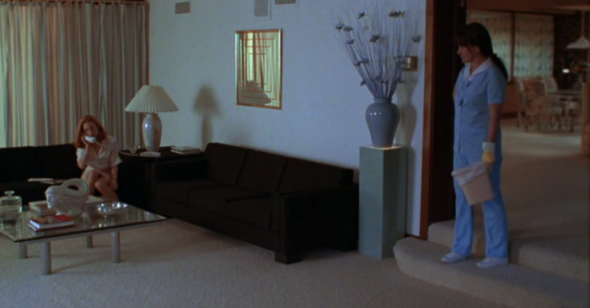
There are no scenes with Gianni in this episode, and none with the Versace family, either. What we see instead is the startling murder that appears to be a killer’s stepping-stone to full psychosis; and a lavender marriage that does not appear to be an outright sham, but merely unconventional. When Marilyn, away on business, calls the house and does not get an answer from her husband, it’s unusual enough for her to worry. When she gets back home, she finds an open, dripping ice-cream carton—chocolate-flavored, as much a visual contagion in their ivory-on-cream-on-alabaster space as the pair of gloomy couches in Todd Haynes’s Safe. It’s a sinister enough development to leave her rattled.

By the time the opening credits roll, she has been widowed, and we’ve guessed that Miglin is another victim of Versace’s killer, Andrew Cunanan; and we’ve guessed, too, how they knew each other. Marilyn says only, in the softest voice and to herself: “I knew it.” How much Marilyn Miglin really knew is never made apparent to us. What is made apparent is that Marilyn and Lee, whatever their dynamic, loved each other. How many men, she asks the TV camera, in a dynamite appearance on a shopping channel not long after Lee is killed, support their wives’ ambitions? How many men lift women up, instead of bring them down?

Conversely, it is never clear if Cunanan kills Miglin and exposes him because he thinks that Miglin is a hypocrite for being closeted, or because he thinks that homosexuality is shameful, something to be punished and reduced to ridicule. “I want you to know that when they find your body, you will be wearing ladies’ panties,” he hisses, “surrounded by gay porn. I want the world to see that the great Lee Miglin is a sissy.” Just after we see Cunanan beside the body, we cut to him carving, and then eating, some great hunk of red meat on the Miglins’ spotless kitchen table; it’s designed to make us think, if only for a second, that he’s actually eating Lee. The trope that a cannibal can eat a great man and absorb his powers seems tailor-made for a social-climbing sociopath who steals from every wealthy man he kills. (Think, too, of wendigos, the mythic demons in the shape of men who eat men, designed to represent the very ordinary human flaw of greed.) He is as guilty of the very Catholic sin of covetousness as he is of the legal crime of murder.

After Marilyn refers to the rumored death of the American dream—just days before the actual death of her husband—she is moved to issue a rebuttal: “Except—look at my husband, Lee. One of seven children. The son of an Illinois coal miner. He began his career selling premixed pancake batter out of the trunk of a beat-up old car. And today Lee manages 32 million square feet of commercial property across the Midwest.” The message is as clear and keenly bourgeois as a cut-glass punch bowl: rags are honorable, an inspiring plot-point, when they end in untold riches and acclaim. It was hardly accurate to say before that there had been no sign of the Versace family in this episode, when its themes of modest origins, of betterment and growth and the anointing power of lovely or expensive things, were the cornerstones of Gianni’s myth—“[originally] from a small village in Calabria overrun with poverty and corruption,” says a recent piece in Numero, “Gianni Versace built a destiny that was the complete opposite [of] his humble beginnings.”

It feels worth mentioning that the episode is called A Random Killing. I had thought at first that this referred to Marilyn’s description of her husband’s death as a random robbery—her defense against the knowledge or suspicion that he had in fact been killed by a man he’d solicited for sex. In fact, the random murder comes in the last five minutes of the show, when Cunanan escapes the scene and realizes he needs a new car. Pulling over and then following a man into a church, he leads him down into to the basement. After listening to him say, politely, that he has a wife and child, that he would very much like it, sir, if he could only see them again, the killer shoots him point-blank in the back of the skull. It is the ugliest and most indelible scene so far in a story filled with brutal, memorable vignettes of pain; and by the time we know what’s happening, it’s far too late to turn our heads away—to disengage.

The Assassination of Gianni Versace: More People Are Dead But the American Dream is Still Alive

4 Best Moments From ‘The Assassination of Gianni Versace’ 2×03

Episode 3 is completely committed to sharing Lee Miglin’s devastating story, with William Reese having a little screen time as well.

Here are the 4 best moments from ‘American Crime Story: The Assassination of Versace, “A Random Killing.”

Lee Miglin and Marilyn Miglin

In this episode, we got to watch the life of Lee Miglin – a commercial real estate developer- and his wife, Marilyn Miglin. This relationship was far from perfect; a 38 year marriage based on a lie, yet they made the best of it. Their marriage was definitely one to sympathise with and was incredibly moving, as we see Marilyn continue to live her life as an ambitious woman with a closeted husband. Marilyn comes home from a work trip in Toronto, where she realises that something is very off. When the police arrive, a bloodcurdling scream is heard from the garage as Lee’s dead body is found. Rewind a week before, Lee and Marilyn are happier than ever at a fund-raising luncheon for Gov. Jim Edgar, Republican of Illinois. Marilyn introduces her husband admiringly and shocks Lee with her gushing words.

“So often we are told the American dream is dead. Except I say: Look at my husband, Lee. One of seven children. The son of an Illinois coal miner. He began his career selling premixed pancake batter out of the trunk of a beat-up old car. And today Lee manages 32 million square feet of commercial property across the Midwest.”

Marilyn later catches Lee on the phone to someone – who we know at this point is Andrew – and he lies, telling her it was a business call. With Marilyn now away at this point, Lee invites Andrew to stay over for the night, where he shows Andrew his plans to build a 125-story, 1,952 foot Sky Needle, which would and could have been the world’s tallest building.

Lee Miglin’s Sexuality

It’s safe to say that Marilyn knew of her husband’s secret, however she persevered with the marriage, not allowing this to break them apart. After Lee has shown Andrew his plans for the Sky Needle, the two kiss and Lee says, “It feels like I’m alive.” As hard as it is to watch Marilyn hide her husband’s secret, you also begin to feel a little bit of sympathy for Lee, as Andrew is allowing him to be the man he’s always wanted to be. (Until you know, he murders him – but Lee doesn’t know this just yet.)

“Escorts don’t normally kiss, do they? I am not like most escorts. I am not like most anybody. I could almost be a husband, a partner.”

Again, Lee’s ability to lie and give false hope to people so easily is plain disturbing, as we all know the outcome.

Lee Miglin’s Death

Lee Miglin’s death has to be the most sadistic and painful scenes to watch. I felt so uncomfortable from Andrew’s cold-hearted speech to Lee’s final breath, like I genuinely could have turned the episode off. The fact that this all did really happen in real life and in this exact way just makes the whole thing way too realistic and due to me having no clue about any of Andrew’s victims until this episode, it really left me mourning these two men who did not deserve what they were given and I really hope justice was served for the both of them.

“I know that you’re not wearing your hearing aid, so I am going to speak very loudly and very clearly so you can understand. I want you to know that when they find your body, you will be wearing ladies’ panties. Surrounded by gay porn. I want the world to see that the great Lee Miglin is a sissy. Soon the whole world will know that the great Lee Miglin, who built Chicago, built it with a limp wrist. The cops will know, the press will know, your wife will know, your children will know, the neighbors will know. Tell me something, Lee: What terrifies you more, death or being disgraced?” – Andrew

Andrew once again wraps his victim’s face up with masking tape. Then he begins brutally punching him in the face, knocking him out and stabbing him multiple times. Andrew’s use of homophobic language suggests that is filled with so much self-hatred. The whole scenario of Cunanan making cross-dressing and looking at porn out as a crime and a disgrace is one of the most devastating moments of the season so far.

William Reese’ Death

As twisted and disturbing as Lee’s death was, I have to admit, William’s was down right the most heart-breaking death to witness (between the three murders we have seen). Andrew flee’s to New Jersey after murdering Lee and he finds out from a radio station that the police are currently looking for him and that investigators have been tracking his every movement by car phone. In search of a new car to steal, Andrew follows William Reese, a caretaker, to his home through a cemetery. He holds William at gun point as he forces him in to the basement, where William gets down on his knees and pleads for his own life. His plea was cut short when Andrew heartlessly shot him in the head with no hesitation whatsoever.

At this very moment of the series, my hatred for Andrew grew so strongly and I was absolutely disgusted at his lack of remorse and committing his most mundane murder that really didn’t need to happen. However, that being said, Darren Criss is still absolutely out-standing throughout this show and I am seriously running out of ways to describe how flawlessly he is portraying this character. Give this man all the awards immediately!

With six episodes remaining and two bodies to go, we best start mentally preparing for what’s to come next, as not mentally preparing really has done no good since this episode.

What did you think to this episode of The Assassination of Gianni Versace: American Crime Story? Write up a comment and let us know your thoughts!

4 Best Moments From ‘The Assassination of Gianni Versace’ 2×03

4YE’s TV Reels Feels For January 28th Through February 3rd

Top Performer:

Clare: It’s just getting way too predictable to have Darren Criss as my best performer week in and week out. Now while he still blew me away this week in The Assassination of Gianni Versace: American Crime Story, my top performer has to go to Gillian Anderson’s Special Agent Dana Scully in The X-Files’ “Ghouli”. Her monologue in the morgue to who she thinks is William was just outstanding. You couldn’t take your eyes off her and your heart just bled for the pain, suffering, and feelings of helplessness and lost time that she just emoted.

Verena: I agree with Clare, going for Darren Criss will get boring week after week. Why does he have to be so good … Anyway, I was really impressed by Iain Armitage in this week’s episode of Young Sheldon. He really does he phenomenal job in each and every episode, but tackling Sheldon’s germophobia was a big one for him. This characteristic has been such an integral part of Sheldon for many years now, it couldn’t have been easy to pick up where Jim Parsons left off.

Top Episode:

Clare: Yes I’m going back to The Assassination of Gianni Versace: American Crime Story, but to be fair, there were only two of my shows that aired in the time period for this week. “A Random Killing” just showed both the complete charismatic charmer that Andrew Cunanan could be, as well as the sheer and utter senseless destruction he unleashed. I never thought Darren Criss could have me screaming at my TV in horror and disgust but this episode achieved that.

Top Quote:

Clare:
“I’ve killed two people, Lee. Two people that were very close to me. I know it’s hard to believe. Intellectual Andrew. Well read, well spoken Andrew. Well dressed. But here I am. This is me.” Andrew Cunanan (Darren Criss), The Assassination of Gianni Versace: American Crime Story.

4YE’s TV Reels Feels For January 28th Through February 3rd

The Assassination of Gianni Versace: Episode 3 Recap

This is the first episode of The Assassination of Gianni Versace in which the titular Mr. Versace does not appear — in human form, at least; Andrew Cunanan does waft through one of his stores, caressing the bomber jackets and reading the coffee table books with either prurient or murderous interest (or, more likely, both). Instead, we travel farther back in time to two of Andrew’s earlier murders: that of a man the New York Times called a “wealthy Chicago developer” in this honestly slightly chilling article about his murder, written before any hint of Cunanan’s involvement had leaked to the press (the kicker, in particular, possibly haunts the woman whose quote it is), and that of a man whose truck Andrew needed to steal once he realized that the FBI was using early cell-phone technology to track his movements via the car phone installed in the Lexus he stole from Ed Miglin.

As ever, I have thoughts:

– Obviously, I didn’t go into this program thinking, “that Andrew Cunanan, so misunderstood!” But because I did start watching this not particularly knowledgeable about him beyond knowing that he shot Versace, I’d say that I was…open to feeling some kind of sympathy for him, and whatever circumstances of his life brought him to that place.  The show has done a great job of unfurling Cunanan’s truly monstrous behavior; the pathological liar, bad houseguest, and thief who seemingly stalked and killed Versace in what you could have perhaps argued (if you didn’t know better) was a crime of passion in the first episode has become the absolute sociopath that he presumably was.

– In addition to being a sociopath, Cunanan was not a very savvy murderer and it truly does seem like he should have been apprehended before he got to Versace — he certainly could have been caught before he killed William Reese for his truck, had the local radio not gone on air and said, “oooh, we heard the police are tracking Andrew Cunanan using his car phone! Andrew, if you’re out there, JUST FYI!!!!” Obviously, the story of EVERY serial killer involves a few close calls before they’re finally caught — if they are ever caught; from what I hear, the Zodiac killer is currently representing the great state of Texas in the US senate — but for someone who believes himself to be a genius, Andrew is not very good at the murder game. All I know about getting away with murder comes from watching TV, but it doesn’t seem very savvy to drive around in your victim’s flashy car. If you’re gonna steal someone else’s vehicle, obviously you do it in the dead of night so you don’t add to your body count (I found Cunanan’s murder of Reese particularly chilling; all of these are obviously very very very bad murders, and Cunanan is a very VERY very bad person, but he was truly just in the wrong place at the wrong time). When you’re swapping license plates, dude, steal the plate AT NIGHT in a parking lot and then place it onto your own vehicle somewhere more secluded, because switching around license plates in the middle of the day at, like, Target is very obvious!

– I continue to be impressed by Darren Criss in this part. This season of American Crime Story isn’t get the buzz that the OJ Simpson season did, but (a) the first season of an accomplished program always gets the most buzz, (b) the OJ trial itself was more firmly affixed to more people’s memories, and more a part of pop culture in general, © that season was truly, truly exceptional on basically all fronts, and impossible to top. But this season is also very well done, and he is EXCELLENT.

– I look forward to Judith Light’s Emmy speech. Vanity Fair’s coverage of this continues to be excellent, and their most recent piece about this episode indicates that Marilyn Miglin (whose products are still sold on HSN) has never admitted that her husband was gay, and that Cunanan’s relationship with him is a matter of supposition on the parts of, well, many many many people. It does seem unlikely that they were not known to each other. There seems to be some speculation that perhaps Andrew knew the Miglin’s son, Duke. Either way, I can understand that a family traumatized by a terrible murder would not want to indulge public speculation about their private lives.

What did you think?

Literally five people I know texted me, “OMG JUDITH LIGHT” as soon as they started watching this episode, and she is indeed great in it; Judith Light as a HSN powerhouse business lady is a brilliant stroke of genius on all levels.

“Remember payphones?” was a thing I sincerely thought while watching this episode. I also thought, “Judith Light’s luggage is gorgeous, but how does she keep it clean?”

However, it’s clear from the Miglin home that Judith Light knows all about keeping things sparkling white. (This home set is AMAZING.)

Don’t worry. That’s just some ham and not a part of someone’s body. (I did think, “OH NO WAS HE ALSO A CANNIBAL?!”)

This show, like Downton before it, cannot resist an overhead shot.

This is a stunning room, and almost certainly a location. TELL ME THE LOCATION.

It’s a bit hard to see here – why is this show so literally dark in the interiors sometimes? – but Judith Light’s Taffeta Skirt and Brocade Top formal combo just SCREAMED Elegant Lady of a Certain Age Attends a Gala in 1997.

As Heather pointed out on Twitter last week, TV truly does believe that women do a lot of Thoughtful Thinking while we moisturize. 

No, seriously, remember payphones? (Is it also terrible that this episode prompted me to think, “wow, backpacks really ARE useful”?)

Poor Lee Miglin. He had a beautiful office. I felt great, GREAT sympathy for him this entire scene. Per the assumptions set forth by this show, he was living a double life that was very difficult for him and it ended so brutally and at the hands of someone who truly was a sociopath. I cannot imagine how terrible this must have been for everyone in his life (I believe one of you noted that you were co-workers with his daughter? Did I imagine that?)

Again with the overhead shots! 

In case we forgot where this is all going.

Listen, those are some good jackets. They just are.

YES, YES, WE GET IT. Removing your makeup at the end of the day equals taking off the mask you show to the world, WE GET IT. (Having said that, this episode was directed by a woman, Gywneth Horder-Payton.)

Per Vanity Fair, the real Marilyn Miglin did go back to HSN three weeks after the murder, and honestly, good for her. I’m sure work was a balm to her; there’s a stronger parallel you could draw, potentally, between her and Donatella, but the show doesn’t go there directly. Perhaps it’s trusting us to draw that line ourselves.

The Assassination of Gianni Versace: Episode 3 Recap

Authentic Versace or counterfeit handbags?: American Crime Story: The Assassination of Gianni Versace | Home | Have You Watched

Our second entry in following up from our article 10 shows to be excited about in 2018, comes from FX and is the second instalment in the bafflingly brilliant American Crime Story franchise. For those familiar with history of this show, it began with a dramatic retelling of the ‘trial of the century’, where former NFL football star O.J. Simpson successfully assembled a legal dream team, and was found innocent of the murders of his ex-wife Nicole Brown and her friend Ronald Goldman.

I’ve used the word baffling to describe the success of that show, because at first look it had the potential to be a bit of a joke. Having David Schwimmer as Robert Kardashian and John Travolta as Robert Shapiro threatened to make the show about who was going to overact the most. Fortunately the intriguing and disputed backstory of the tactics behind the Simpson defence, lead by Courtney B. Vance as the larger than life Johnnie Cochran, and an outstanding performance by Sarah Paulsen as Marcia Clark meant the show was a must not miss.

Happily, although the show has lost original creators Scott Alexander and Larry Karaszewski for the its second time stepping up to the plate, FX has commissioned three more offerings wearing the American Crime Story banner. First up is the story of the slaying of possibly the most famous name in the history of the fashion industry; The Assassination of Gianni Versace.

As we speak the show is currently three episodes old, with our lead cast being Edgar Ramirez (Gianni Versace), Darren Criss (Andrew Cunanan), Ricky Martin (Antonio D’Amico) and Penelope Cruz (Donatella Versace). The worrying name in there was Ricky Martin, more known for Latino dance numbers rather than acting, but as stated previously that quick judgement was what the first run defied massively.

The first thing that strikes visually is the feast of colour and glamour on show. The richness and vibrancy of real life Miami Beach of the late nineties is captured fantastically well. Versace glides from room to room in his mansion as if he is a Roman god, which by all accounts is how he was considered in those times by many.

The show deals with his murder in the very first episode, and makes it clear they are going to rely on flashbacks to tell the whole story of how we got here. On paper it was odds on that this would be how the story was retold, but it would have been interesting to see how they would have flipped the narrative to build massive suspense towards the end of the season.

In real life, the fact that Cunanan was never captured alive means we will never likely know his true motivations for killing a man he apparently didn’t know, along with several other victims. The show this time however is going to give him that motivation, with a massive warning that there are no facts to back up what they are showing on screen.

As shown through his interactions with Gianni and another murder victim, real estate mogul Lee Miglin (Mike Farrell), Cunanan is portayed as a male escort for hire and specifically targets both men in order to kill them. Cunanan is shown to be a cold hearted killer, who seems proud of what he has achieved on his murderous spree. His confidence is such that he isn’t ever shown making concerted efforts to hide his identity or cover his tracks. The source material captures this sentiment brilliantly in its title, with the book Vulgar Favors: Andrew Cunanan, Gianni Versace, and the Largest Failed Manhunt in U. S. History by Maureen Orth providing much of the inspiration for what we see.

How such a trail of destruction could be left by a man and yet he was never caught is astounding when considering the odds Cunanan was up against, and this is why using stories derived from such gigantic real life events can on many occasions provide more entertaining narratives than ones originating from paper alone.

In terms of the acting on show the undoubted star is Darren Criss. He holds the show effortlessly on his shoulders for masses of time, and in amongst more established names that type of talent is to be commended. Ricky Martin clearly isn’t anywhere near a finished article in this department, but his performance doesn’t detract from the rest, which is perhaps the best that could have been hoped for from the outset. However, he does give one of the most striking images early on as the sight of him covered in the blood of his fallen partner is one that’s hard to wash away from your mind.

Whilst embellishing the truth at times is essential for retelling a story, especially early on it does feel like Gianni is being reimagined as a Caligula type character, with money and sex lavished around him as he walks from room to room in his mansion. You will also require a strong stomach at times, as the graphic nature that goes hand in hand with a tale like this is not shied away from at any stage. Particular hard viewing comes in the form of the brutal killing of Miglin, so take this as a warning for those not at that stage yet.

Cruz as grieving sister Donatella gives the show a wow factor in terms of an established Hollywood name, and she looks right at home with the vibrant glamour etched on the screen. One story thread yet to be expanded upon further is how they deal with holding together the massive Versace empire now that its own Emperor has been killed. Definitely something to look forward to in the coming weeks.

In distancing itself to an extent from the first season preceding it, Versace has crafted its own double-edged sword. The point of difference by trying to explain the motivation of the monster Cunanan is to be praised, and it is what will give the story real focus as we head to the mid-way point and beyond. However, by spending much more time on the murders and less on the backstory of the case, they have at the same time moved it away from the main thing that made The People vs O.J. Simpson so majestic to watch. Whether this approach works off in the end is a difficult thing to predict, but it rules out massive comparisons with its predecessor unless a monumental shift in tone is on the horizon.

All in all more positives than negatives here without question, and as we have already witnessed three of Cunanan’s victims, hopefully the last ones, including himself, will be watched more with intrigue rather than frustration.

Authentic Versace or counterfeit handbags?: American Crime Story: The Assassination of Gianni Versace | Home | Have You Watched

Fashion, homophobia and tragedy: quite the ingredients for an ‘American Crime Story’

The second season of FX giant Ryan Murphy’s “American Crime Story” premiered on Jan. 17, its nine episodes intending to bring viewers into the late fashion designer Gianni Versace’s mansion and its surroundings in Miami Beach in the 1990s.

Its subtitle, “The Assassination of Gianni Versace” already evokes fear, which complements the dramatically unsettling atmosphere of the first two episodes so far.

Following in the footsteps of the critically acclaimed “The People v OJ Simpson,” this season literally begins with Versace (Edgar Ramirez) being shot on the steps of his mansion by mysterious serial killer, Andrew Cunanan (Darren Criss) on July 15, 1997.

Immediately, Ryan Murphy’s conscious direction highlights the contrast between the two doomed figures.

Versace is enveloped by his sheer opulence, beautifully-tiled swimming pool and fashion designs, while Cunanan carries a mere backpack, simplistic civilian clothing and the fateful gun.

As the episodes wind down, familiar faces like fellow designer and Gianni’s sister, Donatella Versace (Penélope Cruz) and Gianni’s partner, Antonio D’Amico (Ricky Martin) appear.

What makes Versace’s downfall far more complex than a simple runaway homicide is that Cunanan is revealed to have killed several men before, he had penetrated the gay nightclub scene in Miami Beach shortly before committing the famous murder, and the FBI is shown to be somewhat inept at capturing him.

The viewer uncomfortably has to watch Cunanan creepily meet up with gay—both closeted and out, of varying ages—men, while left wondering how this is connected to Versace in the end. And yet, that’s the point.

To this day, the public does not know why Cunanan murdered at all. This, hence, contributes to the overall disquieting nature of the show so far.

Ramirez instantly does an impeccable job at coaxing the audience into sympathizing with him, as he’d been happy living with D’Amico.

His almost teddy bear-like disposition further makes his murder very tragic as he seemed very intent on expanding his company and strengthening his personal relationship.

What makes him so likable is how humble he acts, as he often brings up his childhood, his designing family background and his time in Italy.

On the other hand, Criss, already known by young fans for once playing teenage dream Blaine Anderson from “Glee” (2010-2015), seems determined to take on a more dramatic role here, as if wanting to prove he can be more than a fanfiction-inspiring teen idol.

While his acting was a little uneven during the first episode, he starts to hold his own in the second.

His performance yields a doomed gypsy, who travels across the country, murdering several men but his disturbingly blank expressions bring up the idea that he is searching for a purpose in life.

The purpose, however, could be infamy as he’s shown creepily smiling when coming across newspaper front covers of Versace’s murder—and even having the audacity to buy all the copies in one scene, as if to congratulate himself.

Perhaps the show wants to confront the idea that he should not just be seen as an insane serial killer.

It could become more psychologically intriguing if it delves into his past, his previous murders and him coming to terms with his sexuality.

Cruz, despite having few scenes so far, always attracts eyeballs any time she appears as Donatella onscreen, her somber visage and convincing Italian accent combining to create quite the grieving figure.

Instead of just sobbing and pacing impatiently, her character becomes multifaceted when she reveals she does not respect Gianni’s lover, D’Amico.

This clash between Gianni’s two closest figures should show up again in future episodes, to prove that Versace’s life was not always trouble-free.

Ricky Martin as D’Amico, however, needs more time in the spotlight to showcase his acting abilities as it still is not convincing lately.

In his defense, there’s only so much Martin can do besides crying and grieving for Gianni for now, given the plot.

The show also confronts homophobia in the 1990s, detailed by the judgmental looks of the FBI, how closely knit the gay community is in nightclubs and bars, and the consequences of the HIV/AIDS epidemic in the background.

Murphy has directly addressed this in multiple interviews while promoting the project and this issue further raises the stakes for the season’s characters.

“I’ve done nothing my whole life,” a dejected Cunanan says in episode two, chronologically before shooting Versace. “That’s the truth.”

Cunanan would later accomplish quite a feat though: successfully murdering multiple individuals, and evading the FBI who’d named him as one of their “Most Wanted.”

And while that captivated the American public in 1997 and would make for great television in 2018, it’s hardly something to be proud of.

But under Ryan Murphy’s evidently superb direction and his brilliant casting decisions, this season seems already determined to remind viewers that even wealth can’t hide from a gun.

Fashion, homophobia and tragedy: quite the ingredients for an ‘American Crime Story’

The violence of capitalism in The Assassination Of Gianni Versace

There’s a moment early on in The Assassination Of Gianni Versace: American Crime Story that, perhaps more than any other, sticks with you long after the image fades. Andrew Cunanan (a remarkable, terrifying Darren Criss), who we’ve already seen kill Gianni Versace, stands in the bathroom of a rundown motel room that he occasionally shares with his friend and potential partner Ronnie Holston (Max Greenfield). He stares at his reflection in the mirror. His face doesn’t move. He betrays no sign of any emotion. Then, he picks up a roll of duct tape, peels the tape back, and begins wrapping it around his head. The motion continues, the signature sound of the strong adhesive an eerie soundtrack to the nonsensical actions. Before long he’s covered his face and head, with just enough room to breathe.

It’s a quietly chilling scene made all the more tense when Andrew plays it off like nothing to Ronnie, but it’s also an insight into one of the show’s more intriguing thematic explorations: the violence of capitalism and its effect on our identity. In the early episodes especially, the show seems to revel in the lavishness of its setting while contrasting that sense of fullness with Andrew’s persistent change in identity. The very first scene of the premiere sees the camera moving from the expanse of the ocean to the expanse of Gianni Versace’s mansion, both settings turbulent, overwhelming, and unpredictable in their own ways. Ryan Murphy directs the opening sequence in a way that immediately situates us in this world of opulence. We take in the clouds painted on the bedroom ceiling, a verisimilitude of the outdoors, and the first of many images that look to replicate an authentic experience.

Through the halls of the mansion we go, our eyes unable to keep up with everything in our path: chandeliers, priceless art, silk pajamas, and balconies with an ocean view. This is the life we are meant to envy, the American Dream come true. Murphy, for the most part, films the scene with a bird’s-eye view, as if we’re outsiders that long to be given access to these gilded halls. Immediately the show is drawing a visual connection between violence and materialism. The episode cuts from Andrew angrily screaming in the tempestuous ocean to Gianni, surrounded by servants, enjoying a lavish breakfast inside the sunlit concourse of his home. More viscerally, there’s the image of Andrew pulling The Man Who Was Vogue, a book about the rise of Condé Nast and his influence on cultural gatekeeping and style, out of his backpack, followed immediately by a gun. Violence follows materialism is the suggestion, one that pops up again and again throughout the season.

It’d be slightly preposterous to argue that The Assassination Of Gianni Versace is some sort of remarkable Marxist critique of capitalism and material wealth, but as the episodes unfold it’s hard to ignore that the show is teasing out an intriguing connection between Andrew Cunanan’s ability to shift his personality at will and our own willingness to adopt certain roles in a very public way, spurred on by a culture obsessed with social media and its consumerist tendencies. Coursing through the show is a critique of our consumerist culture; despite being set the in the late ’90s out of necessity to the true crime, this is a show that’s very much aware of the plague of tastemaking and performative consumption and sharing that defines so much of our lives today. But what’s more scathing is how the show uses Andrew Cunanan as a stand-in for the anxiety and personal oppression that comes with such a culture. His need to be anything and everything to the people around him is not just a sign of his psychopathic tendencies, but a result of the pressures of a capitalist system that continually tells us we’re not doing good enough, that who we are is a failure, and that buying more things is the only way to establish a true, stable, respected identity.

Cunanan—it’s important to note that throughout this piece any mention or analysis of Andrew Cunanan is referring to the character within this show, and not the real man he’s based on—is an enigma similar to Patrick Bateman, a character from a more problematic work that, nonetheless, still draws a connection between Bateman’s bloody outbursts and his need to conform to an ever-shifting set of ideals about what it means to be respected, glorified, and envied. There’s a reason the business-card scene in Mary Harron’s 2000 adaptation of American Psycho stands out so vividly within the film; because it provides terrifying insight into Patrick’s mind-set that the violent acts simply don’t. We need that context of Patrick’s insecurity to understand the violence.

Assassination wants us to understand Andrew in a similar way. He’s a man with no single identity—Andrew’s sexuality is a major component of his complex identity within the show, and Paste’s Matt Brennan wrote a stirring piece about it—but rather a collection of signifiers meant to convey worldliness, taste, and stature. When he first meets Gianni in a club, he regales him with stories about his lavish lifestyle and impeccable taste. Only later do we, and Gianni, realize that it’s all a fabrication, an attempt to convey a certain social standing that he’s been unable to achieve.

This is the anxiety and alienation that capitalism thrives on. It’s a system that creates and then benefits from identity crisis. Alienation is a term in Marxist theory with many different meanings that, when taken together, give us a broader understanding of a feeling that’s often difficult to define. As David Harvey lays out in Seventeen Contradictions And The End Of Capitalism, one such definition is alienation as a “passive psychological term” that means to “become isolated and estranged from some valued connectivity.” The result of that alienation is “to be angry and hostile at feeling oppressed, deprived or dispossessed and to act out that anger and hostility, lashing out sometimes without any clear definitive reason or rational target.” Andrew cannot fill that void inside of him, the one created by a system that tells you that you alone aren’t good enough. When a man in a dance club asks Andrew what he does, he responds thusly: “I’m a serial killer, I’m a banker, I’m a stockbroker, a paperback writer, I’m a cop, I’m a naval officer,” and more, listing off one profession after another. He’s everything and nothing all at once, driving home the idea that under capitalism there is no true identity, only a series of labels that oppress us.

The question is, then, are we all as psychopathic as Andrew Cunanan? Certainly most of us aren’t murderers, but Assassination does seem to suggest that Andrew’s troubling need to be everything all at once is not too far removed from our own need to belong, a feeling amplified in our current culture of constant sharing and liking. We curate our lives, and more importantly our social media timelines, in much the same way Andrew curates his behavior and personality. Andrew literally puts on a costume, another man’s suit and his expensive watch, to attend the opera. He can’t imagine doing anything else. He tells outlandish stories about fictional past boyfriends; one in particular would drive him around in his Rolls-Royce and also snagged Andrew a job building sets for Titanic. These are small violences, little bits of untruth that erode the social fabric and Andrew’s own understanding of himself. Are we doing the same? Are we allowing Instagram influencers, native advertising, and increasingly “hip and socially aware” brands to make us feel like shit just so we’ll buy the thing they’re shilling that supposedly won’t make us feel that way?

Assassination, in at least some way, wants us to ask those questions. It’s not the larger thematic thrust of the season, but it is an intriguing and unavoidable presence. The series asks us to question our own search for identity through material means by showing not only how Andrew is affected by alienation, but also how those around him struggle within a capitalist system. The Miglins are the best example. They are the epitome of the American Dream under capitalism. At a fundraiser gala, Lee gives a speech that evokes the classic “bootstraps” story of his success, and his wife has no trouble building a line of perfume to sell on TV. Everything is picture perfect.

That is, until you dig deeper. At home, Marilyn Miglin (Judith Light in a devastating performance) takes off her makeup, a maudlin look on her face. The mask necessitated by the public gala has been removed, and her sorrow is now visible. Similarly, Lee Miglin can’t be his true self, a gay man in a world that would financially and socially punish him for his sexuality. He wishes he could just “roam among them,” a beautiful statement about wanting to live free of restriction and punishment for who he is. But capitalism has a set of rules and an oppressive structure that must be abided by, and anything outside of that is pushed aside. So, this isn’t just about Andrew, but rather all of us, and the way we’re forced to imitate ways of life rather than living the way we truly want to.

I wish there were a hopeful message to end on, something in the show that points the way forward to a place where we can know one another’s intentions and understand our own, free from the forces of capitalism. But if anything, the world portrayed in The Assassination Of Gianni Versace, in all its gold-plated, vacuum-sealed glory, has only gotten worse. We’ve become more convinced that we can buy something in order to be something. We’ve become chameleons of emotion, projecting our grief, joy, and anxiety to our followers without any check on our authenticity. Like Andrew, we can wear any mask we want.

As chilling as the duct-tape scene is, the most telling moment when it comes to the performative nature of Andrew Cunanan, and thus ourselves, is when Andrew sees the news’ first piece about the killing of Gianni Versace. His face is blank for a moment before he’s overcome with grief. He looks on the verge of weeping, all before the hint of a smile creeps in and the episode cuts to commercial. An imitation of emotion, literally mimicking the public grief of the woman in front of him, as convincing as the real thing. It’s a moment with implications that the show explores throughout the season, which is that Andrew, and everyone else, is a product of a system that grinds us down, asks us to perform emotions and wants, and then shames us for failure. “It was all a lie, an act,” says David, one of Andrew’s victims, moments before he gets a bullet in the back. The violence of capitalism breeds an identity crisis, and a subsequent emptiness and isolation, that can lead to physical violence. We’re all at risk, refusing to challenge the rules and upend the system. We have more in common with Andrew Cunanan than any of us would like to admit.

The violence of capitalism in The Assassination Of Gianni Versace

https://api.soundcloud.com/tracks/394647036/stream?client_id=N2eHz8D7GtXSl6fTtcGHdSJiS74xqOUI?plead=please-dont-download-this-or-our-lawyers-wont-let-us-host-audio

TV Party 001 – The One With The Introductions

Every so often, a podcast comes along that makes you reconsider the possibilities of the medium – a show so innovative, entertaining and downright transcendent that it changes you on a fundamental level. And also, there’s TV Party.

For this first episode, Allison and Clint are joined by Podlander Drunkcast’s Julie Starbird and The AV Club’s Caroline Siede. Together, the fearsome foursome talk about last week’s Good Place finale, the majesty of Lily Tomlin in Netflix’s Grace and Frankie, and more! | 5 February 2018

*from 51:02 –  53:01

‘The Assassination of Gianni Versace’ is a must-see – The Panther Online

FX’s “The Assassination of Gianni Versace: American Crime Story” brings to life a horrific tragedy, expertly using the medium of dramatic television to do so. This is the true crime anthology series’ second season, and the first season aired in February 2016 and featured the infamous O.J. Simpson court case as its backdrop.

While the first season was well-written and acted, featuring outstanding talents such as Cuba Gooding Jr. and John Travolta, American Crime Story’s current season brings with it the same level of dedication with an arguably more tragic story.

“The Assassination of Gianni Versace: American Crime Story” dramatizes the murder of iconic fashion designer Gianni Versace, who was brutally gunned down outside his lavish Miami residence in broad daylight in 1997.

The man who killed Versace, Andrew Cunanan, was a psychotic pathological liar with a genius IQ level. He was on the FBI’s most wanted list and had already butchered four people before Versace. A toxic mix of bureaucratic laziness and homophobia allowed this to happen. The show explores this beautifully by portraying the FBI agents in charge of the manhunt as unmotivated and disinterested in capturing Cunanan – that is until he murders a celebrity.

The FBI agents and other law enforcement pursued Cunanan half-heartedly because he was a gay man killing other gay men. They made too many careless mistakes, like not warning the Miami gay community when they knew Cunanan was in the Southern Florida area, which ultimately allowed Cunanan to take the life of Versace.

In addition to a fascinating true life story, the show, like its previous season, features phenomenal actors such as Penelope Cruz as Donatella Versace and Ricky Martin as Antonio D’Amico, Gianni Versace’s partner of 15 years. However, the actor whose performance deserves special praise and recognition is Darren Criss as the terrifying Cunanan. Criss portrays Cunanan as both empathetic and as the vicious, sociopathic murderer that he was.  

Beyond the compelling true story and great acting, “American Crime Story” brings the terrifying events of Cunanan’s rampage to life through certain artistic triumphs, like shooting on scene at Versace’s actual home where the murder took place. The show is respectful of Cunanan’s lesser-known victims, such as Lee Miglin, by honoring their memory as well as those whose lives were shattered by Cunanan’s actions.

Out of nine episodes, the show’s third episode aired Wednesday, Jan. 31 at 7 p.m. so it’s not too late to catch up and enjoy the rest of the season.

‘The Assassination of Gianni Versace’ is a must-see – The Panther Online