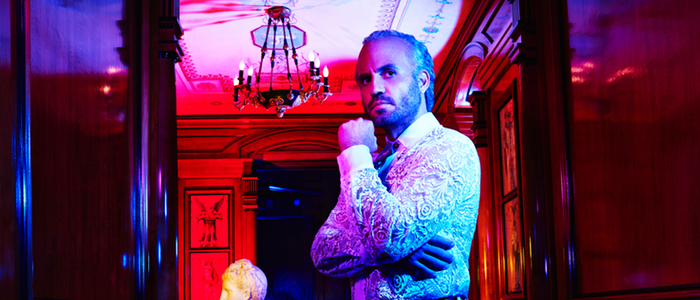
‘American Crime Story’ Review: ‘Alone’ Brings the Story to an End

This week’s American Crime Story review takes a look at the latest (and final) episode of The Assassination of Gianni Versace, “Alone.” Spoilers follow.

No Way Out

Time has run out for Andrew Cunanan. After committing one murder after another with ease and seemingly no danger of being caught, Andrew’s luck has finally run out due to his murder of Versace.

The final episode of American Crime Story: The Assassination of Gianni Versace is all about the end. Here is the culmination of it all. The final weary days in the short, destructive life of Andrew Cunanan. There’s no catharsis here. No sense of release. Instead, there’s a sense that if Andrew was given the chance to do it all over again, he’d probably do everything exactly the same.

After weeks of episodes moving backwards, we finally arrive where we started: with Andrew gunning down Versace on the steps of Versace’s Miami mansion. But unlike Andrew’s other murders – which, aside from the murder of Lee Miglin, attracted very little attention – this one is markedly different. Cop cars are everywhere, speeding through the Miami streets at night. News coverage splashes tabloid-like headlines left and right.

Andrew retreats to a seemingly abandoned houseboat and watches the result of his work on multiple TVs. He seems elated at first – even when the news anchors report him as a suspect. He’s famous now; he’s changed the world. He celebrates by popping open a bottle of champagne. Later, he’ll watch Versace’s televised funeral with reverence and even a little pride. Versace’s funeral is filled with celebrities – Princess Diana, Elton John, Naomi Campbell – and they’re all there because of something Andrew did.

The celebration is short lived. When Andrew tries to get out of Miami, he finds roadblocks at every turn. The police are leaving no stone unturned. He’s trapped. With no one left to turn to, Andrew frantically places a call to his father, Modesto.

Modesto, never one to miss an opportunity, has been selling interviews to the press ever since it was revealed Andrew was the killer. When Andrew calls, he assures his son that he’ll come to America and whisk him off to safety. Andrew, who has apparently learned nothing, believes him. He packs up some things and waits, hopeful that his father will be there in 24 hours.

But his father never shows. Instead, Andrew catches Modesto on the news, mugging for the camera, insisting this is all some mix-up because his son isn’t a homosexual, and revealing that he’s talked to Andrew on the phone.

For Andrew, this is the final nail in the coffin. He knows it’s hopeless now. No one is going to come save him. Soon, police have discovered his location and have him surrounded. With nowhere left to turn, Andrew places his gun in his mouth, sparing one last look at his reflection in a mirror before pulling the trigger.

Special

While anyone who happened to read the Wikipedia entry for Andrew Cunanan knew where this was all going, there are still a few surprises in the final episode, “Alone.” For one thing, Judith Light returns as Marilyn Miglin, widow of Andrew’s victim Lee Miglin. Marilyn just happens to be in Miami during these events, filming a new commercial for her latest perfume. She seems to sum up the feelings of everyone involved here when she says that all she wants is for this to be over. She’s sick of having her good name attached to Andrew Cunanan, and she wants nothing more than for people to stop associating her, and her husband, with Andrew and his actions.

Meanwhile, in Milan, Donatella Versace is trying to put things in order following the murder of her brother. She’s still wrought with grief – in an emotional scene, delivered with a real sense of sorrow by Penélope Cruz – Donatella reveals that on the day Versace was murdered, he tried to call her, and she deliberately ignored the call.

Donatella also has to contend with Antonio, who is also grieving. But Antonio’s grief is treated as something secondary, and Donatella isn’t interested in helping him out. Versace’s will left Antonio with a pension of 50 million lira a month for life, and the right to live in any of Versace’s homes. But the properties Versace left actually belonged to the company, not Versace himself. As a result, he’s cut out. He has no home now. In one of the most cringe-worthy scenes in the episode, the priest at Versace’s funeral goes down a line, offering comfort to everyone in Versace’s family, but deliberately skips Antonio. By the time the episode has ended, Antonio has tried to kill himself – but failed.

All of these surviving individuals – Marilyn Miglin, Donatella, Antonio – are searching for some sort of closure. They want to subscribe to the French proverb “What you lose in the fire, you will find amongst the ashes.” But there’s no real closure here. No sense of completion.

Yes, Antonio survives his suicide attempt. But he’s still cut-out of all things Versace. Yes, Donatella inherits her brother’s empire, but her grief is overwhelming. Yes, Marilyn takes comfort in the fact that the man who murdered her husband is now dead, but she’ll still forever be tied to Andrew and his actions. After the dust has settled, we see Marilyn pouring over letters sent in offering condolences. Letters from young men Lee clearly had affairs with. She can take comfort in these condolences, but she also has to contend with the fact that Lee lied to her throughout his entire life.

And what of Andrew Cunanan? Did he have a moment of clarity in those moments before he pulled the trigger and blew his brains all over the wall of a houseboat bedroom? A realization of where he went wrong? A sense of remorse for his actions? According to American Crime Story, the answer is no.

At the moment Andrew kills himself, we flashback to the (possibly fictional) evening Andrew spent with Versace. There, standing on the stage at the opera with Versace, Andrew says he’s been waiting his whole life for someone to tell him he’s special, and that all he’s ever wanted to do is persuade other people that he’s capable of doing something great.

“But it’s not about persuading people that you’re going to do something great,” Versace says. “It’s about doing it.”

Andrew is puzzled by this response – he doesn’t get it. All he wants is for someone to just tell him he’s special without having actually done anything to merit it. He begs to be made Versace’s assistant, but Versace politely turns him down. Versace tells Andrew that one day, he’ll understand. But Andrew never will. He’ll spend the rest of his short, violent life continually trying to prove to everyone that he’s special. And while he will certainly make headlines, he’ll also leave nothing behind worth celebrating.

In the end, “Alone” juxtaposes the locations of the earthly remains of Gianni Versace and Andrew Cunanan. Versace’s ashes are housed in a veritable temple; a shrine to his greatness, located in a picturesque location. Andrew body, meanwhile, is tucked away in some mausoleum somewhere, among rows and rows of other people, forgotten. Just one nearly anonymous body in a sea of thousands.

Alone

After a few wishy-washy episodes, “Alone” ends The Assassination of Gianni Versace on a high note (although high note perhaps isn’t the right term for such a depressing episode). Director Gwyneth Horder-Payton captures the sinking feeling washing over Andrew perfectly. In one haunting scene, Andrew is visited by the younger version of himself. The young Andrew watches the TV coverage of the adult Andrew’s deeds, a slight, eerie smile on his face. In another scene, Andrew watches Marilyn Miglin’s infomercial as Horder-Payton has the camera push-in on his blank face, effectively pushing the audience into his headspace.

This season of American Crime Story wasn’t entirely successful. The backwards-moving narrative never quite worked, and resulted in a somewhat uneven season, where the bulk of the action happened very early and left a few episodes spinning their wheels. Yet for all its flaws, The Assassination of Gianni Versace still made for some intriguing, captivating television.

While the backwards narrative didn’t quite gel, it did enable Versace to pull a clever bait-and-switch on the audience. At first, we go in thinking this will be just another true crime saga. But what it really turns into is a compelling character study and also a story of how society treats queer people.

Darren Criss’ portrayal of Andrew Cunanan is exemplary. The actor brought the character to life, and while some of the writing could’ve easily turned Andrew into something close to parody, Criss’ performance walked a tightrope and balanced it all.

Other MVPs of the season: Ricky Martin turned in a surprisingly soulful performance as Versace’s lover Antonio D’Amico, particularly in this final episode. The moments where Antonio realizes he’s being cut loose from all things Versace are handled with appropriate panic and confusion by Martin. Penélope Cruz also shines this season, and in this final episode in particular. While there were times when the writing felt as if it was bending over backwards to find ways to insert Donatella into the story, Cruz always managed to play the part with grace and just the appropriate amount of over-dramatic flourishes.

Next up for American Crime Story: a season that tackles the events surrounding Hurricane Katrina, featuring Dennis Quaid as George W. Bush. While that may not stand out as your typical “true crime” narrative, it’s going to be fascinating to see how the series tells this story. Just as the first season of American Crime Story used its true crime angle to tell a story about racism in America, and this second season was primarily about the way society treats queer individuals, I’m sure the Katrina season will have its own social message buried within the narrative. We’ll have to wait to see how that plays out.

‘American Crime Story’ Review: ‘Alone’ Brings the Story to an End

‘American Crime Story’ Review: ‘Creator/Destroyer’ Shows Us Andrew’s Origin Story

1957

The opening of the penultimate episode of The Assassination of Gianni Versace takes us further back in time than we’ve ever been in the series. It’s 1957, and a very young Gianni Versace is trying to learn his place in the world. He’s an outsider at school; picked on by teachers, ignored by fellow students. He sits in his mother’s dress-making shop and watches her work, a sense of awe and wonder on his face the entire time.

He wants to do what his mother does. And so he does.

While school discourages this desire in Versace, his mother embraces it. If her son wants to be a dress-maker, so be it. She wants to nurture this in the child, and give him the chance to grow.

Yet when she places a pencil in Versace’s hand and asks him to design something for her, he instantly gives up.

“I can’t,” he says. “It’s too hard.”

It’s supposed to be hard, his mother counters. “Success only comes with hard work,” she says. “And it takes many years. But that’s alright. That’s why it’s special.”

It’s clear why this scene is here: to sharply contrast Versace against his murderer Andrew Cunanan even more. Here is the message that no one bothered to instill in Andrew – that success takes time, and that you have to work for it.

1980

It would be inaccurate to say that one event, one specific thing, turned Andrew Cunanan into the sociopathic serial killer he became. That’s not how these things work. But while there was no specific trigger, it’s clear from “Creator/Destroyer” that Andrew’s upbringing certainly didn’t help matters. This week, we’re provided with more insight into Andrew’s life, and it’s not pleasant.

As a child, Andrew adores his father, Modesto “Pete” Cunanan (Jon Jon Briones, giving a phenomenal, disturbing performance). Modesto is an immigrant, and he seems obsessed with the concept of making the so-called “American dream” a reality. He moves his family across the country, and sweet-talks his way into a cushy job at Merrill Lynch.

It becomes very clear very quickly that Modesto is a cruel, even violent man. His wife lives in terror of him, and his other children steer clear. Andrew is the only child who receives any sort of warmth from the man, and as a result, he would do seemingly anything to make his father proud.

We watch as the young Andrew interviews to join a fancy school. When asked by the board why he wants to attend the school, Andrew replies, “Because it’s the best school in America.” When asked who told him that, Andrew says: “My father.”

The school board then asks Andrew a seemingly simple question: if he could have one wish, what would it be? Never one for simple answers, he rattles off a list of material things – a house overlooking the ocean, multiple Mercedes’. Here, the school board cuts him off, reminding him that these are multiple things, and what they want to know is what would be his one ultimate wish. Andrew thinks about it for a moment, then replies: “To be special.”

Here again is the sharp contrast between Andrew and Versace. Andrew doesn’t want to be good at anything; he doesn’t want to have talent. He just wants the adulation.

And for a while, he gets it, courtesy of his father. Like when Modesto buys a brand-new car for Andrew, even though Andrew isn’t even old enough to drive yet. Thanks to his father, Andrew comes to believe he truly is special. But this feeling won’t last forever.

1987

A lot can change in 7 years. After setting up Andrew’s “special” childhood, “Creator/Destroyer” jumps ahead 7 years, just as the bottom is about to fall out. Modesto is no longer working at Merrill Lynch. Instead, he’s set-up shop in a rinky-dink firm that operates out of a strip mall; the type of establishment that might have popped-up in The Wolf of Wall Street.

Andrew has grown into a cocky, fun-loving 18 year old. He has an older, married lover who buys him gifts and keeps him comfy – but Andrew wants more. He wants to show his lover off to his friends – something the older man wants no part of. “This is strictly on the side,” he tells Andrew. It’s not that Andrew genuinely cares about this older man; he just wants to show-off. That’s the nature of Andrew Cunanan. To brag; to cause a scene. To get attention.

The happiness that Andrew is feeling is about to crumble apart like a sand castle as the tide is coming in. Modesto is busted for fraud – he’s been selling non-existent stocks to clueless, elderly people. When the feds come calling, Modesto flees the country – leaving his family behind, and in serious financial trouble. Andrew’s mother is understandably worried, telling Andrew that the family has no money, and that Modesto secretly sold their house months ago. But Andrew doesn’t want to hear it. He shrugs his mother off, and insists that his father wouldn’t leave them in such trouble. He must have a plan. He must have money stashed somewhere. He must.

So Andrew charts a trip to Manila to find his fugitive father. Modesto is living with a relative, bunked out in a shadowy, sweaty shack in the middle of nowhere. He welcomes Andrew with open arms, but the reunion turns sour very quickly. Andrew asks Modesto about any hidden money the family might be able to use. Modesto insists there is money. A lot of it. “Millions,” he says.

“Where?” Andrew asks.

“Out of reach,” is Modesto’s lame answer.

Later that night, however, Andrew gets the truth: there is no money. Andrew is furious and disgusted with Modesto, but Modesto is, in turn, just as disgusted with Andrew.

“You can’t go to America and start from nothing,” Modesto says bitterly. “That’s the lie, so I stole.”

“If you’re a lie, than I’m a lie,” Andrew cries.

“You’re not upset that I stole, you’re upset that I stopped,” his father shoots back. “Now you have to work, for yourself.”

In a fit of rage, Andrew brandishes a knife at his father, but backs off, whimpering.

“You don’t have it in you,” Modesto says, his voice thick with disgust. If only he could see into the future…

That bleak, blood-soaked future is calling. But first, Andrew returns home, defeated, and takes a job at a pharmacy. When quizzed about his family by the pharmacy owner, Andrew does what will soon come very naturally to him: he lies. His father is a success story, he says. And if Andrew’s father is a success story, then so is Andrew.

Creator/Destroyer

After spinning its wheels in previous episodes, American Crime Story finally finds its footing again with “Creator/Destroyer.” Part of that is due to the direction of actor Matt Bomer. Bomer doesn’t just juggle multiple narratives with ease, he also sets up three distinct time periods and locations – the Italy of Versace’s youth, the California of Andrew’s, and shadowy, humid Manila where Modesto is hiding out. The result is a clear, concise three-act structure that other episodes of this season have been drastically missing.

The other key element of this week’s episode is the performance of Jon Jon Briones as Andrew’s father Modesto. Briones is incredible here, crafting a truly memorable, truly unsettling character. Because of Modesto’s sleazy, cruel nature, we find ourselves empathizing with Andrew ever-so-slightly. It’s hard to have any sympathy for Andrew, since we know what a destructive monster he eventually becomes. But seeing his childhood, and watching his interactions with Modesto, we can at least begin to understand some of Andrew’s behavior.

Now that we’ve gone as far back into Andrew’s life as we can possibly go, there’s only one place American Crime Story: The Assassination of Gianni Versace can go: back to the future. Back to the aftermath of Versace’s murder. The event that launched us on this violent, unsettling journey through the life of Andrew Cunanan. The end is near.

‘American Crime Story’ Review: ‘Creator/Destroyer’ Shows Us Andrew’s Origin Story

‘American Crime Story’ Review: ‘Ascent’ Marks the Beginning of the End

1992

The two intertwined plotlines on this week’s American Crime Story involve future serial killer Andrew Cunanan and future fashion designer Donatella Versace both coming into their own, in very different ways.

Andrew has yet to fully blossom into the master con-man we know he is. Instead, he’s working a dead-end job at a pharmacy. He’s miserable with his life, and while he likes to tell lies – he brags that he’s finishing up his PhD, which isn’t even close to true – he hasn’t quite caught on to the fact that he can talk his way into a comfortable life. Instead, he pines for it. And he returns home to his fragile, emotionally unstable mother and grows furious when he sees she’s purchased non-brand ice cream instead of Häagen-Dazs.

“Why do you have to get so upset?” his mother asks.

“Because I want the best!” Andrew yells.

Donatella, meanwhile, is trying to come with the terms that Versace could die from his ear cancer. She’s not ready for the company to be left in her hands; not ready to lose her brother so soon. It seems her instinct is to ignore things and hope it will all work out, but Versace clearly doesn’t agree. He’s all but accepted that he’s going to die, and he wants Donatella to prepare for his death, and to prepare for her future in the spotlight. The tragedy is, of course, that later Versace will beat the cancer, but die anyway.

For now, though, he’s alive, and he’s not in the best of moods. Dealing with his illness is affecting him emotionally, which leads him to fly off the handle and berate Donatella for having others sketch her dress designs instead of doing it herself.

“What do you want from me?” Donatella asks.

“I want everything,” Versace yells.

If They Could See Me Now

From these two setups springs the events of the episode. Donatella learns to find confidence in her dress designs, going so far as to model the dress herself at a gala. Andrew, in turn, learns to use his own unique brand of confidence to “sell himself.”

At one point, Andrew ends up at an escort service, but the cold woman who runs it doesn’t seem very impressed. When he says he’s Asian American, the escort service owner quickly replies: “Gay men don’t want Asians.” No matter what Andrew says, the escort service owner remains nonplussed. Undeterred, Andrew goes out on the hunt.

His journey takes him to a play, where he meets three older gay men: Norman, Lincoln and Gallow. We know from last week’s episode that Andrew will eventually end up with Norman, but first he strikes up a (paid) relationship with Lincoln. Andrew will basically be on-call to Lincoln for a weekly allowance.

This is, in theory, what Andrew wanted – disposable income for no real work. Yet Andrew doesn’t have the mindset to be a kept-man, and before long, he’s discovered David at a fancy restaurant. Andrew is clearly taken with this young, shy man, but we know from previous episodes that it’s merely an infatuation rather than actual romantic feelings, and we also know it will end tragically, with David shot dead in the tall grass by the side of a river.

For now, though, David is alive, and appears to be taken with Andrew. He opens up, and tells Andrew a story about unpopular girl he was friends with in high school. David told this girl that one day, he would be a successful architect and build a house they could live in together. Later, when he finally told her he was gay, she was so upset she never spoke to him again.

Andrew’s wooing of David backfires: when Lincoln learns Andrew is spending his weekly allowance on other men, he cuts Andrew off. Looking for new companionship, Lincoln cruises a gay bar and picks up a strange, twitchy young man named Kevin. Kevin insists that he’s not gay, that he merely goes to the gay bar so that men will buy him drinks. Yet he agrees to come home with Lincoln, which leads to a shocking act of violence. Seemingly unprovoked in any real way, Kevin brutally bludgeons Lincoln to death – just as Andrew is coming through the door.

After witnessing the murder, Andrew is shaken, yet he also tells Kevin, “You should run.” Perhaps here, the seed has been planted in Andrew’s mind. Here is the impetus of Andrew’s future murder-spree; the germ of the idea. It’s like an infestation suddenly in his brain, festering until the day he finally decided to murder Jeff Trail.

The other thing Andrew learns from this event: the murder of gay men isn’t a top priority for law enforcement. Later, talking with Norman, the two discuss how blase the cops are about investigating Lincoln’s murder. Here, too, perhaps is the realization that colors Andrew’s future actions. He can kill other gay men if need be, and possibly get away with it, simply because the police won’t really care.

His meal ticket dead, Andrew decides to charm Norman into the same deal he had with Lincoln. And here, we see the first signs of the Andrew we’ve come to know from the future. He turns on the charm, and repurposes David’s childhood story about the unpopular girl to win over Norman.

It works.

Soon, Andrew is leaving his frantic mother behind – after “accidentally” fracturing her shoulder blade in a tussle – and moving into a huge, seaside home with Norman.

At the big, new house Andrew and Norman are moving into, Andrew stands on the terrace overlooking the ocean and says, “If they could see me now.”

“Who?” Norman asks.

“Everyone.”

Donatella, meanwhile, has learned to embrace the spotlight. Wearing the dress she designed has increased attention in the Versace brand, and she gathers her staff around to tell them about Versace’s illness, and how she’ll be taking over the company in his absence. We can almost hear her think, “If they could see me now…”

Ascent

I hate to say this, especially since I’ve enjoyed so much of the season, but American Crime Story: The Assassination of Gianni Versace is spinning its wheels at this point. I continue to think the backwards-moving narrative was a mistake, and it’s cost the show some serious momentum.

Yes, it’s interesting to learn more about Andrew in reverse. And yes, the way the show has flipped the narrative from being about a murder to rather being about how the murder (or rather, murders) happened is clever. But the side-effect of this approach is a show slowly running out of steam.

This week’s episode gave Penélope Cruz a chance to step back into the spotlight, and Cruz does good work here, but Donatella, and even Versace himself, both seem almost out-of-place at this point. We’ve spent so much time with Andrew that when the Versace storyline pops up, it unbalances things a bit.

Darren Criss remains the show’s MVP, and the actor has a lot of fun this week discovering who Andrew is, or rather, who Andrew is turning into. I also really enjoy Michael Nouri‘s performance as the sophisticated, calm Norman, who clearly knows Andrew is trouble but is willing to take a chance on getting involved with him anyway.

Next week, we’ll go even further back in time and learn about Andrew’s destructive, emotionally manipulative father. These events won’t exonerate Andrew, but they will go a long way towards explaining who he is.

‘American Crime Story’ Review: ‘Ascent’ Marks the Beginning of the End

‘American Crime Story’ Review: ‘Descent’ Begins The Downward Spiral

This week’s American Crime Story review takes a look at the latest episode of The Assassination of Gianni Versace, “Descent.” Spoilers follow.

1996, La Jolla

It’s a full year before Andrew Cunanan’s killing spree, and now we’re going to start to learn what makes him tick. The Assassination of Gianni Versace’s backwards narrative has kept Andrew mostly a mystery to us, but this week’s episode, “Descent”, reveals one of the tipping points that would lead him to murder.

Andrew is living at a gorgeous mansion in La Jolla, California. The first moments of the episode show him pulling up to the estate and later diving into a pool. How can Andrew afford all this? The answer is, he can’t. This is actually the home of a wealthy man named Norman. Later, the house will be swarming with people – it’s Andrew’s birthday, and Norman is throwing him a party.

To Andrew, the party is an opportunity to win over David – a man he will eventually murder. His relationship with Norman isn’t sexual, he insists; he merely lives with Norman out of necessity. What he really wants is to be with David. Maybe. “David is a future,” he says. “And up until now I’ve only dated the past.”

The fact of the matter is, Andrew doesn’t know what he wants. But he thinks being in a relationship with David will somehow magically solve his problems. Yet when David arrives at the party, things don’t go according to plan. Jeff, another of Andrew’s future victims, is at the party as well, and Andrew attempts to stage a scene – he gives Jeff an expensive gift – new shoes – and then asks Jeff to give them back to Andrew as a birthday gift, in front of everyone. When Jeff questions the reasoning behind this, Andrew’s answer is blunt and to the point: “I want to seem loved.”

Perhaps this is the curse of Andrew Cunanan: not so much to want love, but rather to have the appearance of being loved. And when Andrew doesn’t get what he wants, he proceeds to spend the rest of the episode burning every single bridge he has. The party doesn’t go as planned – Andrew can barely get any time with David alone, and David and Jeff proceed to hit it off immediately, much to Andrew’s annoyance. Lee Miglin, yet another future victim, shows up as well, and tries to get Andrew alone, also to Andrew’s annoyance. As far as Andrew sees it, his perfect day has been ruined, and his only way to deal with this is by lashing out.

“This World Has Wasted Me’

Long after the party ends, Andrew unveils a “list of requirements” he wants from Norman, including more money, a new car, and being written in Norman’s will as his sole heir. This attempt at emotional extortion backfires, and Norman calmly reveals he knows everything about Andrew, and that Andrew has be lying to him – and everyone else – about his background for years. After refusing to Andrew’s demands, Andrew storms out, assuming Norman will demand he comes back.

It doesn’t happen.

And things only get worse for Andrew from here. He torches his friendship with Jeff by trying to out Jeff to his parents. Then he torches any chance he has with David with an elaborate, expensive, foolhardy getaway: Andrew calls David and tells him he’s paid for an expensive trip for the both of them. David seems hesitant, but agrees to come along.

During the getaway, Andrew takes David clothes shopping; “I want you to dress like the man you’re going to be.” Here, he’s literally trying to make David into his ideal partner, regardless of what David thinks.

Later, during a romantic dinner that’s anything but romantic, David says, “Andrew, I’m not the one.” Desperate, Andrew insists, “You are the one.” David, trying to be kind, says he came on the trip because he wanted to see if he and Andrew could take the next step, but feels like it won’t work because he doesn’t really “know” Andrew. He wants Andrew to be honest with him. Andrew agrees to “tell the truth”, but when he starts talking about his parents, David can tell Andrew is still lying. Weary of it all, David gives up and says he’s tired, effectively closing the door on any real relationship with Andrew.

From here, Andrew spirals deeper and deeper into a pit of despair. His drug use increases, and after shooting up crystal meth, he proceeds to have a red-tinted fantasy/hallucination where Gianni Versace is measuring him for a suit. “This world has wasted me,” Andrew tells Versace with a flat, dead voice. “While it has turned you…into a star.” When Andrew asks what the difference is between himself and Versace, the Versace hallucination replies, “I’m loved.”

The lowest moment for Andrew comes when he attempts, and fails, to break back into Norman’s house. With nowhere left to go, Andrew pays a visit to his mother, in a truly unnerving scene that provides our first real clue as to why Andrew is the way he is.

His mother, Mary Ann, is clearly emotionally and mentally unwell, and she proceeds to babble on almost incoherently the entire time Andrew is there. When Andrew lets his guard down and confesses to his mother that he’s unhappy, she doesn’t seem to hear him at all. He is truly, entirely cut off now – no one seems to be listening to him anymore. No one is buying the bullshit he’s sold so convincingly all his life. Before long, he’ll head to Minneapolis, and his killing spree will begin.

Descent

After the previous American Crime Story episode “Don’t Ask Don’t Tell”, “Descent” is a bit of a disappointment. This was probably inevitable – “Don’t Ask…” was the best episode of the entire season so far, and now that we’re going back even further in time – to a full year before Andrew’s murders begin – the show has run dry of big, shocking moments. Instead, The Assassination of Gianni Versace is settling into a sad, somber groove in which he begins to slowly reveal Andrew’s history.

There’s a problem with this: we’ve spent so much time watching Andrew do terrible, destructive things that it’s nearly impossible to muster up any sympathy for him at this point. Yes, getting a glimpse of Andrew’s nerve-wracking mother provides some insight into Andrew as a person, but it might be too little too late.

Director Gwyneth Horder-Payton keeps the episode moving along briskly, and some stylistic flourishes – a fast camera push-in on Andrew’s face at the party, signifying him realizing he’s losing control; the red-tinted drug hallucination with Versace – stand-out.

Darren Criss continues to impress with his layered, frantic performance. Some of the best moments of this episode revolve around Criss showing Andrew’s often pathetic desperation – during the party, when he senses David not paying enough attention to him, he attempts to stage a big, flashy scene that doesn’t go according to plan. Watching Criss portray Andrew’s panicked desperation at that moment is remarkable.

Actress Joanna Adler lays it on a bit too thick as Andrew’s mother Mary Ann. I understand that this is a tough balancing act – the character shows up seemingly out of nowhere with only a few minutes left in the episode, and Adler has to get across how damaged this individual is in short period of time. Still, Adler goes way too big in these scenes, portraying Mary Ann as someone so unstable that it’s hard to believe she’s able to survive on her own without being hospitalized.

Adler fairs a bit better in next week’s episode. Next week, American Crime Story travels even further back into Andrew’s history, and shows us his humble, tragic origins.

‘American Crime Story’ Review: ‘Descent’ Begins The Downward Spiral

‘American Crime Story’ Review: ‘Don’t Ask Don’t Tell Is The Season’s Best Episode

This week’s American Crime Story review takes a look at the latest episode of The Assassination of Gianni Versace, “Don’t Ask Don’t Tell.” Spoilers follow.

The Victims

Jeff Trail made a brief appearance last week before being brutally murdered. On this week’s episode, “Don’t Ask Don’t Tell”, we get to see Jeff’s story. This episode isn’t so much about Jeff’s murder – we’ve already seen that after all – as it is about the heartbreaking trajectory of his brief life. If last week’s episode, “House By the Lake”, served primarily as a bait-and-switch moment to show us what this season of American Crime Story was really about, “Don’t Ask Don’t Tell” is the episode that truly underlines the thesis. It’s also the best episode of the season, without question.

First, however, we spend some time with Gianni Versace. In his first appearance after being absent for two episodes, Versace is in Italy in 1995. He tells his sister Donatella that he plans to come out during an interview with the  LGBT-interest magazine The Advocate. Versace had never publicly spoken about his sexuality, and now, in 1995, he feels the time is right.

Donatella is not happy – she reminds Versace that they’re opening stores in countries where homosexuality is a crime, and she worries that the rock stars and actors and royalty Versace dresses may no longer want to be associated with the Versace brand. She also reminds Versace that when Perry Ellis was diagnosed with AIDS, people stopped buying his clothes.

This is the overall theme of “Don’t Ask Don’t Tell” – coming out of the closet can be devastating. The lives of Gianni Versace and Jeff Trail are contrasted this week, and despite their similar sexual preferences, the two men’s experiences couldn’t be more disparate. By episode’s end, Versace will have come out comfortably, whereas Jeff will end up the first casualty of Andrew Cunanan.

Don’t Ask Don’t Tell

What makes The Assassination of Gianni Versace such an ultimately heartbreaking season of American Crime Story is the way it takes the time to introduce us to its victims. Yes, the murders of Nicole Brown Simpson and Ron Goldman were tragic, but we never really met them as characters last season. The show kicked off after they had already been killed.

Technically, Versace begins after its victims have been murdered as well, but the show’s backwards-moving narrative device has the power to resurrect these characters from the dead. Only to snuff them out again. “Don’t Ask Don’t Tell” is particularly brutal in this regard, because it spends almost its entire length introducing us to Jeff Trail; we want to stop the clock and keep him alive longer; stop him from showing up at David’s apartment to meet his cruel fate. But we can’t.

Andrew Cunanan arrives in Minneapolis four days before Jeff’s murder, and proceeds to bully his way into David and Jeff’s lives. David is sympathetic, but Jeff clearly wants nothing to do with him. Jeff is a former Naval officer working a dead-end job, filled with regret. When we meet Jeff here, we see him talking with a new coworker who was also in the military. When the new employee politely asks why Jeff left the Navy, he snaps. “I made the decision!”.

This leads to a flashback to 1995, two years before Jeff’s murder. Jeff is relatively happy with his life in the Navy, but he also lives with the fear that sooner or later, the secret of his sexuality will come out. This fear intensifies after he saves another gay sailor from being beaten by a group of other sailors. This one event triggers the path of the episode, as Jeff grows more and more intense and nervous that he’s going to be found out.

In one particularly disturbing sequence, Jeff learns that there’s a chance that another gay sailor is going to identify other homosexuals in the Navy. This sailor apparently doesn’t know names, but can recognize his sexual partners via their tattoos. This story sounds utterly made-up when you remove yourself from it, but for Jeff, in the middle of it all, it has a ring of truth. His solution is to try to cut a tattoo off his leg with a box cutter; an action that doesn’t go according to plan.

Later, Jeff’s paranoia reaches a fever pitch, and he attempts to hang himself. This, too, doesn’t go according to plan, and Jeff eventually ends up at a gay bar, where he first meets Andrew Cunanan. Once again, we want to stop the clock; to warn Jeff that befriending Andrew will be the biggest mistake of his life. But Jeff is alone, in need of comfort, and Andrew – in his own manipulative, sneaky way – can offer it.

During the course of the evening, Jeff tells Andrew he plans to conduct an interview with the show 48 Hours about gays in the military – an action Andrew thinks is a mistake. “The Navy are going to witch hunt you, Jeff,” he says. But Jeff feels he has to go through with it. The interview Jeff gives is brilliantly contrasted with the interview Versace gives to The Advocate. As Jeff meets in a cheap motel room in secret, hidden in shadows, Versace is seen in a well-lit, expensive hotel. His interview with The Advocate frees him, while Jeff’s 48 Hours interview simply makes things worse. There’s no catharsis here; no emotional weight lifted from Jeff’s shoulders. Instead, he recounts how he saved the gay sailor’s life earlier in the episode, and adds: “It’s the bravest thing I’ve ever done, and I can’t even tell you how many times I’ve thought about taking it back, just so people wouldn’t know about me.”

Back in 1997, in the days leading up to Jeff’s murder, the situation between Jeff and Andrew grows more and more radioactive. Andrew is in Minneapolis, under the assumption that he, Jeff and David will spend time together. But Jeff wants nothing to do with Andrew. We learn that Andrew once sent a postcard to Jeff’s father in a feeble attempt to out Jeff to his parents, which has only made the relationship between the two men more strained. Yet Jeff is still nice enough to let Andrew stay at his apartment for a night while he crashes at the home of his pregnant sister.

The idea is for Andrew to vacate the premises before Jeff gets home, but Jeff finds him waiting there, at which point Jeff’s rage simmers until he can’t keep it tamped down any longer. He accuses Andrew of ruining his life, and says that he wishes he had his old life in the Navy back.

“They don’t want you,” Andrew says. “They never wanted you. I want you.” When Andrew adds: “I loved you–”, Jeff snaps, cutting him off and shouting, “No one wants your love.” It’s in this moment you can see the wheels turning behind Andrew’s eyes. You can see the decision slowly forming; the decision to kill Jeff. Andrew realizes that he can no longer manipulate Jeff; no longer use his lies to bend Jeff to his will. In other words, Jeff has become useless to Andrew, and in Andrew’s mind, there’s nothing left to do but end his life.

“No One Wants Your Love”

Andrew is mostly in the background in this episode, and that’s for the best. After two weeks in a row of his excessively destructive behavior, the character has long overstayed his welcome. Darren Criss continues to do great work on the show, but it was wise for American Crime Story to shift the focus away from him this week.

The star of “Don’t Ask Don’t Tell” is obviously Finn Wittrock, who gives an honest, heartbreaking performance as the increasingly conflicted Jeff Trail. As a character, Jeff bottles up most of his emotions, and Wittrock does good work playing up all that simmering angst and rage. He’s even better when he lets the emotions come to a head and snaps, such as when he yells at a co-worker, or at Andrew.

Director Dan Minahan, who also helmed last week’s episode, goes light on the stylish touches this week. There aren’t as many dramatic flourishes in camera movement or placement, and that’s not a bad thing. Perhaps sensing that this week’s script, by Tom Rob Smith, was powerful enough as-is, Minahan knew it would be better to keep the direction subtle and let the actions speak for themselves.

We’re now moving beyond Andrew’s murders. The following episodes will travel back even further into Andrew’s life, and peel back the lies and deception to show us who he really was. One can’t help but think this makes The Assassination of Gianni Versace a front-loaded show, where all the true action happens in the first five episodes, and the back-half of the season is more subdued. Still, American Crime Story has a few more tricks up its sleeve.

Stray Observations:

– You can watch an excerpt from the real 48 Hours interview with Jeff Trail here:

– You can read the real Advocate interview with Versace here.

– While this episode is primarily focused on Jeff, the scenes we get with Andrew stand out due to Andrew’s desperate, unsubtle attempts at control and manipulation. At one point, Andrew and David go to a club to meet friends from David’s work, and Andrew spends the entire evening being loud and abrasive, constantly trying to get the upper hand.

‘American Crime Story’ Review: ‘Don’t Ask Don’t Tell Is The Season’s Best Episode

‘American Crime Story’ Review: ‘House By the Lake’ Tells a Tragic Tale

The Victims

Welcome to April 27 1997, one week before the murder of Lee Miglin, the victim of last week’s episode. With episode four of The Assassination of Gianni Versace, “House By The Lake”, we witness the beginning of Andrew Cunanan’s killing spree. This is where it all started – this is the moment that would eventually bring Cunanan right up to Gianni Versace’s doorstep.

Like last week’s episode, though, Versace is nowhere to be see in “House By The Lake.” Versace’s death was merely the rocket fuel to launch this season of American Crime Story into orbit. Ever since this season began its grim backwards march, it’s been moving further and further away from the overlit world of Miami Beach to show us the deceptive, manipulative reality of Andrew Cunanan.

“House By The Lake” begins in Minneapolis, with Andrew staying at the spacious loft apartment of friend and former lover David Madson. Clearly, something awkward has occurred between these two men right before this episode begins. The air in the room is thick with tension. “We both said some things we regret,” David says, trying to make peace. “I don’t regret anything I said,” Andrew replies, each word deliberate and meticulous as he utters it.

This passive aggressive mood seems almost unbearable, but things get a lot worse, fast. Andrew and David’s friend Jeff Trail soon arrives. He’s come to retrieve a gun Andrew stole from his apartment (big red flag alert). David has to let Jeff into the building, and as the two make their way back to the apartment – where Andrew waits in the shadows – they converse about Andrew the way someone talks about a volatile child. It’s clear they both think they need to handle Andrew with kid gloves. David seems sympathetic; Jeff, not so much.

“He has no one,” David says.

“He should ask himself why,” Jeff shoots back.

Before the opening title card has even appeared, Jeff is dead – brutally bludgeoned to death by Andrew with a hammer. From here, the episode settles into a steady, unrelenting feeling of nameless, inescapable dread. Andrew is able to manipulate David into going on the run with him. But it can’t last. Andrew wants to live in a fantasy where David will love him for who he is – but that’s the problem. Andrew isn’t anyone. He’s a blank slate; a shapeshifter who can be whatever the situation needs him to be. You get the sense throughout “House By The Lake” that Andrew is really trying to make his new arrangement with David work. But it’s impossible. David is Andrew’s emotional (and in some cases, physical) prisoner, and when the realization seeps in that David will never accept him, Andrew kills David too. And then it’s off to Chicago, and towards last week’s murder of Lee Miglin.

No One Else

Unlike previous episodes, “House By The Lake” isn’t ultimately about Andrew. It’s about David, and the tragedy of his all-too-brief life. In various flashbacks, we see David as a younger man with his gruff, outdoorsman father. While out hunting one day as a small boy, David runs from the sight of a dead animal. He’s later ashamed at his perceived weakness, but his father is sympathetic. “I never want you to be sad,” his father tells him.

Later, we see David coming out to his father in an uncomfortable, not entirely hopeful, but ultimately realistic scene. “Mind if I take a moment?” David’s father asks after David confesses he’s gay. “I don’t want to say the wrong thing.”

The father follows this up with, “Maybe you wanted to be told I don’t have a problem with it; I can’t say that, but what I can say is I love you more than I love my own life.” It’s a heartbreaking moment, made all the more heartbreaking later when, as David lays dying, he has a vision of sharing a cup of coffee with his father.

David’s sexuality, and his ultimate fear of disgrace – a fear that was brought up last week as well, but about Lee Miglin – is what colors all of David’s ultimately terrible decisions following Jeff’s murder. A rational, reasonable thing to have done following Andrew’s brutal crime would have been to call the police and report Andrew immediately. But Andrew, so adept at manipulation and exploitation, is able to talk David out of this. And when enough time passes, it’s too late. As Andrew puts it, if David tries to call the cops, the cops will simply believe he was in on the murder with Andrew. “They hate us, David. They’ve always hated us,” Andrew says. “You’re a fag.”

These fears turn out to be ultimately reasonable. Later, when two detectives arrive at the apartment after Jeff’s body is discovered, their first assumption is that the murder is some sort of “gay thing.” They arrive rather quickly at the assumption that David was in some way involved with the murder, and they go so far as to bring that assumption to David’s frightened parents.

The most telling moment of the episode comes when, while on the run, David and Andrew stop at a bar. Andrew is still riding high, seemingly unperturbed that he’s committed a murder and is now a fugitive. In this moment, David excuses himself to the bathroom, where he shatters a window and sees a clear path to escape. The camera lingers on this moment, as we wait for David to do the obvious thing: get the hell out of there.

Andrew, meanwhile, sits in the bar, listening to the soothing sounds of special guest star Aimee Mann crooning a sad, slowed-down cover of The Cars’ “Drive.” Here, in this brief moment, Andrew’s barriers fall away and he begins to weep. Is he weeping because of the music (it’s pretty damn sad), or is he weeping because he knows he’s dug himself into a hole he can never climb out of? Up until he murdered Jeff Trail, Andrew’s crimes were petty – long cons and little (and sometimes big) lies. There’s no going back from murder, however. And in this moment, perhaps Andrew realizes that nothing matters anymore. That if he wants something going forward, he might as well kill to get it.

This moment of reflection is broken when David unexpectedly returns to the table, having decided not to escape. Why? The answer comes later, as the two are on the road again. David confesses he’s thinking about what the police are going to find out about him, and says he realizes he’s been doing this his entire life – thinking about people “finding out” about his sexuality. He wonders how his parents are going to live in their small town “with all that talk.”

“Was I really afraid…that you were going to kill me, or was I afraid of the disgrace?” he asks Andrew. David is stuck. He’s fear of people judging his sexuality has tethered him to Andrew, and it will, tragically, lead to his doom. As Andrew puts it: “The truth is, we have no one else.”

It Was All A Lie

By now, the viewer has likely caught on to the bait and switch American Crime Story: The Assassination of Gianni Versace has pulled. This isn’t a bad thing; in fact, it’s rather ingenious in its construction. The first two episodes lull the viewer into assuming they know exactly what type of season this will be. Episode three, however, hints that things are going to turn out much differently. And now, by episode four, Versace seems to be pulling back the curtain completely. If this were a card game, this episode would be the moment the player who has been brilliantly bluffing you shows you their hand.

Perhaps this is why, ultimately, the season is moving backwards rather than forwards. Andrew Cunanan’s murder of Versace made headlines, but it wasn’t an isolated incident. By moving back in time, we’re getting the whole story, bit by bit. We’re learning the true, terrible nature of Andrew Cunanan.

Director Dan Minahan approaches this episode on two different fronts: one is that ever-mounting tension mentioned earlier. The first half of the episode, set in the nightmare that is David’s apartment, is full of pulse-quickening moments of dread, all of it underscored by an unsettling, ever-present droning sound on the soundtrack. The other front of this episode is the tragic side; the sad life and death of David Madson, who ultimately dies by a river in the middle of nowhere. These heartbreaking elements are the more effective, made all the more so by the performances, particularly Cody Fern as David.

By the episode’s end, David has realized Andrew’s true nature. He recounts the romantic evening he and Andrew once spent years ago, sounding wistful before ultimately ending with a harsh, blunt: “It was all a lie.” “Is that why you killed Jeff?” he asks Andrew. “You loved him…but he figured you out in the end, didn’t he? He finally saw the real you, and you killed him for it.” Fern’s delivery of these lines, with just the right mixture of anger and misery, is pitch-perfect.

As always, Darren Criss’ performance as Andrew remains a highlight, but Andrew has grown more and more despicable and detestable as the season has continued, which ultimately makes spending time with him distasteful. It’s a very tough balancing act, and Criss pulls it off for the most part. But there’s only so much we can take. A shot near the end of Andrew cuddling David’s dead body is particularly blood curdling.

Stray Observations:

– As I’m pretty sure I’ve said multiple times in this review, this is a sad, heartbreaking episode. But there’s some (darkly) funny stuff, too. The way Criss delivers Andrew’s line, “I’m so glad you decided to come with me!” after he’s virtually kidnapped David is bleakly hilarious.

– One subtle but unmissable running motif in the episode: Whenever David and Andrew walk somewhere, Andrew puts his arm over David’s shoulder possessively, like property.

– Finn Wittrock makes a very brief appearance in this episode as Jeff Trail. Next week’s episode, “Don’t Ask Don’t Tell,” will give him center stage. It’s also the best episode of the entire season.

– This week’s pop songs: the aforementioned “Drive” by The Cars (as covered by Aimee Mann), and “Pump up the Jam” by Technotronic.

– Yes, that really was Aimee Mann in the bar. “We talked about who we could get to play this,” producer Brad Simpsontold Vanity Fair. “Somebody who was first known in the 1980s, who had a strong voice and you could buy as somebody who would live in this landscape. When we went to Ryan [Murphy] for suggestions of who could it be, he instantly said, without a beat: ‘Aimee Mann. Send her the pages, tell her we’re gonna figure out the song, but it has to be her.’”

‘American Crime Story’ Review: ‘House By the Lake’ Tells a Tragic Tale

American Crime Story Review: A Random Killing

This week’s review takes a look at the latest episode of The Assassination of Gianni Versace, “A Random Killing.” Spoilers follow.

The Victims

It’s May 1997, and the murder of Gianni Versace is is still three months away. Versace may still be alive in the timeframe of this episode, but he’s absent here – off somewhere living his life, still blissfully unaware that Andrew Cunanan is weeks away from destroying it all.

It’s fitting that since episode 3, “A Random Killing,” is the first Versace-less episode of The Assassination of Gianni Versace, it’s also the first episode of the season that feels drastically different. As this show continues to tick backwards, like Christopher Nolan’s Memento, the timeline shifts, altering itself, ever-changing. Gone are the brightly-lit beaches and pastel colored buildings of Miami Beach. In its place are the affluent suburbs of Chicago, where Cunanan has brought his own brand of destruction.

“A Random Killing” opens with a chilling, horror-movie-tinged opening sequence in which Home Shopping Network saleswoman Marilyn Miglin returns home from a business trip and quickly discovers something is very wrong. Her husband Lee was supposed to pick her up at the airport – but he never arrived. Marilyn takes a cab home, and the tension builds, and builds, and builds, to a point where it feels as if the episode will burst. Marilyn’s affluent row home seems haunted, or cursed, when she steps through the door. It’s too quiet, too barren. Things that might be perfectly mundane under normal circumstances, like a pint of ice cream left out on a kitchen counter, suddenly take on an ominous feel. Soon, neighbors and police have arrived, and what they discover is enough to make a neighbor let out a blood-curdling scream: Lee Miglin has been brutally murdered.

He’s not the only victim who loses his life at the hands of Andrew Cunanan. Later, we see Cunanan gun down William Reese, a caretaker at a Civil War cemetery. While this act is carried out on the spur of the moment – Andrew shoots Reese almost as an afterthought – the title of the episode indicates only one of these killings is random, and yet when that distinction comes up, it’s applied to the murder of Lee Miglin, not William Reese. The devil is in the details.

“I Could Almost Be”

The Andrew Cunanan at the center of “A Random Killing” is a completely different Cunanan than we’ve seen in previous episodes. At the end of last week’s episode, “Manhunt,” Cunanan’s mask of sanity began to slip as he rattled off a laundry list of all the different phony personalities he’s used throughout his life. Here, the smooth, fast-talking con artist is lying dormant while the cold, calculated predator is on full display. Andrew is on the run here – he later mentions he’s already killed two people very close to him, and later still police mention that a stolen vehicle Andrew was driving was “linked to the homicide of Jeff Trail.” Remember that name.

While we have yet to witness these two previous murders Andrew mentions, it’s clear that he’s unhinged. He’s fleeing for his life, and not really sure where to go. He ends up at the home of the wealthy Lee Miglin, a man who has seemingly be happily married for years, with a grown son – yet he’s also a man who is also hiding a secret.

Secret lives are a big theme of this season of American Crime Story, and just as Andrew has spent his entire life trying to pretend he was someone else, so, too, has Lee Miglin. The episode flashes back a week before his murder, and we see that Lee and his wife Marilyn are, indeed, happily married…yet Lee is struggling. He kneels in the homemade chapel he has tucked away in his large house, and swears to God that he tries, he really tries, to fight his urges. But it’s no use.

When Lee receives a late-night phone call from Andrew Cunanan, just as Marilyn is about to go out of town, Lee gives in to his urges, and gives Andrew permission to come over. When Andrew arrives, he skips the pleasantrees. He’s not trying to impress Lee, or lure him. Lee, seemingly oblivious to this, embraces Andrew. He wants to be loved by this young man, whom we later learn had worked as a male escort for Lee. “I’m not a fool,” Lee says, “I know it’s not real.” But he wants it to be real. He wants it to be real just as Andrew wants his constant lies about his own success to be real. Andrew senses the weakness in Lee, and like any sociopath, decides to exploit it. There’s a quick moment where Andrew has a gun raised at Lee’s back, ready to cut the elderly man down. Yet he hesitates – not out of sympathy, but rather because he realizes he can draw Lee Miglin’s death out; change it from a quick, cold slaying into a calculated act of torture. He passionately kisses Lee, then says, “You’ve never been kissed like that before, have you?”

Befuddled and under Andrew’s romantic spell, Lee whimpers that Andrew isn’t like the other escorts. “I could almost be a husband,” Andrew says, “or a partner. I could almost be. I really could…almost.”

Almost.

What follows is a horrifying sequence in which Andrew wraps Lee’s head in tape – a call-back to last week’s episode, where Andrew did the same thing with a John. From here, Andrew brutally murders lee, taunting him as he does so, telling the dying man that he’s going to dress his corpse in women’s panties and leave gay porn strewn around his corpse. “I want the world to see the great Lee Miglin is a sissy,” Andrew snarls, then adds: “What terrifies you more: death, or being disgraced?”

It’s a chilling sequence, and if the previous two episodes haven’t already destroyed any sort of empathy you might have for Andrew Cunanan as a character, surely this moment will do the trick (note: Andrew’s actions get even worse in the next two episodes, so be warned).

A Random Killing

I’m still having trouble accepting the backwards narrative of The Assassination of Gianni Versace. As the show unfolds, it becomes increasingly unclear as to why Ryan Murphy and company chose to approach this story this way. Perhaps it’s meant to emulate the way a detective investigating the murder of Versace might uncover the story: starting at the end, and working their way back. Perhaps. Yet this approach remains more distracting than innovative.

What continues to make Versace work, however, are the performances, and the direction. Darren Criss’ work as Cunanan remains stunning, even if Cunanan as a character grows more and more repulsive. Criss’ ability to slip from charming to terrifying is no easy feat, yet the actor handles this, and the other intricacies of the part, masterfully.

This week’s guest stars turn in stellar work as well. Mike Farrell, as the doomed Lee Miglin, is inherently sympathetic, making his murder all the more heart wrenching. Scenes showing Lee struggling to fight his sexual urges are handled deftly by Farrell, and the way the actor reacts to his wife telling him she always enjoys his company, seeming both touched and surprised, is one of the episode’s best moments.

The always-amazing Judith Light, as Lee’s wife Marilyn, gets the bulk of the heavy emotional lifting here, and Light doesn’t fail to disappoint. Moments after Lee’s murder is uncovered, Light’s Marilyn springs into action, taking stock of all the items Andrew stole from the house. She fights to remain strong, yet breaks down ever-so-briefly near the episode’s conclusion. This momentary sign of weakness is quickly replaced by fury. Marilyn makes it abundantly clear that everyone, including the police, whom she has influence over thanks to her wealth, are to treat Lee’s murder as a random killing. She refuses to let anyone claim that Lee knew his murderer, because she doesn’t want her husband’s name dragged through the mud. The personal items, and Lee’s life, are the only things Marilyn says she’ll allow Andrew to steal from her. “He won’t steal my good name,” she says.

There is a question of propriety here. The Assassination of Gianni Versace is not a documentary, and as a result, it’s free to play fast and loose with the facts. Yet the real Miglin family still maintains to this day that the murder was random, and that Lee had no connection to his killer. Whether or not it is in good taste for Versace to ignore this is a question the viewer has to ask themselves, and about which they should draw their own conclusions.

Like the previous two episodes, the direction in “A Random Killing” is the real show-stopper. Director Gwyneth Horder-Payton fills the episode with ominous, low-angles, the camera pointing up, warping the image above. This is an overall horrifying episode, and the first few minutes, with Marilyn wandering around her silent home, give most modern horror movies a run for their money. A real-life friend of the Miglins who went to the Miglin residence after Marilyn came home, later said, “There was a horrible feeling in the house,” and Horder-Payton is able to portray that horrible feeling through the silent, unsettling way the cameras move about the home. That “terrible feeling” starts the episode, and it doesn’t let up until the credits roll. By then, Andrew has murdered one more person, and is on the run. His next stop, as we know from last week’s episode, will be Miami. That’s not our next stop, however. We’ve already been there. We’re going backwards. Next week, we’ll learn the events that lead Andrew to Lee’s doorstep. It won’t be pleasant.

American Crime Story Review: A Random Killing

The Assassination of Gianni Versace Review: Episodes 1 and 2

FX’s American Crime Story is back with an all new season, The Assassination of Gianni Versace, which takes on yet another 1990s-based murder. Unlike the sprawling focus of The People vs. O.J. Simpson, however, The Assassination of Gianni Versace focuses in on one individual, and explores the path of destruction he created with his actions. Our first The Assassination of Gianni Versace review looks at the first two episodes of the season: “The Man Who Would Be Vogue” and “Manhunt.”

Within the first few minutes of The Assassination of Gianni Versace: American Crime Story, it becomes clear this is a different beast than the first season. Besides the obvious difference in subject matter, The Assassination of Gianni Versace operates on a completely different wavelength than People vs, O.J., and its different tone and atmosphere are immediately apparent.

Where as People vs. O.J. was bathed in shadow, even during the day with the California smog making full-blown sunshine impossible, Versace is sun-dappled, opening on the pink-hued, picturesque locals of Miami Beach. If you had been expecting Versace to work its way up to its titular slaying, the first episode of the season, “The Man Who Would Be Vogue,” will catch you completely off guard: the murder of the fashion mogul happens in the beginning of the show.

There’s a slight build-up: director Ryan Murphy gives us a study in contrasts. We watch as the wealthy Gianni Versace (Edgar Ramírez) rises in his breezy, gorgeous mansion and begins his relaxing, pampered day, all while the sweaty, nervous Andrew Cunanan (Darren Criss) stalks around the beach, living out of a backpack. Cunanan staggers into the crystal clear water and shrieks, half-laughing, half in agony. And then he sets about his foul deed.

Who are these people? Versace doesn’t really introduce them, but in these first few minutes we know exactly who they are. We know Versace is a man who has it all: huge house, lots of money, a steady romantic partner – Antonio D’Amico, played by Ricky Martin – and a lust for life; and we know Cunanan is a man who has literally nothing. And yet that man with nothing is able to quite casually take everything Versace has away with few shots from a handgun.

Just as The People vs. O.J. was not really about O.J. Simpson,  The Assassination of Gianni Versace is not really about Gianni Versace. Instead, it uses Versace’s death as a starting point to track the life and crimes of Andrew Cunanan, a con artist and serial killer who was able to evade capture for so long due to indifference. Cunanan was a gay man preying on other gay men – crimes that law enforcement weren’t necessarily chomping at the bit to solve in the 1990s. Homosexuality, and society’s reaction to its culture, is the overarching narrative hook of Versace, as racism was for People vs. O.J.

As episode one unfolds, you get the sense that Ryan Murphy and company are trying to ease the audience into what this new season is going to be while hitting beats familiar to the first season. After Versace is gunned down, the narrative begins jumping around, showing a clearly out-of-its-depth police force already beginning to bungle this huge murder case, as well as ghoulish souvenir hunters willing to break through the police tape to dab a torn-out Versace magazine ad in a pool of the slain fashion designers blood. Penélope Cruz’s Donatella Versace enters the picture, and proceeds to steal the show. Cruz nails the real Donatella’s voice, but also makes the character her own – a brooding-yet-imposing figure trying to figure out how to keep the Versace name (and brand) alive now that her brother is dead. Flashbacks also begin – and these are what you need to start paying attention to. Because as episode two makes clear, the whole show is going to consist of flashbacks.

The Man Who Would Be Vogue presents a scene that the Versace family insists never happened: a moment where Cunanan meets and charms his way into Versace’s life years before the murder. Whether or not this event actually happened is irrelevant – this scene exists to start revealing to us who Cunanan is: a charming, manipulative psychopath, able to sweet-talk his way into seemingly anyone’s life.

Here is The Assassination of Gianni Versace’s biggest strength and weakness. Darren Criss’ performance is remarkable – the type of committed, engrossing work that gets labeled as “career defining” and wins awards. Yet it’s nearly impossible to empathize with Cunanan. One of the People vs. O.J.’s greatest strengths was finding a way to make nearly every character (save possibly Simpson himself) relatable. Even blow-hard lawyer Johnnie Cochran was given a sympathetic, or at least empathetic, backstory. As Versace moves forward, or rather, backward (more on that below), Cunanan becomes worse – a cruel, unfeeling creature who kills with impunity.

Episode 2, “Manhunt,” is the first episode that truly reveals the narrative format the show will be taking. Like Christopher Nolan’s Memento or Gaspar Noé’s Irréversible, Versace is a story told in reverse. Every episode jumps back to events that occurred just before the previous episode. So while “The Man Who Would Be Vogue” has Cunanan already in Miami Beach, about to murder Versace, “Manhunt” presents us with his arrival – blowing into town in a red pickup truck, blasting and singing along to Laura Branigan’s “Gloria.” This brief, amusing moment is perhaps the most likable Cunanan will ever seem in the series. Once he arrives in Miami Beach, however, he instantly begins working the angles, needlessly lying about his past to a hotel manager as he takes up residence in her run-down, pastel-colored hotel by the sea.

One in Miami Beach, Cunanan befriends a local named Ronnie (Max Greenfield), but it’s not entirely clear what, if anything, Cunanan wants out of the friendship, other than perhaps someone to spend time with as he waits to make his big move against Versace. Ronnie is HIV positive, although he never quite comes out and says that. He instead mentions being sick, and then asks Cunanan, “Are you sick?” The vagueness allows the question to linger – Cunanan is not HIV positive, but he has a different sickness somewhere inside him; a sickness robbing him of empathy, driving him to do his terrible deeds.

Sickness is what opens Manhunt as well. In a rather heartbreaking mini-movie taking place right before the title card, we get a whirlwind tour of events in Versace’s life. The fashion designer arrives at a hospital, incognito, and travels down a lonely wing where he sees two sick, dying men laying side by side in hospital beds. Versace is sick, and yet again, the show takes a vague approach to his illness. It’s heavily implied here that Versace has AIDS or is HIV positive, but the Versace family disputes this claim. According to them, the fashion designer had ear cancer. Tom Rob Smith, who wrote the script and helped develop the season, maintains he talked to off-the-record sources who confirmed Versace had HIV. Whether or not Versace did, this moment is intended to establish the fashion designer looking death in the face – and coming back from the brink.

Later in the episode, we see Versace talking about how he feels healthy and alive again, and how he wants his designs to reflect life. But here, in this opening, the focus shifts abruptly from Versace coming to terms with his illness, to Versace’s body being prepared in the morgue – the gaping bullet hole in his face being sealed up so he can be presentable in an open casket. Donatella later arrives, dresses the dead man in a fine suit, and then Versace is cremated. We see all of these minute yet devastating details, and the message is clear: this is what Andrew Cunanan did. With a few bullets, he reduced Versace to a literal pile of ashes – ashes that are soon placed in a gold, ornate box, and flown away on a private jet by Donatella.

“After all he went through, to die like this,” she mutters, her glassy gaze on the box. This is the sum total of an iconic life: dust. It’s haunting, and it’s necessary. Occasionally, Versace will dip into camp territory, but moments like this are essential to remind us that while Cunanan may occasionally seem darkly comedic, he also destroyed lives.

As for Cunanan, “Manhunt” begins to peel back the curtain on him as an individual. Again, Criss’ performance is stellar, full of bluster and confidence always masking panic and rage. In Criss’ hands, Cunanan is a cross between Tom Ripley from The Talented Mr. Ripley and Patrick Bateman in American Psycho, image-obsessed and possessing the cunning ability to adapt and turn himself into whatever the situation calls for. “Manhunt” even gives him a very Bateman-esque moment, where he dances around a room to pop music as a victim struggles before him. This scene is shocking, starting off amusing and descending into high tension. Hoping to score money for drugs, Cunanan has picked-up an older, closeted man at the beach. They go back to the man’s posh hotel room, and Cunanan proceeds to wrap the man’s entire head in duct tape – taking away his humanity, removing any trace of personhood. The man struggles to breathe as Cunanan hovers over him, scissors clenched in a fist. Cunanan eventually stabs a hole around the man’s mouth so the man can breathe. Later, the act over, Cunanan leaves as if nothing happened at all. The man, clearly traumatized, slips on a wedding ring, picks up the phone, and dials 9-1-1. Yet when the operator asks him what his emergency is, the man whimpers, “Nothing,” and hangs up.

This is Cunanan’s ultimate power. By preying on closeted gay men, he knows his chances of being caught are slim to none – because law enforcement doesn’t care. We get a front row seat to this as FBI agents show up and meet with local cops. The FBI is pretty sure Cunanan is coming to, or already in, Florida. When a local cop suggests they hang Cunanan’s WANTED fliers in the gay section of town and start canvasing, the FBI seems utterly indifferent. “This isn’t our top priority,” they say. In other words: they couldn’t care less.

Versace isn’t shying away from the implications presented here: that if someone, somewhere, just gave a damn, Versace (and other people) would still be alive, and Andrew Cunanan would’ve been stopped a lot sooner.

As for Cunanan, he closes out “Manhunt” by letting his mask of sanity slip. While stalking (and failing to find) Versace at a gay nightclub, Cunanan encounters another man. “What do you do?” the man asks. “I’m a serial killer,” Cunanan yells into his ear over the pounding music. When the other man at the club asks him to repeat that, Cunanan launches into a laundry list of jobs: “I’m a banker, I’m a stockbroker, I built movie sets, I…”  – here are all Cunanan’s various fake identities coming out in one arterial gush. He senses the end is near. Earlier, Ronnie told him that he personally moved to Miami Beach because he once heard that people who don’t have much time left to live often decide to live by the water. Cunanan has gotten so far on his wits, and lies, but here, in this moment at the club, you sense that he knows he can’t keep this up much longer. You sense that Ronnie’s earlier question is echoing in his head.

“Are you sick?”

The Assassination of Gianni Versace Review: Episodes 1 and 2

American Crime Story Producers Talk Versace, Hurricane Katrina and More

Brad Simpson and Nina Jacobson are executive producers on American Crime Story. After the captivating and award winning first season, The People Vs. O.J. Simpson, there were some hold-ups. The next season was supposed to be about Hurricane Katrina, followed by the Gianni Versace murder. The Assassination of Gianni Versace became the second season, but Hurricane Katrina is still up next. Then they are developing a season about the Linda Tripp and Monica Lewinsky sex scandals of President Bill Clinton.

/Film spoke with Jacobson and Simpson at an FX party for the Television Critics Association. They described how each season has a different tone and therefore needs a different writer, and what we can expect from future seasons.

Since Scott Alexander and Larry Karaszewski weren’t available, how did you find new writers to tackle Versace?

Simpson: Ryan [Murphy] had Maureen [Orth]’s book and Nina and I had to think about who would be the perfect writer for this. It was tonally going to be different. O.J. was a drama. It had a sort of Sidney Lumet/Paddy Chayefsky inserted into it. This needed to be something out of the vein of Silence of the Lambs or David Fincher with a political bent. Tom Rob Smith is a writer we love. I tried to option his book, Child 44. When it came out, I lost the option battle for that. I think he’s one of the premier thriller writers as a novelist. We loved his series London Spy. He writes about all these things: Ripley-like characters, mysteries, people who are liars and also sexuality. It felt like his voice was the right voice for this. We knew we needed somebody who had as strong a reputation as Scott and Larry. He got the book and loved it and signed on instantly. Except for cowriting one episode, he’s written every episode of the season.

Do you think you’ll have a different writer for each season?

Simpson: I would love to stumble upon a writer who’d do a couple seasons with us. It’s tough because I love Scott and Larry. This wouldn’t have been a show that would’ve been right for them to write. Tom’s voice was perfect for this. It’d be easier for me if we could find somebody who would stay on, but somebody said earlier today, “We’re doing genres within genre.” True crime can mean many different things. If we did a kidnapping story, I guess we won’t because FX has their kidnapping story [Trust], but if we did a bank robbery story, we would probably find a very different type of writer.

Jacobson: The truth is that Tom wrote some amazing scripts early on. So we had a lot of very strong scripts while we were still struggling with Katrina, so we had plenty to get started because he was on a tear. He knew exactly what he wanted. We had the usual dramaturgical process of the back and forth, but he was writing great material and had a lot of them. At a point we were like, “Very clearly, we should be doing this first. It’s ready and we’re not ready on Katrina.” Better to get it right and do justice to your stories than to try to hit a deadline. Even though you wish you could hit a deadline, you’d rather not screw it up.

If Scott and Larry wouldn’t be right for Versace, how is the tone different from People Vs. O.J. Simpson?

Jacobson: It’s a different kind of story because of the fact that so many of the episodes cover different people. So you have all of the victims to explore. I don’t think people knew these people to begin with so they don’t have a lot of predetermined ideas because they didn’t know who these figures were. For me, I was impressed and surprised by what a cutting edge figure Versace was. I don’t think I realized that. You think of Versace clothes, Lifestyles of the Rich and Famous kind of signifier of wealth. I didn’t realize what a visionary he was, how courageous his coming out was, the fact that he was really one of the first designers to come out. The others who had been forced out by having AIDS, all of that stuff really surprised me and the degree to which his work came from the inside, from his background and his history, his family, childhood. I really feel like I didn’t understand who he was until we dove into the research.

Did you think you could at first?

Simpson: O.J. took us a year and a half to write that. What we learned is with a new writer and new subject, you really have to put the time in and O.J. set a high bar. We didn’t expect to ever achieve what O.J. achieved which was this amazing universal acclaim, awards, ratings and everyone talking about it. We want each show to have integrity and exist and work on its own merits and bring something different to people. We’re never going to try to repeat O.J. That’s the reason this season is very different. If you’re showing up thinking it’s going to be O.J., you’re getting something very different this season. I hope it’s pleasurable. It’s scarier. It’s more intense but it’s also I think an important story.

American Crime Story Producers Talk Versace, Hurricane Katrina and More

American Crime Story Season 2 Writer Talks Versace

American Crime Story returns tonight. Ryan Murphy’s anthology series, which captivated audiences with The People Vs. O.J. Simpson, now tackles The Assassination of Gianni Versace. This murder is a little different than Simpson’s, though. Andrew Cunanan murdered Versace at the end of a spree totaling five murders. The series is about the crimes, not the trial.

Executive producer and writer Tom Rob Smith spoke with /Film after a Television Critics Association panel for the second season. Based on Maureen Orth’s book Vulgar Favors: Andrew Cunanan, Gianni Versace and the Largest Failed Manhunt in U.S. History, The Assassination of Gianni Versace begins with the killing and moves backwards. Smith explained some of the details we’ll see in the show’s opening scenes and later episodes.

If The People Vs. O.J. Simpsons was a circus, like the trial was, what is the tone of The Assassination of Gianni Versace?

Of course, the media circus didn’t happen until Versace was killed. Part of that is one of the stories, which is when you go back with these murders, you’re de-escalating the scale of the police investigation. In Miami, it was the biggest failed manhunt of all time, but the murders in Minneapolis got almost no press coverage. They got a tiny bit in the Minneapolis local paper. No national coverage and the police investigation was as small as you could imagine. So you’re watching the evolution of a cultural phenomenon rather than going straight into the cultural phenomenon.

So we’ve seen the very last scene of the story right up top?

No, we will jump at the end and show how he was caught. Episode nine jumps forward.

But Versace remains a main character even though it opens with his death?

He’s a presence all the way through, yeah. We’re taking his story backwards and Cunanan’s story backwards.

With Edgar Ramirez and Penelope Cruz, did you try looks that maybe were too much and scaled it back?

They have a real sense of “what is the sense of this person?” It’s almost like they embody a sensibility rather than a series of physical characteristics. They both have this extraordinary kind of empathy for the character, this person would say this but not this, this person would sit like this. The detail is really precise and thorough. There’s a real love actually. When we’re looking at these characters, one of the tragedies is all of this love, family love, relationship love, love for the work was destroyed. That’s the real loss so we’re trying to really get into that.

Of the four other murders, were some more well known, if not as well known as Versace?

Some were really well known like the Versaces. Lee Miglin in Chicago was well known in the city but not well known nationally. And in Minneapolis, those murders are not known at all, so it’s really interesting to give everyone that equality, to say everyone’s story is worth exploring.

Is the series compassionate towards Andrew Cunanan?

I think what Darren was trying to say is if you go back far enough, you find a human and not a monster. I mean, he becomes someone who is terrifying, someone who is very disturbed, someone who caused a huge amount of misery. So there are parts when this man is despicable. In some ways that was one of the reasons why we decided to tell it backwards because then you’re taking him and saying he is secondary, less than the victims and their life because they’re the heart of these episodes. The killer becomes pushed back, almost this force that drives a destructive force through them, but they were the center. Then when you go back before the murders, you can say this person is a human then. You’re looking at what went wrong.

There’s a lesion on his leg in the pre-title scene. Did he have AIDS himself?

He didn’t have HIV/AIDS. That was known. One of the early things was they were like, “Oh, he must’ve had HIV/AIDS because he’s this killer.” That’s just not true. It was one of the stigmas of HIV/AIDS. The autopsy said he didn’t have it.

So is it a misdirect?

No, it’s one of those clues about story. He had this horrific abscess on his leg. It’s from drug use. It’s trying to signal physical decay. You’re looking at this man who was once beautiful, coveted and wanted, and his disintegration physically.

It made me nostalgic seeing Cunanan swig a Jolt cola. Are there other signs of the ‘90s you include?

There were all kinds of things. You have to get into the way the police work, the way in which cell phones were used to track things, all these details that are really important period details that aren’t just random. They’re part of the story.

Does Jolt cola still exist or did they have to dress that up?

I don’t know. I actually scripted it as an energy drink. The props department are amazing. The thing about that is where it’s important, like in the book it will tell you, and you can Google it and find pictures. The gun is the exact same gun, all that kind of stuff. Then I just said energy drink and they found that. I can ask the props department. All I put in the script was he’s drinking an energy drink and I guess Red Bull must’ve been later or something.

I tried Jolt once and I couldn’t finish a can. It was awful.

That I will have to hand onto them. I’ll tell the props department you were impressed with that. I’ll ask them, I’m interested. Jolt Cola. It’s funny because I was looking at it, like, “What is that can?” I didn’t know it.

Did you give the entire layout of the Versace estate in the opening sequence?

That’s pretty much it. It’s that courtyard and then he knocked down the hotel that was next to it and built a pool. So it’s those two rectangles. He worked on those. So yeah, we got a really good sense, flowing through all the corridors. My favorite part of it is the Spanish villa courtyard with the planetarium on the top. That’s beautiful. It has a real magic about it. Everyone loves the pool. It was the most expensive pool of all time when they built it. Whatever was shipped in from Italy.

What might viewers learn about the fashion business in this series?

I think it’s less a story about the particulars of the fashion business, more about what it is to go from someone who has nothing to someone who builds a really successful business and the key points in that journey. Hard work, love, an amazing team. Then you’re contrasting that with someone who was of a similar position, who has actually many of the privileges, he was sent to a great school, and what goes wrong. You’re kind of building out these two stories like that. The fashion industry, we’re interested in it because it has lots of interesting elements, details, period details, but you’re kind of digging deeper and saying this is a story about someone who achieved so much. He’s a Steve Jobs-like figure.

American Crime Story Season 2 Writer Talks Versace